

Quick Answer
Harass is the correct word in standard American English when you mean to repeatedly bother, pressure, intimidate, threaten, or disturb someone.
Haras is generally not the correct spelling for that meaning.
For almost every modern English sentence, the correct choice is harass.
Correct Examples
- Do not harass employees online.
- The caller continued to harass her after she asked him to stop.
- Schools have policies that prohibit students from harassing classmates.
Incorrect Examples
- Do not haras employees online.
- The caller continued to haras her.
If your intended meaning is repeated unwanted behavior, use harass.
Why People Confuse Harass And Haras

The confusion usually comes from spelling rather than meaning.
The correct word ends with two s letters:
h-a-r-a-s-s
Many writers accidentally remove the final s and create:
h-a-r-a-s
Because English contains many short words ending in -as, some people assume haras looks reasonable.
Pronunciation can also contribute to the mistake. When spoken quickly, the final sound of harass may not sound strongly doubled, causing writers to omit the last letter.
A useful reminder is:
Harass = One R + Two S’s
Key Differences At A Glance

| Context | Best Choice | Why |
|---|---|---|
| Everyday writing | Harass | Standard English verb |
| School writing | Harass | Accepted spelling |
| Workplace policies | Harass | Common legal and HR term |
| Social media discussions | Harass | Correct usage |
| Formal documents | Harass | Standard English |
| Horse-breeding context | Haras | Rare noun use |
Meaning And Usage Difference

The biggest difference is that harass is a common English verb, while haras is not normally used as that verb.
Harass
Harass means:
- To repeatedly bother someone
- To pressure someone persistently
- To intimidate someone
- To subject someone to unwanted conduct
- To trouble someone continuously
Examples:
- The tenant claimed the landlord tried to harass him.
- Online users should never harass others.
- The witness reported being harassed repeatedly.
Haras
In modern American English, haras is not the standard spelling of the verb harass.
A rare dictionary use exists in which haras refers to a horse-breeding establishment or stud farm. Most readers never encounter this meaning.
Because that usage is highly specialized, people searching for harass vs haras almost always intend the spelling question.
Feature Comparison
| Feature | Harass | Haras |
|---|---|---|
| Standard English word | Yes | Rarely used |
| Common verb | Yes | No |
| Everyday writing | Yes | No |
| Dictionary-recognized everyday meaning | Yes | No |
| Horse-breeding noun meaning | No | Yes |
Tone, Context, And Formality
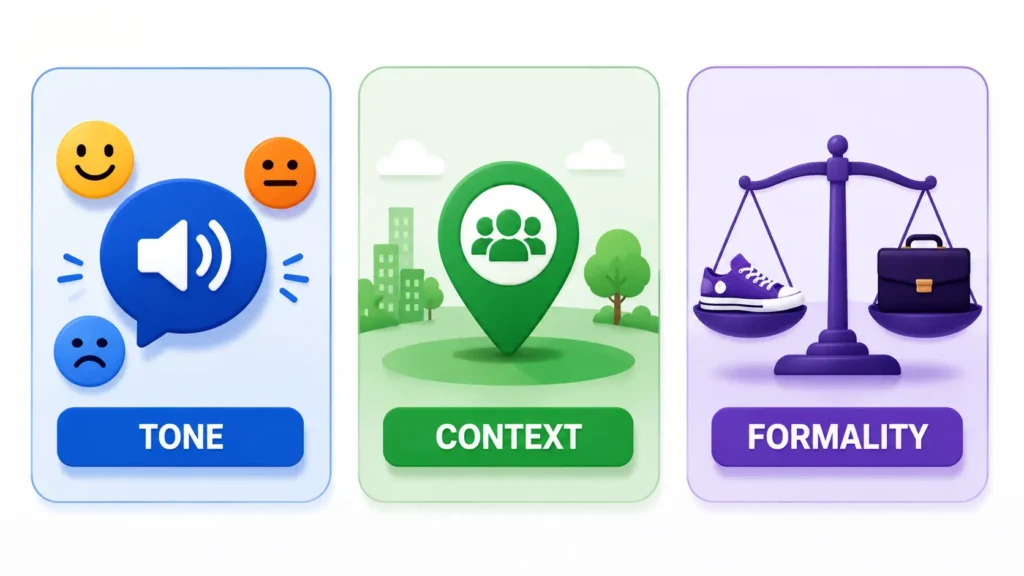
Harass often carries a serious tone.
The word appears in:
- Workplace policies
- School policies
- Legal discussions
- Government guidance
- Social media rules
- Human resources documents
Examples:
- Harassing a coworker can violate company policy.
- Students should not harass classmates.
- Repeated unwanted contact may be considered harassment.
Because the term can have legal or disciplinary implications, it should not be used casually for every annoyance.
For example:
Less accurate:
- My phone alarm harassed me this morning.
More accurate:
- My phone alarm annoyed me this morning.
The word harass usually suggests repeated, unwanted, and often targeted behavior.
Which One Should You Use?
Use harass whenever you mean:
- Repeated unwanted behavior
- Persistent bothering
- Intimidation
- Bullying-like conduct
- Pressure directed at a person
Examples:
- Do not harass customer-service representatives.
- The company prohibits employees from harassing coworkers.
- She felt harassed by the repeated messages.
Use haras only if you are discussing the rare noun related to horse breeding.
For ordinary English writing, the answer is simple:
Choose harass.
When One Choice Sounds Wrong
The word haras sounds incorrect whenever the sentence requires a verb.
Incorrect:
- Stop trying to haras me.
- They continued to haras customers.
- Someone tried to haras the witness.
Correct:
- Stop trying to harass me.
- They continued to harass customers.
- Someone tried to harass the witness.
The verb pattern works naturally with harass but not with haras.
Common Mistakes And Quick Fixes
Mistake 1: Dropping The Final S
Incorrect:
- Please stop trying to haras me.
Correct:
- Please stop trying to harass me.
Mistake 2: Adding An Extra R
Incorrect:
- The caller continued to harrass her.
Correct:
- The caller continued to harass her.
Mistake 3: Confusing Harass And Harassment
Incorrect:
- He tried to harassment the witness.
Correct:
- He tried to harass the witness.
Mistake 4: Using Harass For Minor Irritations
Less accurate:
- My little brother harasses me by asking one question.
More accurate:
- My little brother annoys me by asking one question.
Harass Vs Similar Words
Harass Vs Annoy
Annoy is usually milder.
- The noise annoyed me.
Harass is stronger.
- The repeated threatening messages harassed her.
Harass Vs Bother
Bother often refers to minor inconvenience.
- Sorry to bother you.
Harass implies repeated unwanted behavior.
- The caller continued to harass the employee.
Harass Vs Bully
Bullying is a type of behavior that may involve harassment, but the words are not identical.
Bullying often involves power imbalance and repeated mistreatment.
Harassment focuses on repeated unwanted conduct.
Everyday Examples
- The company warned workers not to harass customers.
- Students should never harass classmates online.
- The tenant accused the landlord of trying to harass him.
- Repeated phone calls can become a form of harassment.
- She blocked the account because it continued to harass her.
- The manager reminded employees not to harass coworkers.
- The school policy prohibits harassing other students.
- Nobody should be harassed because of personal beliefs.
- The witness reported being harassed after the trial.
- The team received training on preventing workplace harassment.
- Online users should not harass people over disagreements.
- The neighbor claimed he was being harassed repeatedly.
Dictionary-Style Word Details
Verb
Harass: A standard English verb meaning to repeatedly trouble, bother, intimidate, or pressure someone.
Haras: Not commonly used as a verb in standard American English.
Noun
Harass: Not normally used as a noun. The noun form is harassment.
Haras: A rare noun referring to a horse-breeding establishment.
Synonyms
Harass:
Closest plain alternatives:
- Bother
- Pester
- Badger
- Intimidate
- Pressure
- Torment
- Hassle
Possible opposites:
- Respect
- Support
- Protect
- Leave alone
Haras:
Closest plain alternative in its rare meaning:
- Stud farm
Example Sentences
Harass
- The company does not tolerate employees who harass coworkers.
- Someone continued to harass her through social media.
- Repeated calls can harass customers.
Haras
- The term may refer to a horse-breeding establishment in specialized contexts.
Word History
Harass has long been established in English as a verb meaning to trouble, wear down, pressure, or repeatedly bother someone.
Haras has historical use as a noun connected to horse breeding and should not be confused with the modern English verb harass.
Phrases Containing
Harass
- Harass a coworker
- Harass a tenant
- Harass a witness
- Harass customers
- Harass someone online
- Stop harassing me
- Accused of harassing
- Repeatedly harass
Haras
- No common modern American English phrases.
FAQ
Is harass or haras correct?
Harass is correct when you mean to repeatedly bother, pressure, or intimidate someone.
Is haras a real word?
It exists as a rare noun related to horse breeding, but it is not the standard spelling of the verb harass.
How do you spell harass correctly?
The correct spelling is:
H-A-R-A-S-S
One r, two s letters.
What is the noun form of harass?
The noun form is harassment.
Example:
- The company investigated the harassment complaint.
Can harass be used in formal writing?
Yes. It commonly appears in workplace, legal, educational, and policy-related writing.
What is another word for harass?
Depending on context, alternatives include:
- Bother
- Pester
- Badger
- Intimidate
- Pressure
- Torment
Conclusion
When comparing harass vs haras, the correct choice for ordinary English writing is almost always harass.
Harass is the standard verb meaning to repeatedly bother, pressure, intimidate, or trouble someone. It appears in everyday conversation, workplace policies, legal discussions, educational settings, and online communication.
Haras is not the normal spelling of that verb. While it has a rare noun meaning connected to horse breeding, most writers and readers will never use it in that sense.
If your sentence involves repeated unwanted behavior, remember this simple rule:
Harass = One R + Two S’s.
Harass is correct when you mean to repeatedly bother, pressure, or intimidate someone.
It exists as a rare noun related to horse breeding, but it is not the standard spelling of the verb harass.
The correct spelling is:
H-A-R-A-S-S
One r, two s letters.
The noun form is harassment.
Example:
The company investigated the harassment complaint.
Yes. It commonly appears in workplace, legal, educational, and policy-related writing.
Depending on context, alternatives include:
Bother
Pester
Badger
Intimidate
Pressure
Torment