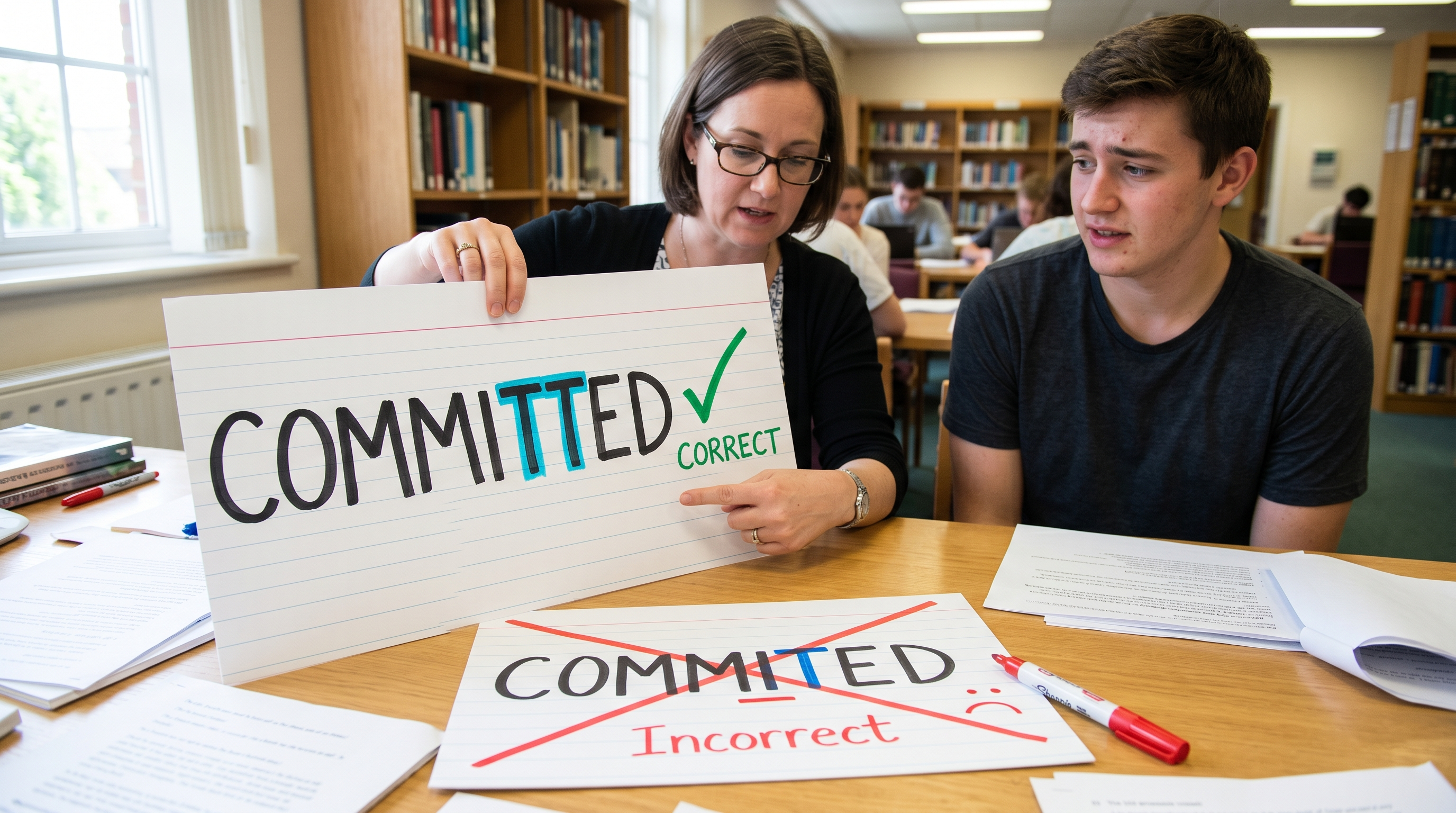

People often pause when writing “coming” because English spelling rules can feel inconsistent. Some words double the final consonant before adding “-ing,” while others do not.
If you are choosing between “coming” and “comming,” the correct spelling is always “coming.”
“Comming” is a misspelling in standard American English.
Quick Answer
Use “coming” in all normal English writing.
| Context | Correct Choice | Why |
|---|---|---|
| Text messages | coming | Standard spelling |
| Business emails | coming | Professional and correct |
| Academic writing | coming | Dictionary-approved form |
| Social media posts | coming | Accepted everyday usage |
| “Comming” in formal writing | Avoid | Considered a spelling error |
Why People Confuse Them
The confusion usually comes from English consonant-doubling patterns.
Many verbs double the final consonant before adding “-ing”:
- run → running
- swim → swimming
- sit → sitting
Because of that pattern, some writers assume “come” should become “comming.”
But “come” follows a different rule.
English typically drops the silent “e” before adding “-ing”:
- make → making
- write → writing
- come → coming
The word loses the “e,” but it does not double the “m.”
Pronunciation also plays a role. Most Americans pronounce “coming” quickly, so the spelling detail is easy to miss during typing.
Key Differences At A Glance
| Feature | coming | comming |
|---|---|---|
| Correct English spelling | Yes | No |
| Found in dictionaries | Yes | Usually listed as an error |
| Used in professional writing | Yes | No |
| Derived correctly from “come” | Yes | No |
| Common typing mistake | No | Yes |
Meaning And Usage Difference
“Coming” is the present participle and gerund form of the verb “come.”
It commonly refers to:
- arriving
- approaching
- moving toward something
- happening in the future
Examples:
- “She’s coming to the meeting after lunch.”
- “A storm is coming tonight.”
- “Thanks for coming over.”
“Coming” can also work as a noun in limited situations:
- “The coming of spring”
- “The coming year”
“Comming” does not have a recognized meaning in modern American English. It is generally treated as a typo or spelling mistake.
The pronunciation of “coming” usually sounds like:
- “KUM-ing”
Because the spelling does not fully match the sound people hear, the extra “m” mistake happens frequently.
Tone, Context, And Formality
“Coming” works naturally in every type of communication:
- casual conversation
- professional emails
- journalism
- marketing
- academic writing
- online messaging
“Comming” does not fit edited or professional English.
Using it in resumes, reports, presentations, or public writing may make the content look rushed or unproofread.
Which One Should You Use?
Always use “coming.”
There is no standard writing situation where “comming” is preferred.
A simple memory trick can help:
Start with the base word:
- come
Then remove the silent “e” and add “-ing”:
- coming
You never need to add another “m.”
When One Choice Sounds Wrong
To fluent readers, “comming” usually looks incomplete or mechanically wrong because it breaks familiar English spelling patterns.
Incorrect:
- “I’m comming home now.”
- “The guests are comming later.”
Correct:
- “I’m coming home now.”
- “The guests are coming later.”
Since “coming” appears constantly in books, websites, signs, and messages, readers recognize the correct spelling immediately.
Common Mistakes (And Quick Fixes)
Doubling The Wrong Letter
Wrong:
- “The train is comming soon.”
Correct:
- “The train is coming soon.”
Following Sound Instead Of Spelling
Because both versions sound similar aloud, writers sometimes spell the word based only on pronunciation.
Wrong:
- “Are you comming tonight?”
Correct:
- “Are you coming tonight?”
Misapplying The Consonant Rule
Not every verb doubles the final consonant before “-ing.”
Wrong thinking:
- run → running
- come → comming
Correct pattern:
- come → coming
Quick reminder:
Words ending in silent “e” usually drop the “e” instead of doubling the consonant.
Everyday Examples
Here are natural examples using the correct spelling:
- “Are you coming with us this weekend?”
- “A new coffee shop is coming to downtown next month.”
- “Thanks for coming by after work.”
- “The package is coming tomorrow.”
- “Nobody saw the question coming.”
Incorrect examples:
- “She is comming over later.”
- “More updates are comming soon.”
Dictionary-Style Word Details
Verb
coming: Present participle and gerund form of the verb “come.” Used to describe arriving, approaching, or happening.
comming: Not accepted as a standard English verb form.
Noun
coming: Occasionally used as a noun in phrases such as “the coming of age ceremony” or “the coming winter.”
comming: Not recognized as a standard noun.
Synonyms
coming: approaching, arriving, upcoming, nearing
Closest practical antonyms may include:
- leaving
- departing
- going
comming: No accepted synonyms because it is not a standard English spelling.
Example Sentences
coming: “More visitors are coming this summer.”
coming: “She appreciated everyone coming to the celebration.”
comming: “Comming” should be avoided in edited writing.
Word History
coming: Comes from the verb “come,” which traces back to Old English and older Germanic language roots.
comming: No separate word history exists because it developed as a spelling error of “coming.”
Phrases Containing
Common phrases with “coming” include:
- “coming soon”
- “coming home”
- “the coming year”
- “what’s coming next”
- “saw it coming”
“Comming” does not appear in accepted English phrases.
Conclusion
The correct spelling is “coming.”
The mistake “comming” usually happens because English spelling rules around doubled consonants can be confusing. Still, the verb “come” follows the silent “e” pattern:
- come → coming
If you want your writing to look polished, professional, and correct, use “coming” every time.