Labeler vs labeller is mainly a regional spelling choice. Both words are correct, and both can mean a person or machine that labels something.
For American English, use labeler. For British-style English, use labeller. The meaning does not change, but the spelling should match your audience and the rest of your writing.
Quick Answer
Use labeler for US English.
Use labeller for British-style English.
Both words mean a person or device that puts labels on products, packages, files, containers, data, or other items.
Correct in US English: “The labeler printed shipping labels.”
Correct in British-style English: “The labeller printed shipping labels.”
Labeler Vs Labeller At A Glance
| Context | Best Choice | Why |
| US English | labeler | This is the standard American spelling. |
| British-style English | labeller | This matches the double-l spelling pattern. |
| US resume or job listing | labeler | It looks natural to American employers. |
| UK product page | labeller | It fits British-style spelling. |
| Packaging machine | labeler | Common in US industrial and product writing. |
| International document | labeler or labeller | Choose one spelling style and stay consistent. |
| Same page uses labeled and labeling | labeler | It keeps the spelling family American. |
| Same page uses labelled and labelling | labeller | It keeps the spelling family British-style. |
What Does Labeler Mean?
Labeler is a noun. In American English, it means a person or device that labels something.
A labeler can be a worker who places labels on products. It can also be a machine that prints or applies labels.
Examples:
“The labeler printed barcodes for each box.”
“She worked as a product labeler at the warehouse.”
“The automatic labeler applied labels to every bottle.”
“Our office labeler ran out of tape.”
In US writing, labeler is the best spelling for articles, product descriptions, workplace documents, manuals, resumes, and business pages.
What Does Labeller Mean?
Labeller means the same thing as labeler, but it uses the British-style double-l spelling.
Examples:
“The labeller applied price tags to the new stock.”
“The automatic labeller stopped during the packaging run.”
“She worked as a labeller in the warehouse.”
“The product labeller needs maintenance.”
For a US audience, labeller may look unusual. It is not a different job, device, or meaning. It is simply a different spelling style.
The Main Difference Between Labeler And Labeller
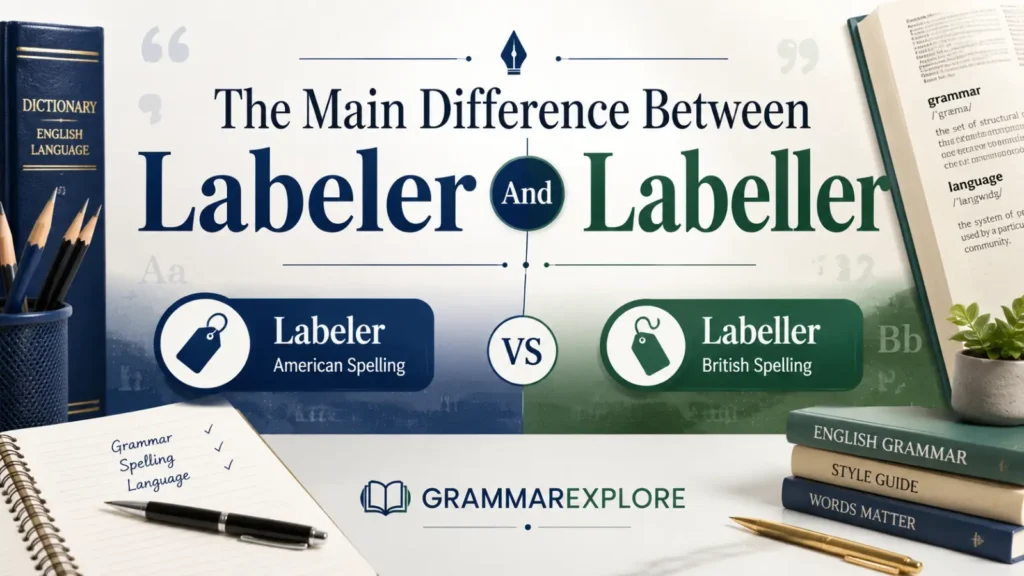
The main difference is spelling convention.
Labeler is the American spelling. Labeller is the British-style spelling. Both refer to someone or something that labels.
Think of the spelling family:
American English: labeler, labeled, labeling
British-style English: labeller, labelled, labelling
If your article uses American spelling, write labeler. If your document uses British-style spelling, write labeller.
Why People Confuse Them
People confuse labeler and labeller because both spellings are real. The double-l pattern also appears in related words, which makes the choice harder.
For example, American English usually uses:
labeled
labeling
labeler
British-style English often uses:
labelled
labelling
labeller
The confusion is understandable because the words sound the same and mean the same thing. The only practical difference is which spelling system you are using.
Labeler As A Person
A labeler can be a person whose job is to label items, products, files, images, or data.
Examples:
“The labeler checked each package before shipping.”
“She got a part-time job as a data labeler.”
“The product labeler placed warning stickers on each container.”
“A warehouse labeler prepared boxes for delivery.”
In modern US writing, data labeler is also common. It refers to someone who tags, marks, or categorizes data for a project.
Labeler As A Machine
A labeler can also be a machine that prints, places, or applies labels.
Examples:
“The labeler applied barcodes to the cartons.”
“The bottle labeler stopped halfway through the batch.”
“We replaced the old labeler with a faster model.”
“The shipping labeler prints hundreds of labels per day.”
In everyday office use, many people say label maker instead of labeler. In industrial or packaging contexts, labeler often sounds more natural.
Labeler Vs Label Maker
Labeler and label maker are closely related, but they are not always used the same way.
A label maker usually means a small office or home device used to print labels.
Example:
“I used a label maker to organize the pantry.”
A labeler can mean a person, a small device, or an industrial machine that applies labels.
Example:
“The factory labeler applied labels to 5,000 bottles.”
For home and office organization, label maker often sounds more natural. For packaging, shipping, production, and warehouse work, labeler is often the better word.
Which One Should You Use?
Use labeler if your readers are in the United States or your content follows American English.
Examples:
“The labeler printed clean address labels.”
“We need a labeler for the packaging line.”
“She listed data labeler experience on her resume.”
Use labeller if your writing follows British-style spelling.
Examples:
“The labeller printed clear product tags.”
“We need a labeller for the packaging line.”
“She listed data labeller experience on her CV.”
The safest rule is simple: choose one spelling style and use it everywhere.
When One Choice Looks Wrong
Labeller can look wrong in US writing because American readers expect labeler.
Less natural for US English: “The labeller printed the barcode.”
Better for US English: “The labeler printed the barcode.”
Labeler can look inconsistent in British-style writing if the same page uses labelled and labelling.
Mixed: “The labeler labelled every box.”
Consistent British-style: “The labeller labelled every box.”
The issue is not meaning. The issue is consistency and audience expectation.
Common Mistakes And Quick Fixes
Mistake: “The labeller labeled every box.”
Fix for US English: “The labeler labeled every box.”
Mistake: “The labeler labelled every box.”
Fix for British-style English: “The labeller labelled every box.”
Mistake: “We need a labeller for our US product manual.”
Fix: “We need a labeler for our US product manual.”
Mistake: “The labeler is the sticker.”
Fix: “The labeler applies the sticker. The label is the sticker or tag.”
Mistake: “Labeler and labeller mean different machines.”
Fix: “They mean the same thing. The difference is spelling.”
Mistake: “I bought a labeler for my kitchen jars.”
Better in casual US English: “I bought a label maker for my kitchen jars.”
Everyday Examples
“The labeler printed address labels for the packages.”
“She used a label maker to organize her desk drawers.”
“The warehouse labeler checked every barcode.”
“The factory labeler applied stickers to each bottle.”
“The labeller appeared in the UK product catalog.”
“A data labeler reviewed thousands of images.”
“The office labeler needs new tape.”
“The automatic labeler stopped during the production run.”
“Our US guide uses labeler, labeled, and labeling.”
“The British-style guide uses labeller, labelled, and labelling.”
Dictionary-Style Word Details
Verb
Labeler: Not used as a verb in standard English. It is a noun. Use label as the verb.
Example: “Please label the boxes before Friday.”
Labeller: Not used as a verb in standard English. It is also a noun. Use label as the verb.
Example: “Please label each folder clearly.”
Noun
Labeler: A noun meaning a person or device that labels something. This is the standard spelling for American English.
Labeller: A noun with the same meaning. This is the British-style spelling.
Synonyms
Labeler: Closest plain alternatives include label maker, label applicator, tagger, and labeling machine, depending on context.
Labeller: Closest plain alternatives include label maker, label applicator, tagger, and labelling machine, depending on context.
There is no strong everyday antonym for either word. If needed, use a phrase such as label remover or person who removes labels, depending on the context.
Example Sentences
Labeler: “The labeler printed 300 shipping labels before noon.”
Labeler: “She worked as a data labeler for a mapping project.”
Labeller: “The labeller applied price tags to the new stock.”
Labeller: “The automatic labeller needs maintenance.”
Word History
Labeler: Formed from label plus -er, meaning someone or something that performs the action of labeling. The single-l form fits American spelling.
Labeller: Formed from label plus -er, with the double-l form used in British-style spelling.
The important point is practical: both forms come from the same base word and share the same meaning.
Phrases Containing
Labeler: data labeler, product labeler, barcode labeler, shipping labeler, automatic labeler, print-and-apply labeler.
Labeller: data labeller, product labeller, barcode labeller, shipping labeller, automatic labeller, print-and-apply labeller.
FAQ
Is labeler or labeller correct?
Both are correct. Labeler is the American spelling. Labeller is the British-style spelling. They have the same meaning.
Which spelling should I use in American English?
Use labeler in American English.
Example: “The labeler printed the shipping tags.”
Is labeller wrong in the United States?
It is not wrong as a word, but it looks unusual in American English. For US readers, labeler is the better choice.
Do labeler and labeller mean the same thing?
Yes. Both can mean a person or device that labels something. The difference is spelling, not meaning.
Can labeler mean a machine?
Yes. A labeler can be a machine that prints, places, or applies labels.
Example: “The bottle labeler applied labels to each container.”
Is label maker the same as labeler?
Sometimes, but not always. A label maker is usually a small office or home device. A labeler can be a person, a small device, or an industrial machine.
Should I write labeling or labelling with labeler?
For American English, write labeler, labeling, and labeled.
For British-style English, write labeller, labelling, and labelled.
Conclusion
The difference between labeler and labeller is spelling, not meaning. Both words refer to a person or device that labels something.
Use labeler for American English. Use labeller for British-style English. Most importantly, keep the spelling family consistent: labeler, labeled, labeling for US writing, and labeller, labelled, labelling for British-style writing.
Both are correct. Labeler is the American spelling. Labeller is the British-style spelling. They have the same meaning.
Use labeler in American English.
Example: “The labeler printed the shipping tags.”
It is not wrong as a word, but it looks unusual in American English. For US readers, labeler is the better choice.
Yes. Both can mean a person or device that labels something. The difference is spelling, not meaning.
Yes. A labeler can be a machine that prints, places, or applies labels.
Example: “The bottle labeler applied labels to each container.”
Sometimes, but not always. A label maker is usually a small office or home device. A labeler can be a person, a small device, or an industrial machine.
For American English, write labeler, labeling, and labeled.
For British-style English, write labeller, labelling, and labelled.