
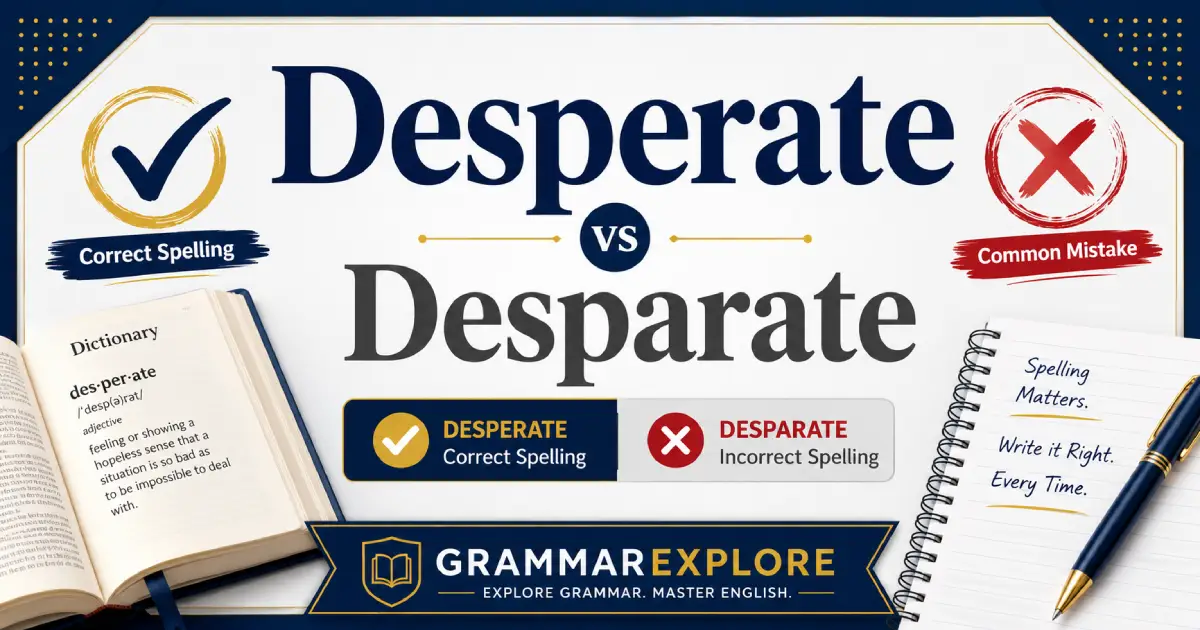
The correct spelling is desperate.
Writers often misspell desperate as desparate because they type quickly, guess the spelling from pronunciation, or misunderstand the word’s structure.
Many people make this mistake in emails, text messages, social media posts, academic writing, and professional documents. This spelling error can affect clarity and make writing look less polished.
Confusing spellings can make even simple words tricky, so if you want to master another commonly misspelled pair, check out this guide on dilemma vs dilema to learn the correct spelling and usage.
Quick Answer
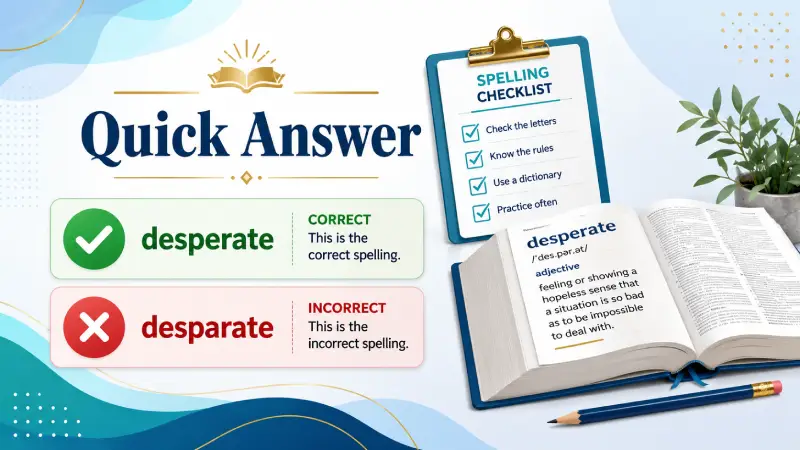
Always use desperate.
Do not use desparate because English dictionaries do not recognize it as a correct word.
Correct examples:
- “She was desperate for help.”
- “He made a desperate attempt to finish on time.”
Incorrect examples:
- “She was desparate for attention.”
- “It was a desparate effort to succeed.”
Why People Confuse Desperate and Desparate
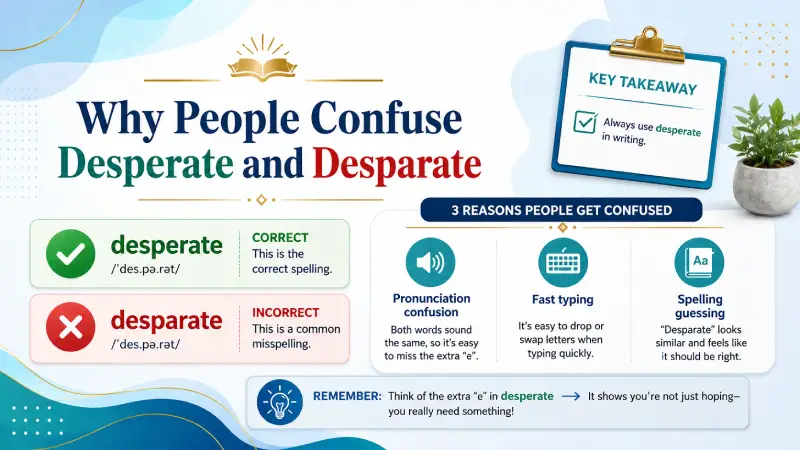
Writers confuse these two spellings for several reasons:
1. Pronunciation Confusion
Many people hear the word quickly and assume the spelling matches the sound. The middle “e” sound can make writers choose the wrong letter.
2. Fast Typing
People often type desparate by accident when they write quickly and do not check their spelling.
3. Spelling Guessing
Some writers guess the spelling based on pronunciation instead of remembering the correct structure.
Even experienced writers can make this mistake when they write under pressure.
Desperate vs Desparate: Key Difference
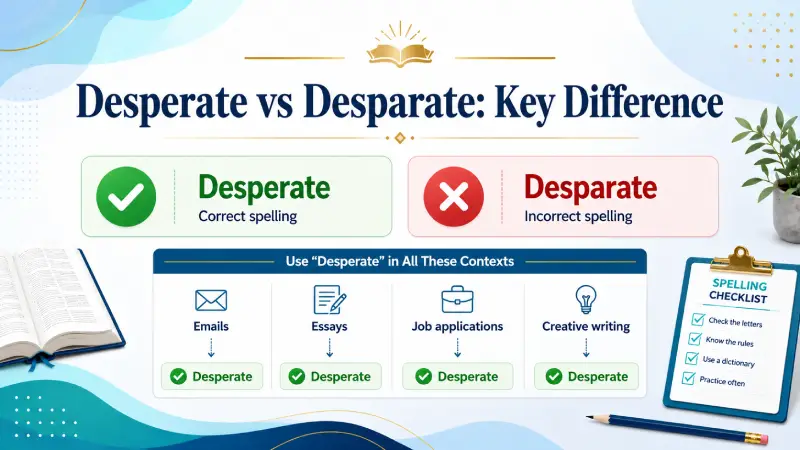
| Context | Correct Choice | Reason |
|---|---|---|
| Academic essays | Desperate | Writers use the standard spelling |
| Emails | Desperate | It creates professional communication |
| Text messages | Desperate | It remains the accepted form |
| Creative writing | Desperate | It keeps writing accurate |
| Job applications | Desperate | Employers expect correct spelling |
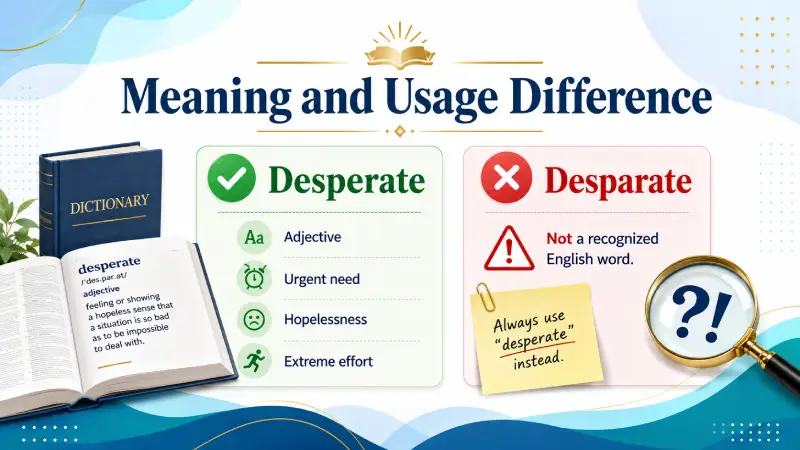
Meaning and Usage Difference
Desperate
Desperate works as an adjective. It describes a person, situation, or action that shows:
- Extreme need
- Strong urgency
- Hopelessness
- A willingness to take risks
Examples:
- “She was desperate to meet the deadline.”
- “The company made a desperate attempt to survive.”
- “The family needed desperate help during the crisis.”
Desparate
Desparate does not have a meaning in standard English. Writers should avoid using this spelling.
Tone, Context, and Formality
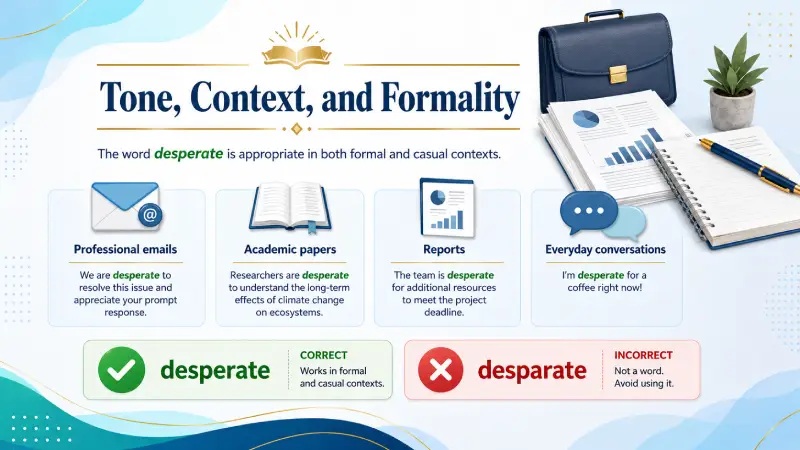
The word desperate works in formal and casual writing.
You can use it in:
- Professional emails
- Academic papers
- Reports
- Social media posts
- Everyday conversations
Using the incorrect spelling desparate can distract readers and make your writing appear careless.
Professional examples:
- “The team took desperate measures to complete the project.”
- “His desperate request for assistance reached the manager.”
Casual examples:
- “I’m desperate for a cup of coffee.”
- “She was desperate to see her friends.”
Which One Should You Use?
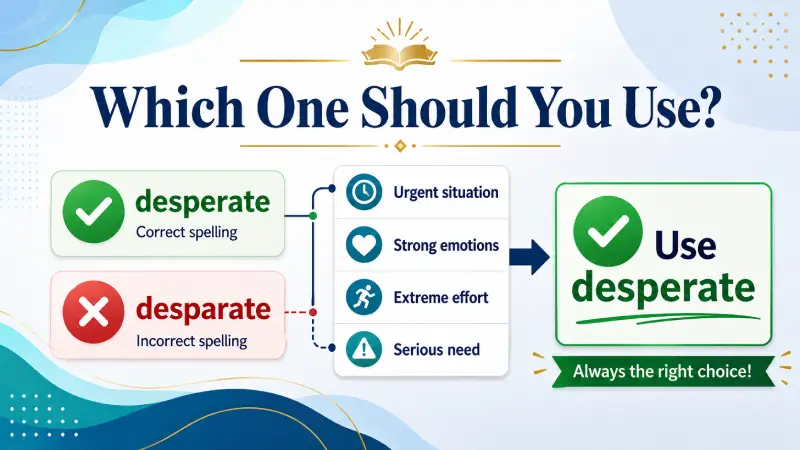
Always choose desperate when you want to describe:
- A serious need
- An urgent situation
- Strong emotions
- Extreme effort
Correct examples:
- “The rescue team made a desperate effort to save the hikers.”
- “I’m desperate for a solution to this problem.”
- “They searched for a desperate way to fix the issue.”
When One Choice Sounds Wrong
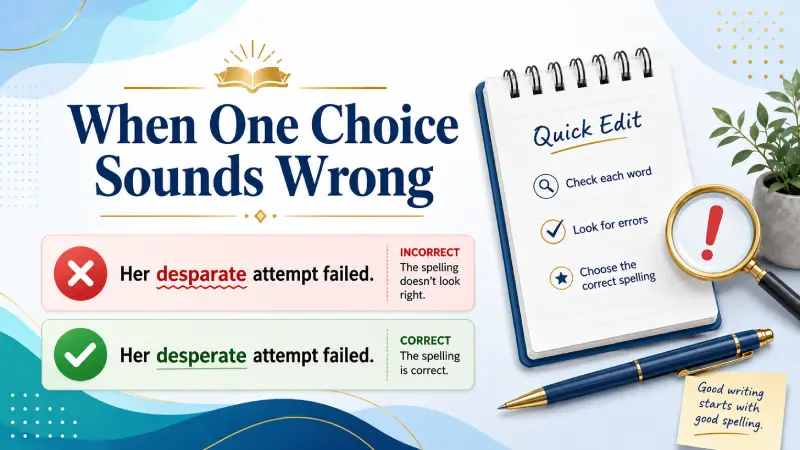
Many readers immediately notice the incorrect spelling.
Incorrect:
- “Her desparate attempt failed.”
- “He felt desparate to explain himself.”
Correct:
- “Her desperate attempt failed.”
- “He felt desperate to explain himself.”
Many spelling mistakes happen because small letter changes can completely alter a word’s correctness, just like the confusion between column vs colum, where one missing letter turns a correct spelling into a common error.
Common Mistakes and Quick Fixes
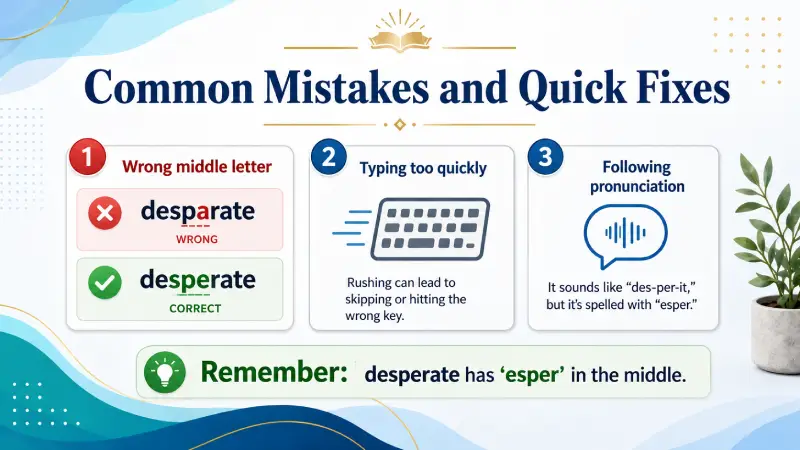
Mistake 1: Changing the Middle Letters
Some writers replace the “e” with an “a” and create the incorrect spelling.
❌ Wrong: desparate
✅ Correct: desperate
Fix: Remember that desperate contains “esper” in the middle.
Mistake 2: Typing Too Quickly
Fast typing can cause missing or incorrect letters.
❌ Wrong: desparate
✅ Correct: desperate
Fix: Review longer words before submitting important writing.
Mistake 3: Following Pronunciation Instead of Spelling
Some writers spell words exactly how they hear them.
❌ Wrong: desparate
✅ Correct: desperate
Fix: Memorize the correct spelling pattern.
Everyday Examples

Correct:
- “She felt desperate after losing her job.”
- “The organization made a desperate call for volunteers.”
- “The patient was desperate for medical attention.”
- “He made a desperate attempt to apologize.”
Incorrect:
- “She was desparate after the accident.”
- “It was a desparate effort to finish the task.”
Dictionary-Style Word Details

Desperate
Part of speech: Adjective
Meaning: Showing extreme need, urgency, or hopelessness.
Examples:
- “The desperate situation required immediate action.”
- “She made a desperate attempt to solve the problem.”
Desparate
Part of speech: None
Meaning: Not a recognized English word.
Synonyms
Desperate:
- Urgent
- Critical
- Frantic
- Hopeless
- Extreme
Desparate:
- No synonyms because it is not a valid word.
Word History
The word desperate comes from the Latin word desperatus, which means “without hope” or “lost hope.” English speakers adopted the word during the 15th century.
The spelling desparate has no word history because it developed only as a spelling mistake.
Common Phrases With Desperate
- Desperate attempt
- Desperate situation
- Desperate measures
- Desperate need
- Desperate plea
English speakers do not use desparate in standard phrases.
Many spelling mistakes happen because a missing or extra letter changes the entire word, so it’s helpful to learn about other confusing pairs like difference vs diffrence and how to use them correctly in everyday writing.
Frequently Asked Questions
Is desparate a correct spelling?
No. Desparate is not a correct English spelling. Writers should use desperate instead.
Why do people write desparate instead of desperate?
People often write desparate because they confuse the pronunciation, type quickly, or guess the spelling incorrectly.
How can I remember the spelling of desperate?
Remember that desperate contains “esper” in the middle. The correct spelling uses e, not a.
Can I use desperate in formal writing?
Yes. Writers can use desperate in professional emails, academic essays, reports, and everyday communication.
Final Conclusion
The correct spelling is desperate.
Writers should avoid desparate because it is only a common spelling mistake. Remember the middle “e” in desperate to write clearly and confidently in every situation.