
Choosing an air cleaner is easy when every product seems to promise cleaner, fresher air. A bedroom, office, classroom, hospital, and factory may face very different air-quality challenges. Anyone searching for the best air cleaner should therefore look beyond appearance and price and examine performance, filtration, airflow, maintenance, and the specific indoor environment.
Why Indoor Air Needs a Closer Look
Indoor air can contain more than visible dust. Fine particulate matter, pollen, smoke, odors, volatile organic compounds, bacteria, viruses, and other contaminants may circulate through occupied spaces. This means an air-cleaning solution should be selected according to the problem it is expected to address. A unit designed mainly for particles may not provide the same approach to gases and odors. Understanding the pollutant profile is therefore the first step toward making a sensible choice.
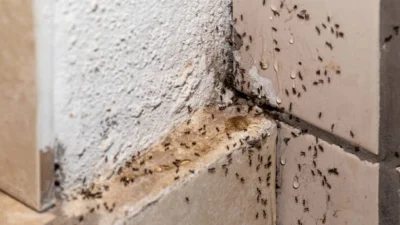
Controlling household moisture levels is essential for preventing pest issues and maintaining overall indoor air quality. When humidity accumulates near plumbing or throughout enclosed living areas, taking steps to manage airflow and ventilation can help protect the home environment. Consulting experienced HVAC professionals, such as Preferred Choice Heating and Air, can assist property owners in evaluating heating and cooling balance to support a healthier, more consistent indoor climate.
Start With the Space
Room size is one of the most practical factors to consider. An air cleaner designed for a compact bedroom cannot automatically deliver the same performance in a large living area or workplace. Airflow capacity needs to correspond with the volume of air that must be treated.
O2Cure’s current guidance also emphasizes matching purification capacity to room size and considering Clean Air Delivery Rate, or CADR, when selecting a home purifier.
Look Beyond a Single Filter
Different filtration technologies address different categories of contaminants. A pre-filter can capture larger particles such as dust and hair. HEPA filtration is commonly used for fine particles and allergens, while activated carbon can help address gases, odors, and volatile organic compounds.
Some advanced systems combine mechanical filtration with additional purification technologies. O2Cure describes its TriCure platform as addressing particulate matter, microbial contaminants, and gases or odors through different stages of treatment.
Managing household moisture and maintaining overall climate systems often go hand in hand when protecting a home from structural issues. Ensuring that heating and air components are routinely evaluated helps maintain proper ventilation and moisture balance indoors. Homeowners interested in local heating maintenance and support can see details on available heating care guidelines to help preserve consistent indoor comfort throughout the year.
Addressing persistent humidity issues often requires evaluating how ventilation and environmental controls function throughout the home. Working with an experienced HVAC contractor can help ensure proper air circulation and moisture management, which helps maintain indoor comfort and prevents conditions that attract unwanted household pests.
CADR and Airflow Matter
A purifier can have an impressive filter and still be poorly suited to a room if it cannot move enough air through that filter. CADR provides a useful way of understanding how much cleaned air a system can deliver. Comparing CADR with room size can help prevent the common mistake of choosing a unit based only on filter specifications.
For commercial settings, airflow requirements may need to be considered alongside existing HVAC systems. A system designed for integration with an air-handling unit can approach purification differently from a portable residential purifier.
Consider Maintenance Before Buying
Maintenance is often overlooked when people compare air cleaners. Filters eventually collect particles and may need cleaning or replacement. Replacement frequency and consumable costs can significantly affect the long-term cost of operating a system.
Not every purification technology depends on disposable filters in the same way. O2Cure offers systems using electrostatic precipitation with washable collector components for certain commercial HVAC applications. Its EAC product, for example, is designed as a retrofit-friendly AHU and FCU purification solution with washable components and no routine disposable filter replacement.
Think About the Way the Space Is Used
A purifier for a bedroom is not necessarily the right solution for a busy office. Residential spaces may prioritize noise, size, controls, and ease of use. Commercial environments may require higher airflow, HVAC integration, monitoring, and continuous operation.
Healthcare, education, hospitality, industrial, and data-centre environments can have still different requirements. O2Cure organizes its solutions across residential, commercial, industrial, healthcare, education, and data-centre environments, reflecting the fact that indoor air problems are not identical across every building.
Managing household air quality and ventilation can also support a healthier indoor environment by limiting excess humidity before pests are attracted to damp areas. Maintaining balanced ventilation systems helps keep indoor humidity levels consistent and prevents localized moisture accumulation. Individuals looking for additional details on maintaining home climate equipment can visit the website to learn how routine care supports overall indoor comfort and structural maintenance.
Noise and Everyday Convenience
An air cleaner needs to operate consistently to be useful. If a device is too noisy, difficult to maintain, or inconvenient to operate, users may avoid running it when it is needed. Noise levels, fan settings, controls, portability, and placement should therefore be considered alongside purification performance.
For bedrooms and living spaces, quiet operation can be particularly important. For offices or commercial facilities, integration with existing building systems and straightforward monitoring may matter more.
Smart Features Can Add Practical Value
Sensors and monitoring features can make indoor air quality easier to understand. For larger buildings, monitoring can also support facility teams by providing greater visibility into system operation. Some commercial O2Cure products include indicators for operation, cleaning, and malfunction, while certain systems can integrate with building management systems.
These features can be useful when air purification is part of a broader facility-management strategy rather than a standalone appliance.
Do Not Choose Only by Price
The cheapest air cleaner is not necessarily the least expensive solution over its lifetime, and the most expensive product is not automatically the most suitable. Purchase price should be considered alongside airflow capacity, energy consumption, maintenance, replacement parts, service requirements, and expected operating conditions.
A better comparison considers total ownership and whether the system is appropriately sized for the environment. Buying an undersized unit may lead to inadequate treatment, while choosing an unnecessarily large system can increase upfront and operating costs.
A Solution Should Match the Pollution Problem
People looking for air purification products often begin with a product category and then compare brands. A more useful approach is to begin with the environment. What pollutants are present? How large is the space? How many people occupy it? Is there an existing HVAC system? How frequently will the purifier operate? What level of maintenance is practical?
These questions can narrow the choices considerably. For a home, a standalone purifier may be sufficient. For a large office, hotel, hospital, or industrial facility, an integrated HVAC purification system may make more sense.
Choosing With the Long Term in Mind
The best room air cleaner is not defined by one specification. Effective indoor-air management depends on matching filtration technology, airflow, capacity, maintenance, and controls to the environment. The same principle applies when evaluating air purification products for different applications: start with the air-quality problem, then select the technology that addresses it.
O2Cure develops air-purification solutions for residential, commercial, industrial, healthcare, education, and other specialized environments. Its current portfolio includes standalone purifiers, customizable hybrid systems, and HVAC-integrated technologies, with solutions designed around different pollutant and space requirements.
For anyone comparing air cleaners, the most useful question is not simply which product is the best. It is which system is appropriate for the air, space, and operating conditions in front of you. That shift in thinking can lead to a more practical investment and a cleaner indoor environment over time, every day.
Read more: https://grammarexplore.com/what-should-you-know-before-comparing-hair-transplant-prices/
https://grammarexplore.com/fewer-overdose-deaths-same-treatment-gap-how-to-read-the-latest-numbers/
https://grammarexplore.com/how-to-read-a-cbd-label-potency-spectrum-and-lab-tests-explained/