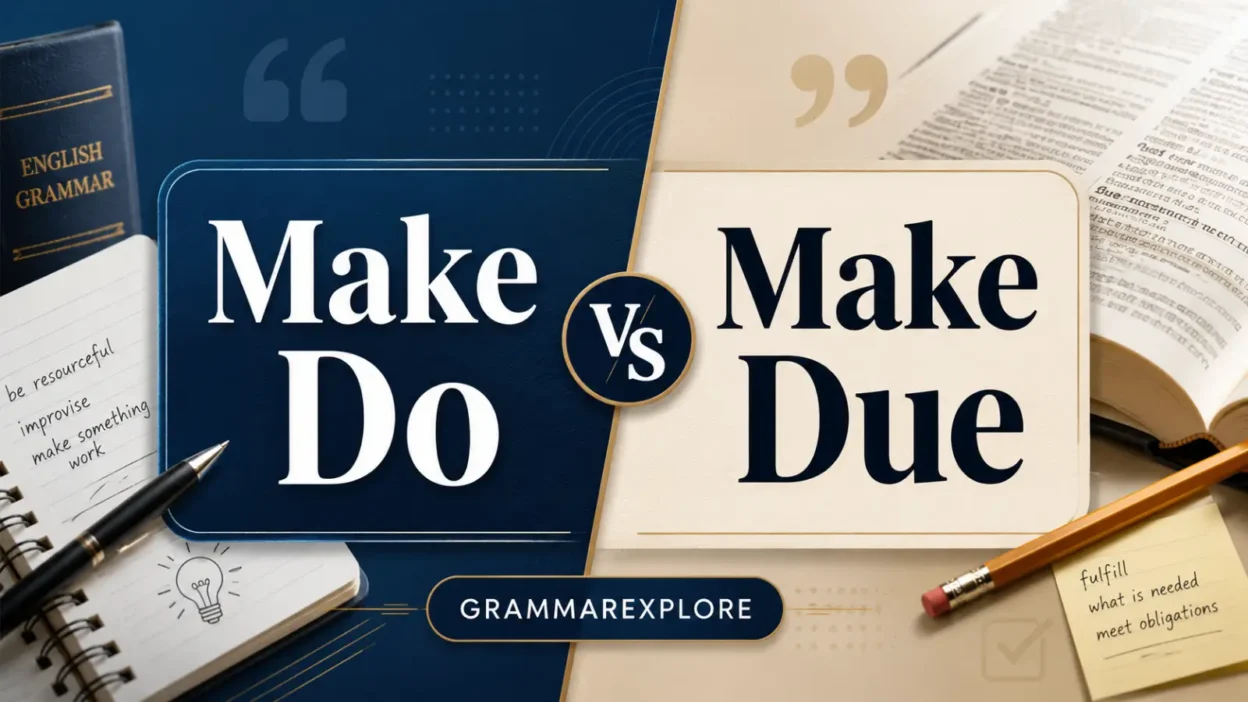
Make do is the correct phrase. Make due is usually a mistake.
Use make do when you mean to manage with what you have, even if it is not perfect. For example, “We forgot the charger, so we’ll have to make do with one laptop.” Do not write “make due” for that meaning.
Quick Answer
The correct idiom is make do.
Correct: “We had to make do with less space.”
Incorrect: “We had to make due with less space.”
Make do means to manage, cope, or get by with available resources. Make due is not the standard phrase for that meaning. However, due is still correct in other sentences when it means owed, expected, scheduled, or required.
Correct: “The report is due Friday.”
Make Do Vs Make Due At A Glance

| Context | Best Choice | Why |
| Managing with what you have | make do | This is the correct idiom. |
| Using limited resources | make do with | This is the most common pattern. |
| Going without something | make do without | This means manage even though something is missing. |
| Writing the mistaken phrase | make due | This is usually incorrect for the idiom. |
| Talking about a deadline | due | Due means expected or scheduled. |
| Describing a makeshift item | make-do | The hyphenated form works before a noun. |
What Does Make Do Mean?

Make do means to manage with what is available. You use it when the situation is not ideal, but you still find a way to continue.
Examples:
“We ran out of plates, so we made do with napkins.”
“The office had to make do with old computers.”
“She forgot her notes but made do during the presentation.”
“We can make do without Wi-Fi for one night.”
The phrase often appears as make do with or make do without.
Make do with means use something available, even if it is not ideal.
Example: “We made do with folding chairs.”
Make do without means manage even though something is missing.
Example: “We made do without air conditioning for two days.”
What Does Make Due Mean?
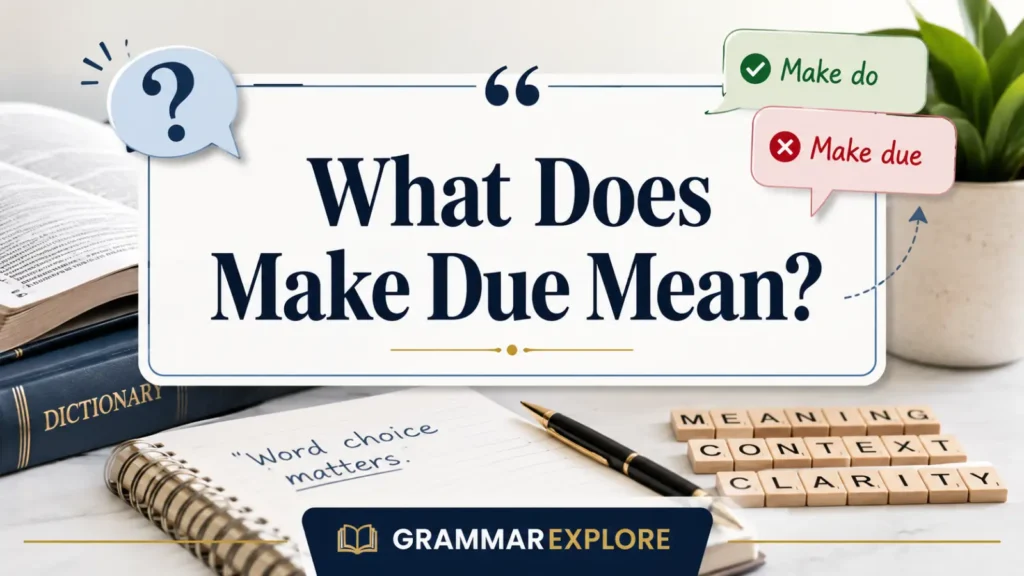
Make due is usually an incorrect version of make do.
Incorrect: “We’ll make due with what we have.”
Correct: “We’ll make do with what we have.”
The mistake happens because do and due sound the same in much of American English. In writing, though, the idiom uses do, not due.
That said, make and due can appear together in a different sentence structure.
Correct: “Can we make the rent due on the first?”
In that sentence, make is a verb, and due means scheduled or required by a certain time. It is not the idiom make do.
Why People Confuse Make Do And Make Due

People confuse make do and make due because the words do and due are pronounced the same in everyday American speech.
The word due can also seem logical because it relates to deadlines, payments, and obligations. Still, the phrase make do is not about something being owed or scheduled. It is about doing what you can with what you have.
That meaning makes do the correct word.
Memory trick:
If you mean “do what you can,” write make do.
Make Do, Make Due, And Make-Do
These three forms are not the same.
Make do is the correct open phrase.
Example: “We can make do with one car this week.”
Make due is usually the wrong form when you mean manage or get by.
Incorrect: “We can make due with one car this week.”
Make-do is the hyphenated form. Use it as an adjective before a noun, or sometimes as a noun meaning a makeshift substitute.
Examples:
“It was a make-do solution.”
“They used a cardboard box as a make-do.”
The hyphen matters because make-do is working as a modifier or noun, not as the normal verb phrase.
When To Use Make Do
Use make do when you mean:
manage with what is available
cope with limited resources
get by without something better
use a substitute
work through a less-than-perfect situation
Examples:
“We forgot the tent stakes, but we made do.”
“The team made do with a smaller budget.”
“I lost my headphones, so I made do without them.”
“She made do with an older phone until payday.”
“They made do with a temporary repair.”
When To Use Due
Use due when you mean something is owed, expected, scheduled, or required.
Examples:
“The payment is due Monday.”
“The assignment is due at midnight.”
“The baby is due in July.”
“Give the matter due attention.”
“The delay was due to bad weather.”
These sentences are correct, but they do not use the idiom make do.
When One Choice Sounds Wrong
Make due with is wrong when you mean manage with what is available.
Incorrect: “We had to make due with cheap supplies.”
Correct: “We had to make do with cheap supplies.”
Make due without is also wrong for the same reason.
Incorrect: “I had to make due without my laptop.”
Correct: “I had to make do without my laptop.”
Make do can sound wrong if the sentence is really about a deadline.
Wrong meaning: “Can we make do the invoice tomorrow?”
Correct: “Can we make the invoice due tomorrow?”
In that sentence, you are setting a due date, not saying someone will manage with limited resources.
Common Mistakes And Quick Fixes
Mistake: “We had to make due with old equipment.”
Fix: “We had to make do with old equipment.”
Mistake: “I can make due without a printer.”
Fix: “I can make do without a printer.”
Mistake: “The family made due on one income.”
Fix: “The family made do on one income.”
Mistake: “We’ll make due until the repair is done.”
Fix: “We’ll make do until the repair is done.”
Mistake: “It was a make do solution.”
Fix: “It was a make-do solution.”
Mistake: “The team is making due with fewer people.”
Fix: “The team is making do with fewer people.”
Everyday Examples
“We forgot the cooler, so we’ll make do with a grocery bag.”
“The office was short on chairs, but we made do.”
“I forgot my notes, so I had to make do from memory.”
“The recipe calls for fresh basil, but we can make do with dried basil.”
“They made do with one bathroom during the remodel.”
“We can make do without cable for a few months.”
“The school had to make do with fewer supplies.”
“She made do with an old laptop until she could buy a new one.”
“The team made do after two players got sick.”
“We used a make-do shelf until the new bookcase arrived.”
Make Do In Professional Writing
Make do is acceptable in professional writing when the tone is practical and clear.
Examples:
“We can make do with the current setup until the new desks arrive.”
“The department had to make do after the budget cut.”
“Our team can make do with the existing software for now.”
For a more formal tone, you can replace make do with manage, work with what is available, or use the current resources.
Example:
Casual: “We can make do with the current staff.”
More formal: “We can manage with the current staff.”
Synonyms For Make Do
Good alternatives for make do include:
manage
cope
get by
make it work
improvise
use what is available
make the best of it
Examples:
- “We can make do with one laptop.”
- “We can manage with one laptop.”
- “We can make it work with one laptop.”
- “We can get by with one laptop.”
The best synonym depends on tone. Manage sounds more formal. Get by sounds more casual. Improvise suggests quick thinking or a temporary solution.
Dictionary-Style Word Details
Verb
Make do: A verb phrase meaning to manage, cope, or get by with available resources.
Example: “We can make do with one table.”
Make due: Not the standard verb phrase for this meaning. Use make do instead.
Correct separate use: “Can we make the payment due Friday?”
Noun
Make do: The open phrase make do is not usually a noun.
Make-do: The hyphenated form can be a noun meaning a makeshift substitute.
Example: “The cardboard box was a make-do.”
Make due: Not commonly used as a noun in standard American English.
Synonyms
Make do: Closest plain alternatives include manage, cope, get by, make it work, improvise, and make the best of it.
Make due: No true synonym applies when it is used as a mistake for make do. If due is used correctly, alternatives may include owed, scheduled, expected, or required, depending on the sentence.
There is no perfect one-word opposite for make do. Opposite ideas include have enough, have what you need, or use the ideal option.
Example Sentences
- Make do: “We did not have enough plates, so we made do with paper towels.”
- Make do: “The team made do with a smaller budget.”
- Make due: “Make due” is usually incorrect when you mean manage.
- Make due: “Can we make the rent due on the first?” is correct because make and due are used separately.
Word History
Make do: The phrase combines make and do, with do carrying the idea of being enough or serving the purpose. In everyday use, it means to manage with what is available.
Make due: This form is commonly treated as a mistaken version of make do in modern standard writing. The error is easy to understand because do and due sound alike.
Phrases Containing
Make do: make do with, make do without, made do, making do, make do for now.
Make-do: make-do solution, make-do repair, make-do meal, make-do desk.
Make due: Not a standard idiom. Correct separate uses include make the payment due, make the rent due, and make the report due.
FAQ
Is it make do or make due?
The correct phrase is make do.
Example: “We had to make do with what we had.”
Make due is usually a mistake when you mean manage or get by.
What does make do mean?
Make do means to manage with what is available, especially when the situation is not ideal.
Example: “We forgot the tablecloth, so we made do with a clean sheet.”
Is make due ever correct?
Make due is not correct as the idiom meaning manage or cope. However, make and due can appear together in a different sentence.
Correct: “Can we make the invoice due next Friday?”
Why is it make do and not make due?
The phrase is make do because it means to do what you can with what you have. Due relates to deadlines, payments, or something owed, so it does not fit the idiom.
Is make-do hyphenated?
Use make-do with a hyphen when it works as an adjective before a noun.
Example: “They used a make-do repair until the part arrived.”
The normal verb phrase stays open.
Example: “They had to make do.”
Can I say make do without?
Yes. Make do without means to manage even though something is missing.
Example: “We had to make do without air conditioning.”
Conclusion
The correct phrase is make do, not make due.
Use make do when you mean to manage, cope, or get by with what is available. Use due only when something is owed, expected, scheduled, or required.
The easiest memory rule is this: if you mean “do what you can with what you have,” write make do.
The correct phrase is make do.
Example: “We had to make do with what we had.”
Make due is usually a mistake when you mean manage or get by.
Make do means to manage with what is available, especially when the situation is not ideal.
Example: “We forgot the tablecloth, so we made do with a clean sheet.”
Make due is not correct as the idiom meaning manage or cope. However, make and due can appear together in a different sentence.
Correct: “Can we make the invoice due next Friday?”
The phrase is make do because it means to do what you can with what you have. Due relates to deadlines, payments, or something owed, so it does not fit the idiom.
Use make-do with a hyphen when it works as an adjective before a noun.
Example: “They used a make-do repair until the part arrived.”
The normal verb phrase stays open.
Example: “They had to make do.
Yes. Make do without means to manage even though something is missing.
Example: “We had to make do without air conditioning.”