

Traveled vs Travelled can look like a simple spelling difference, but the correct choice depends on which variety of English you use. Both forms are the past tense and past participle of the verb “travel,” meaning to go from one place to another. In American English, “traveled” is the standard spelling, while “travelled” is more common in British English and other varieties.
This difference often causes confusion because both spellings are correct in their respective forms of English. If you are writing for a U.S. audience, choosing the American spelling helps keep your writing consistent and natural. This guide explains which spelling to use and when each form is appropriate.
Quick Answer
Traveled is the standard spelling in American English. Travelled is the standard spelling in British English and many other non-US varieties of English. Both words are correct, and both mean the same thing: went from one place to another.
For a US audience, write traveled.
Examples:
- I traveled to Boston for a conference.
- She has traveled across the United States.
- That is a heavily traveled road.
Use travelled only when your writing follows British spelling:
- I travelled to London last spring.
- He has travelled throughout Europe.
- It is a well-travelled path.
Traveled Vs Travelled At A Glance
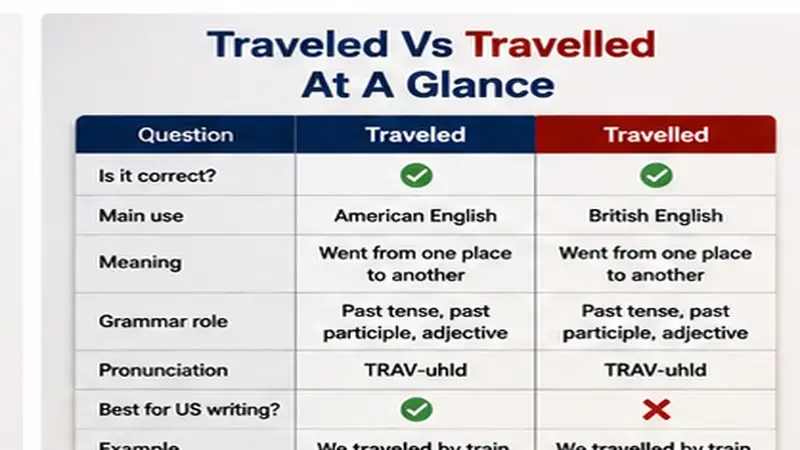
| Question | Traveled | Travelled |
|---|---|---|
| Is it correct? | Yes | Yes |
| Main use | American English | British English |
| Meaning | Went from one place to another | Went from one place to another |
| Grammar role | Past tense, past participle, adjective | Past tense, past participle, adjective |
| Pronunciation | TRAV-uhld | TRAV-uhld |
| Best for US writing? | Yes | Usually no |
| Example | We traveled by train. | We travelled by train. |
The difference is spelling style, not meaning.
What Does Traveled Mean?
Traveled is the American English past tense and past participle of travel. It means someone or something moved from one place to another.
Examples:
- We traveled to Nashville last weekend.
- The team traveled by bus after the game.
- News of the decision traveled quickly.
- She has traveled for work for years.
Traveled can also work like an adjective, especially in phrases that describe a person, road, route, or path.
Examples:
- a well-traveled writer
- a heavily traveled highway
- a less traveled trail
In American English, traveled is the safest choice for school, business, publishing, resumes, and everyday writing.
What Does Travelled Mean?
Travelled is the British English spelling of the same word. It also means went from one place to another.
Examples:
- We travelled to Edinburgh by train.
- She has travelled through Spain and Portugal.
- The message travelled quickly through the office.
- They travelled together for several weeks.
Like traveled, travelled can also describe a person, road, route, or path.
Examples:
- a well-travelled journalist
- a much-travelled speaker
- a less travelled road
For US readers, travelled may look British or inconsistent if the rest of the article uses American spelling.
Why Are There Two Spellings?
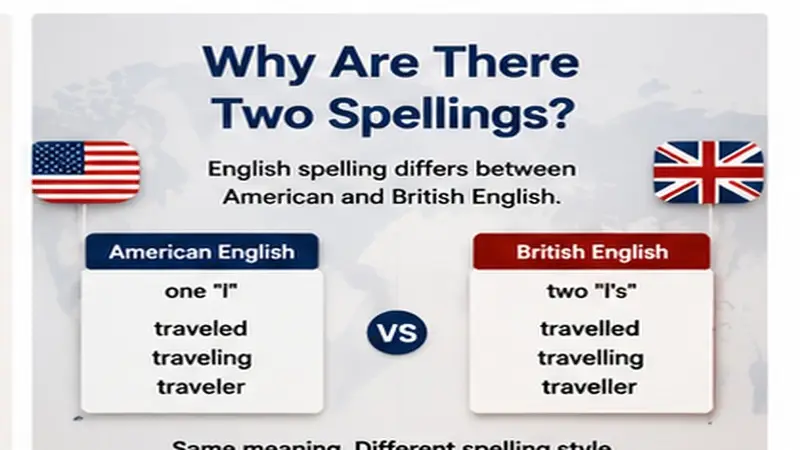
English spelling often differs between American and British English. Traveled and travelled follow that pattern.
American English usually uses one l in forms like:
- traveled
- traveling
- traveler
British English commonly uses two l’s in forms like:
- travelled
- travelling
- traveller
The same pattern appears in other word pairs, such as labeled/labelled, canceled/cancelled, and modeled/modelled. For this article, the important point is simple: choose the spelling that matches your audience.
Which Spelling Should You Use?
Use Traveled In American English
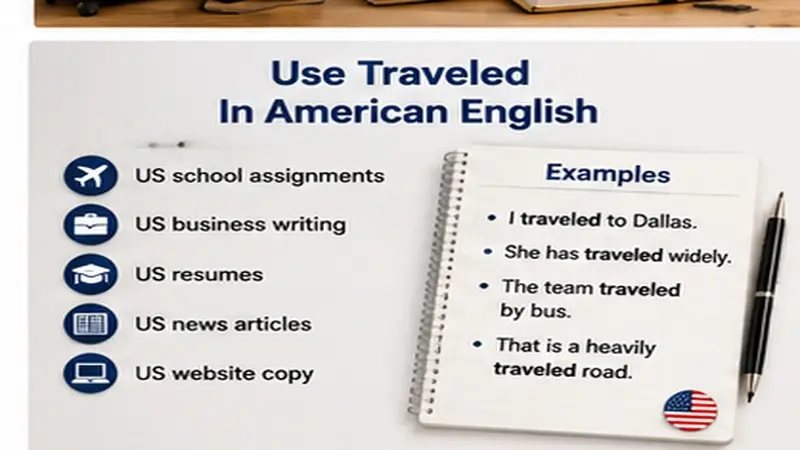
Use traveled when writing for readers in the United States.
Best examples:
- I traveled to Dallas for the interview.
- Our sales team traveled to three states in one week.
- She has traveled widely for her research.
- The package traveled from Phoenix to Chicago.
Use traveled in:
- US school assignments
- US college papers
- US business emails
- US resumes
- US blog posts
- US news articles
- US website copy
- US social media captions
- Use Travelled In British English
Use travelled when your document follows British spelling.
Best examples:
- I travelled to Manchester for the meeting.
- They travelled across Scotland by car.
- She has travelled widely as a photographer.
- The parcel travelled from London to Leeds.
Use travelled for:
- UK-style schoolwork
- British publications
- British business writing
- UK client documents
- Australian or New Zealand style when that style is requested
- Any project that consistently uses British spelling
Choose One Style And Stay Consistent
Do not mix traveled and travelled in the same article unless you are directly comparing the spellings.
Inconsistent:
- I traveled to Seattle, then travelled to Vancouver.
Better for US English:
- I traveled to Seattle, then traveled to Vancouver.
Better for British English:
- I travelled to Seattle, then travelled to Vancouver.
Consistency matters because mixed spelling can make an otherwise polished piece look careless.
Traveled And Travelled As Verb Forms
Both words can be used as the past tense of travel.
Past tense:
- US: We traveled last summer.
- UK: We travelled last summer.
Both can also be used as past participles after helping verbs like has, have, or had.
Past participle:
- US: She has traveled to six countries.
- UK: She has travelled to six countries.
The grammar is the same. Only the spelling changes.
Traveled And Travelled As Adjectives
Both spellings can also work as adjective forms.
- Use them to describe a person who has visited many places:
- US: He is a well-traveled professor.
- UK: He is a well-travelled professor.
- Use them to describe a route, road, or path that many people use:
- US: That is a heavily traveled road.
- UK: That is a heavily travelled road.
- Use them to describe a path or route that fewer people use:
- US: We took the less traveled path.
- UK: We took the less travelled path.
In US writing, well-traveled is the expected form. In British-style writing, well-travelled is expected.
Is Travelled Wrong In American English?
Travelled is not wrong everywhere, but it is usually not the best choice for American English.
A US teacher, editor, client, or reader will normally expect traveled. If you use travelled in a US resume or business email, the meaning will still be clear, but the spelling may look inconsistent with American style.
Less natural in US writing:
- I travelled to regional offices every month.
Better in US writing:
- I traveled to regional offices every month.
The issue is not grammar. The issue is style match.
Is Traveled Wrong In British English?
Traveled is standard in American English, but it can look out of place in a British-style document.
Less natural in British writing:
- She traveled through Wales by train.
Better in British writing:
- She travelled through Wales by train.
Again, the meaning does not change. The best spelling depends on the variety of English your document follows.
Related Forms: Traveling, Travelling, Traveler, And Traveller
The same spelling choice applies to related forms.
Use these in American English:
- traveled
- traveling
- traveler
Use these in British English:
- travelled
- travelling
- traveller
Examples:
- US: The traveler was traveling alone and had traveled all week.
- UK: The traveller was travelling alone and had travelled all week.
For a polished document, keep the whole set consistent.
Common Mistakes With Traveled And Travelled
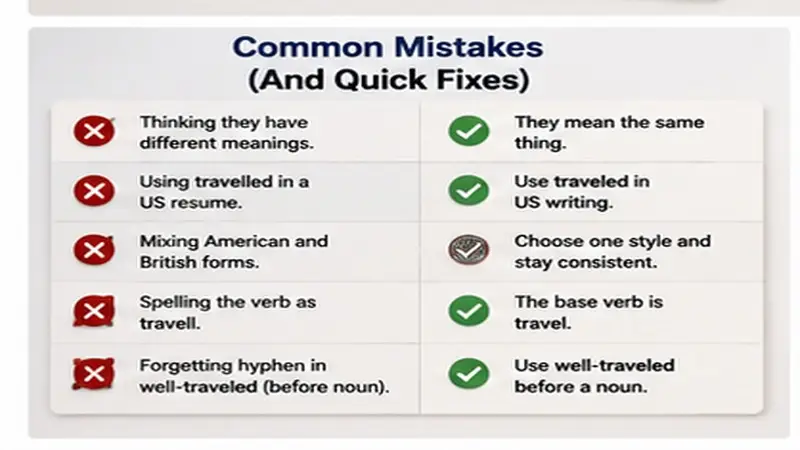
Mistake 1: Thinking The Words Have Different Meanings
Incorrect idea:
- Traveled means one trip, and travelled means many trips.
Correct idea:
- They mean the same thing. The difference is American vs British spelling.
Mistake 2: Using Travelled In A US Resume
Less natural:
- I travelled to client locations across Texas.
Better:
- I traveled to client locations across Texas.
For US job applications, use traveled.
Mistake 3: Mixing American And British Forms
Inconsistent:
- I traveled often because I enjoyed travelling.
Better US style:
- I traveled often because I enjoyed traveling.
Better British style:
- I travelled often because I enjoyed travelling.
Mistake 4: Spelling The Base Verb As Travell
Incorrect:
- I want to travell next year.
Correct:
- I want to travel next year.
The base verb is always travel.
Mistake 5: Forgetting The Hyphen In Well-Traveled Before A Noun
Clear:
- She is a well-traveled speaker.
- They chose a less-traveled route.
When the phrase comes before a noun, the hyphen often improves clarity. After the noun, the phrase may not need the same treatment:
- The speaker is well traveled.
- The route is less traveled.
Real Examples For US Writing
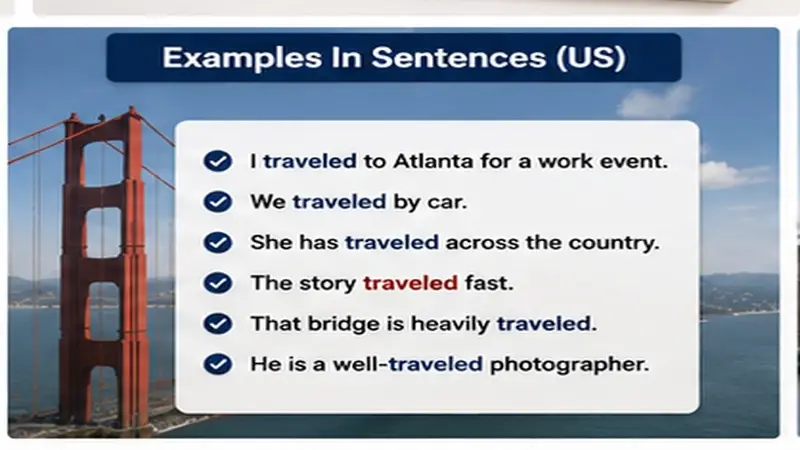
Use traveled in these American English sentences:
- I traveled to Atlanta for a work event.
- We traveled by car because flights were expensive.
- The students traveled to Washington, DC, for a history trip.
- She has traveled across the country for interviews.
- The story traveled fast after the announcement.
- That bridge is heavily traveled during rush hour.
- He became a well-traveled food writer.
- We chose the less traveled trail.
Real Examples For British-Style Writing
Use travelled in these British-style sentences:
- I travelled to London for a work event.
- We travelled by train because it was easier.
- The students travelled to York for a history trip.
- She has travelled across Europe for interviews.
- The story travelled fast after the announcement.
- That road is heavily travelled in summer.
- He became a well-travelled food writer.
- We chose the less travelled path.
Quick Decision Guide
Use this guide when you are unsure:
| Writing Situation | Best Spelling |
|---|---|
| American school essay | traveled |
| American resume | traveled |
| American business email | traveled |
| American blog article | traveled |
| British school essay | travelled |
| British publication | travelled |
| UK client work | travelled |
| International document | Follow the required style guide |
| No style guide provided | Use the form your main audience expects |
For most US-based writing, the answer is traveled.
FAQ
Is traveled or travelled correct?
Both are correct. Traveled is standard in American English, while travelled is standard in British English and many non-US English contexts.
Which spelling should I use in the United States?
Use traveled in the United States. It is the expected spelling in US schools, business writing, resumes, articles, and everyday communication.
Is travelled a spelling mistake?
Travelled is not a spelling mistake in British English. However, it may look inconsistent in American English if the rest of the document follows US spelling.
Do traveled and travelled mean the same thing?
Yes. They mean the same thing. Both refer to going from one place to another, and both can also describe a person, road, route, or path.
Is it well-traveled or well-travelled?
Use well-traveled in American English. Use well-travelled in British English. The meaning is the same.
Is the pronunciation different?
No. Traveled and travelled are pronounced the same way: TRAV-uhld. The extra written l in travelled does not create a new sound.
Should I use traveled or travelled on a resume?
For a US resume, use traveled. Example: “Traveled to client sites across the Midwest.” Use travelled only if the resume follows British spelling.
What is the noun form: traveled or travel?
The noun is usually travel, not traveled or travelled. Example: “Business travel is part of the job.”
Final Answer
Use traveled for American English. Use travelled for British English. The two spellings have the same meaning, pronunciation, and grammar role.
American English
Use traveled in American English.
- I traveled to Miami last weekend.
- She has traveled for work for ten years.
- That is a well-traveled route.
British English
Use travelled in British English.
- I travelled to London last weekend.
- She has travelled for work for ten years.
- That is a well-travelled route.
Bottom Line
Match your audience and use one spelling consistently throughout your writing.