
The correct expression is too bad, not to bad, when you want to show something is unfortunate or disappointing.
The confusion happens because both words sound identical, but they work very differently in grammar. Too strengthens meaning, while to connects words in a sentence. This small difference completely changes correctness.
Quick Rule
Use too bad when you mean “unfortunate” or “a shame.”
To bad is not a correct phrase in that meaning and only appears when “to” belongs to another part of a sentence.
Why People Confuse Them
The main reason is pronunciation. In spoken English, to and too sound the same, so writing becomes the problem.
There is also a grammar overlap. Both words appear in common phrases, but they serve different roles:
- Too = intensifier (too cold, too late, too bad)
- To = connector (to school, to leave, to bad weather)
This overlap causes frequent spelling mistakes in fast writing like texting or social media.
Key Difference At A Glance
| Situation | Correct Choice | Reason |
|---|---|---|
| Expressing disappointment | too bad | Standard phrase for “unfortunate” |
| Showing sympathy | too bad | Natural reaction phrase |
| Describing intensity | too bad | “Too” strengthens adjective |
| Before a verb | to | “to go, to eat” |
| In sentence structure | to + bad (sometimes) | Only as separate grammar parts |
Meaning and Usage Difference
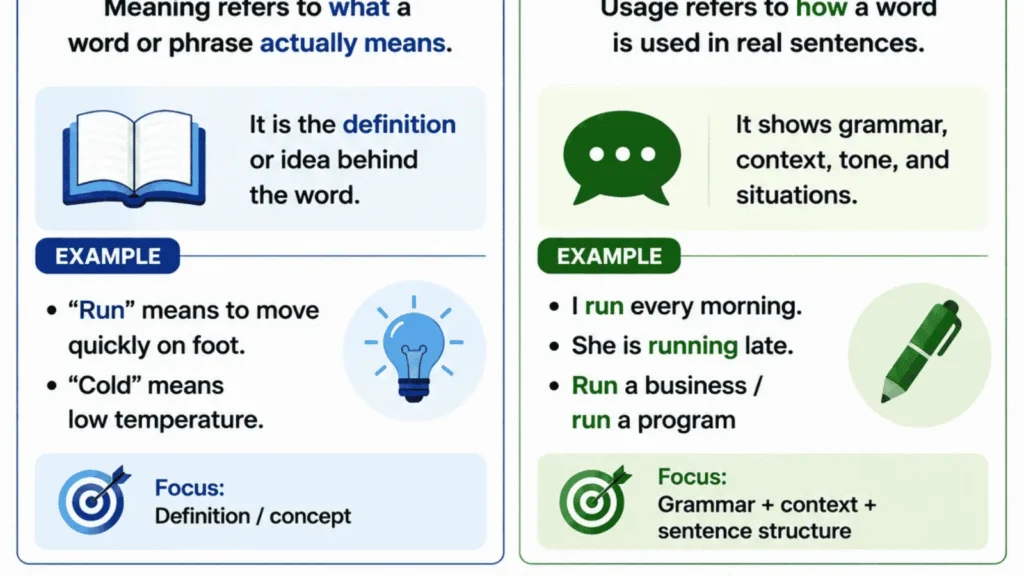
Too Bad
Too bad is a fixed phrase used to express regret, disappointment, or sympathy.
Examples:
- That’s too bad you missed the meeting.
- It’s too bad the event got canceled.
- Too bad we didn’t leave earlier.
It can also sound slightly dismissive depending on tone:
- Too bad, the decision is final.
To Bad
To bad is not a standard phrase in English for expressing meaning.
It only appears when words are not functioning as one unit:
- We had to respond to bad reviews.
- She adjusted to bad conditions.
- They reacted to bad news.
Here, “to” connects parts of the sentence, and “bad” is just describing a noun.
Tone, Context, and Real Usage
Too bad changes tone depending on context:
- Sympathetic: “That’s too bad, I hope it works out.”
- Neutral: “Too bad we missed it.”
- Dismissive: “Too bad, that’s the rule.”
This flexibility is why the phrase is common in both casual and professional speech.
To bad does not carry tone as a phrase because it is not used as a single expression.
Which One Should You Use?
In real writing, choose too bad in almost every case where you are reacting to something unfortunate.
Use it in:
- Conversations
- Messages
- Emails
- Casual writing
Only use “to” and “bad” separately when they belong to different parts of a sentence.
When It Sounds Wrong
These are clear errors:
- ❌ It’s to bad you failed.
- ✔ It’s too bad you failed.
- ❌ That’s to bad news.
- ✔ That’s too bad news → (better: That’s too bad about the news)
But these are correct:
- ✔ We had to adapt to bad weather.
- ✔ She reacted to bad news quickly.
Common Mistakes
- Mistake 1: Sound-based spelling
- Wrong: To bad we lost.
- Correct: Too bad we lost.
- Mistake 2: Overcorrecting sentences
- Wrong: We adjusted too bad conditions.
- Correct: We adjusted to bad conditions.
- Mistake 3: Missing grammar separation
- Wrong: Reacted too bad situation.
- Correct: Reacted to bad situation.
Everyday Examples
Too bad (correct phrase):
- Too bad you couldn’t join us.
- That’s too bad for the team.
- It’s too bad the timing didn’t work.
- Too bad we ran out of time.
To + bad (separate grammar use):
- We had to respond to bad feedback.
- She adapted to bad weather quickly.
- They reacted to bad decisions.
Dictionary-Style Word Details
Verb
- Too bad: Not used as a verb.
- To bad: Not used as a verb phrase.
Noun
- Too bad: Used as a short expression meaning misfortune.
- To bad: Not used as a noun phrase.
Synonyms
- Too bad: unfortunate, what a shame, regrettable, that’s unfortunate
- To bad: not applicable as a phrase
Example Sentences
- Too bad you missed the opportunity.
- It’s too bad the plan didn’t work.
- That’s too bad, but we move on.
- We responded to bad conditions.
- She reacted to bad timing.
- They adapted to bad circumstances.
Word History
Too bad comes from standard English grammar where “too” intensifies adjectives.
To bad is not a historical phrase; it appears due to spelling confusion between two similar-sounding words.
Phrases Containing
- Too bad: that’s too bad, it’s too bad, too bad for you, too bad to ignore
- To bad: only appears in structures like “respond to bad news,” not as a phrase itself
FAQs
Is “too bad” or “to bad” correct?
Too bad is the correct phrase when you mean something is unfortunate, disappointing, or regrettable. To bad is usually incorrect in standard English.
Example:
Too bad you missed the meeting.
What does “too bad” mean?
Too bad means “unfortunate,” “sad,” or “that is disappointing.” People use it when reacting to bad news or when saying something cannot be changed.
Example:
It’s too bad the concert was canceled.
Why is “to bad” wrong?
To is a preposition, while too means “also” or “excessively.” In the phrase too bad, the word too means “very” or “extremely.” That is why to bad does not work in this common expression.
Incorrect:
It’s to bad you cannot come.
Correct:
It’s too bad yo cannot come.
Can “to bad” ever be correct?
Yes, but only in rare sentence structures where to belongs to another phrase and bad describes something after it.
Example:
The story went from good to bad.
In normal everyday use, when you mean “unfortunate,” always write too bad.
Is “too bad” rude?
Too bad can sound rude if it is used dismissively.
Rude tone:
You lost your ticket? Too bad.
Polite tone:
That’s too bad. I hope things get better soon.
The meaning depends on tone and context.
What is another way to say “too bad”?
You can use:
That’s unfortunate.
That’s disappointing.
I’m sorry to hear that.
What a shame.
That’s a pity.
Example:
Too bad the trip was canceled.
What a shame the trip was canceled.
Is it “too bad” or “too badly”?
Use too bad when describing a situation. Use too badly when describing how an action is done.
Examples:
It’s too bad we missed the train.
He played too badly to win the match.
Is “that’s too bad” grammatically correct?
Yes. That’s too bad is a correct and common sentence. It means “that is unfortunate” or “I’m sorry that happened.”
Example:
You failed the test? That’s too bad.
What is the difference between “too bad” and “so bad”?
Too bad often means “unfortunate” or “excessively bad.” So bad means “very bad” and usually describes quality, condition, or intensity.
Examples:
It’s too bad she left early.
The movie was so bad that we stopped watching.
What is the final rule for “too bad” vs “to bad”?
Use too bad when you mean “unfortunate,” “disappointing,” or “very bad.” Avoid to bad unless the sentence clearly uses to as part of another structure, such as “from good to bad.”
Conclusion
The correct expression is always too bad when you mean something is unfortunate or disappointing.
To bad is not a phrase and only appears when “to” and “bad” belong to separate parts of a sentence.
A simple rule helps:
If you can replace it with “unfortunately” or “a shame,” use too bad.
Too bad is the correct phrase when you mean something is unfortunate, disappointing, or regrettable. To bad is usually incorrect in standard English.
Example:
Too bad you missed the meeting.
Too bad means “unfortunate,” “sad,” or “that is disappointing.” People use it when reacting to bad news or when saying something cannot be changed.
Example:
It’s too bad the concert was canceled.
To is a preposition, while too means “also” or “excessively.” In the phrase too bad, the word too means “very” or “extremely.” That is why to bad does not work in this common expression.
Incorrect:
It’s to bad you cannot come.
Correct:
It’s too bad yo cannot come.
Yes, but only in rare sentence structures where to belongs to another phrase and bad describes something after it.
Example:
The story went from good to bad.
In normal everyday use, when you mean “unfortunate,” always write too bad.
Too bad can sound rude if it is used dismissively.
Rude tone:
You lost your ticket? Too bad.
Polite tone:
That’s too bad. I hope things get better soon.
The meaning depends on tone and context.
You can use:
That’s unfortunate.
That’s disappointing.
I’m sorry to hear that.
What a shame.
That’s a pity.
Example:
Too bad the trip was canceled.
What a shame the trip was canceled.
Use too bad when describing a situation. Use too badly when describing how an action is done.
Examples:
It’s too bad we missed the train.
He played too badly to win the match.
Yes. That’s too bad is a correct and common sentence. It means “that is unfortunate” or “I’m sorry that happened.”
Example:
You failed the test? That’s too bad.
Too bad often means “unfortunate” or “excessively bad.” So bad means “very bad” and usually describes quality, condition, or intensity.
Examples:
It’s too bad she left early.
The movie was so bad that we stopped watching.
Use too bad when you mean “unfortunate,” “disappointing,” or “very bad.” Avoid to bad unless the sentence clearly uses to as part of another structure, such as “from good to bad.”