
The difference between organizing vs organising is not meaning, it is spelling style. Both words describe the same action: arranging, planning, or putting things in order. The only difference is which English system you follow.
Organizing is standard in American English. Organising is common in British English and many regions that follow British spelling patterns. The meaning stays identical in every case.
The real decision is not about correctness in meaning, but about matching your audience and staying consistent throughout your writing.
Quick Answer
Both spellings are correct depending on the English system you use.
Use organizing for American English.
Use organising for British-style English.
They mean the same thing: arranging, planning, or structuring tasks, people, or information.
Why People Confuse Them

Confusion happens because both spellings look valid and appear in real writing across the world. There is no change in pronunciation or meaning, which makes the difference harder to notice.
The base forms explain the pattern:
organize → organizing
organise → organising
The only difference is the letter before -ing: z or s.
Global writing adds to the confusion. Readers often encounter both forms online, especially in international business, education, and media content.
Another factor is style variation within British English itself. Some systems prefer organise, while others allow organize, which makes both forms appear in British-related writing.
Key Differences At A Glance

| Context | Best Choice | Reason |
|---|---|---|
| American English writing | organizing | Standard US spelling system |
| British English writing | organising | Common UK spelling system |
| Canadian writing (general use) | organizing | Often preferred in this word family |
| Australian/New Zealand writing | organising | Follows British pattern |
| Academic or formal US documents | organizing | Expected consistency in US style |
| Global audience content | Choose one style | Must remain consistent throughout |
Core rule: the spelling depends on audience, not meaning.
Meaning and Usage Difference
Both words describe the same action: arranging or structuring something into order.
You can organize/organise physical items, plans, events, ideas, or systems. The function does not change with spelling.
American usage:
She is organizing the project timeline.
They are organizing a community event.
I am organizing my notes before class.
British-style usage:
She is organising the project timeline.
They are organising a community event.
I am organising my notes before class.
Both forms work as:
- Present participle: “She is organizing/organising…”
- Gerund: “Organizing/Organising takes time…”
There is no meaning difference, only spelling convention.
Tone, Context, and Formality
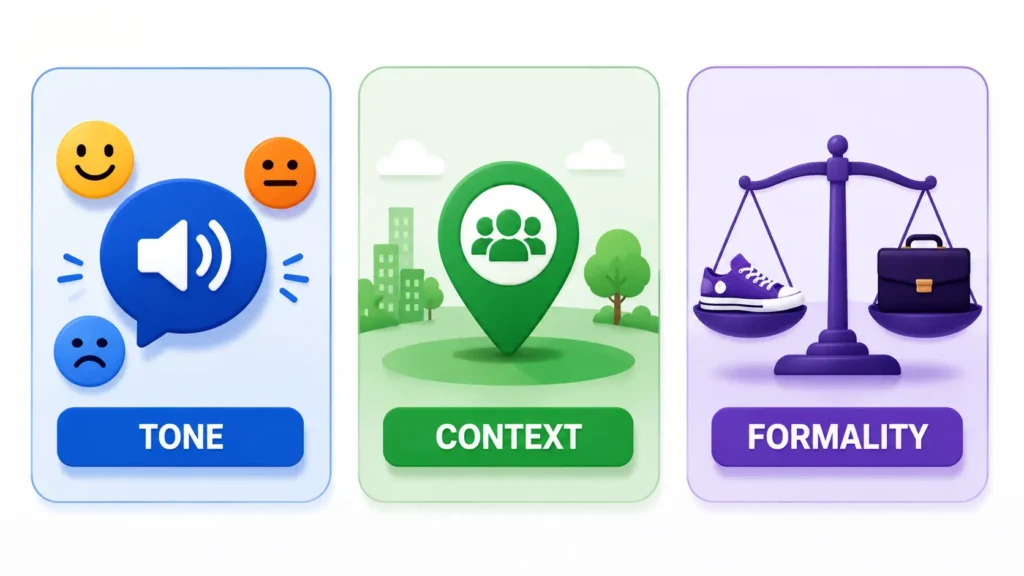
Neither spelling changes tone or formality. Both are neutral and work in professional, academic, and casual writing.
What matters is alignment with your audience.
American English environments expect organizing, including resumes, emails, reports, and business communication.
British-style environments expect organising, especially in UK-based education, media, and documentation.
In global content, inconsistency is the real issue, not the spelling choice itself. Mixing both forms in one document reduces clarity and professionalism.
Which One Should You Use?
Use a simple decision path:
If your reader is American → use organizing
If your reader is British or follows UK spelling → use organising
If your audience is international:
- Pick one system
- Use it everywhere
- Do not switch between sections
Examples:
US writing:
She is organizing a conference agenda.
UK writing:
She is organising a conference agenda.
Both are correct within their systems.
When One Choice Feels Wrong
A spelling feels “wrong” when it does not match reader expectations.
In US writing, organising can look inconsistent or foreign.
In UK writing, organizing can feel American unless intentionally used.
Incorrect (US context):
We are organising the training session.
Correct (US context):
We are organizing the training session.
Incorrect (UK context):
We are organizing the training session.
Correct (UK context):
We are organising the training session.
The meaning remains unchanged; only reader expectation changes.
Common Mistakes (and Quick Fixes)
Mixing both spellings in the same document is the most common error.
Wrong:
We are organizing the event and also organising volunteers.
Fix:
Choose one spelling system and apply it everywhere.
Another mistake is inconsistent word families:
organize / organising
organization / organisation
organizer / organiser
Fix:
Keep the full word family aligned with your chosen spelling system.
Wrong audience targeting is another issue:
A US resume using “organising” may feel inconsistent with American formatting expectations.
Fix:
Match spelling to the audience before writing.
Everyday Examples
US English:
I am organizing my schedule for next week.
She is organizing a school fundraiser.
They are organizing files by category.
We are organizing a team meeting.
UK-style English:
I am organising my schedule for next week.
She is organising a school fundraiser.
They are organising files by category.
We are organising a team meeting.
Both sets describe identical actions with identical meaning.
Dictionary-Style Word Details
Verb
Organizing: Present participle of organize used in American English.
Organising: Present participle of organise used in British-style English.
Example:
She is organizing/organising the meeting schedule.
Noun
Organizing: Gerund form used to describe the act of arranging.
Organising: Same function in British spelling.
Example:
Organizing/Organising takes careful planning.
Synonyms
Organizing: arranging, planning, structuring, coordinating, sorting, ordering
Organising: same equivalents in British spelling
Example Sentences
Organizing:
He is organizing the documents.
She enjoys organizing events.
Organising:
He is organising the documents.
She enjoys organising events.
Word History
Both forms come from the same root verb. The spelling difference developed through regional English conventions. Meaning stayed the same across all forms.
Phrases Containing
Organizing: organizing a meeting, organizing events, organizing files, organizing ideas
Organising: organising a meeting, organising events, organising files, organising ideas
FAQs
What is the difference between organizing and organising?
The spelling is the only difference between organizing and organising. Organizing follows American English, while organising follows British English. Both words mean arranging, planning, or putting something in order.
Is organizing or organising correct?
You can use both spellings correctly. Use organizing when you follow American English. Use organising when you follow British English.
Do organizing and organising mean the same thing?
Yes, both words mean the same thing. They describe the action of arranging, planning, or structuring tasks, people, or information.
Which spelling should I use in the United States?
In the United States, you should use organizing. American English prefers this spelling in writing, education, business, and formal communication.
Which spelling should I use in the UK?
In the UK, people commonly use organising. British English prefers this spelling pattern, although some variations still appear in usage.
Can I use organizing and organising in the same article?
You should avoid mixing both spellings in one article. Choose one style and use it consistently to keep your writing clear and professional.
Is organising wrong in American English?
American English does not prefer organising, but it still understands it. However, writers use organizing to match US spelling standards.
Is organizing wrong in British English?
British English does not usually prefer organizing, but it still recognizes it. Writers use organising to match UK spelling conventions.
What is the base word of organizing?
The base word is organize. In American English, it follows the pattern: organize → organizing → organized → organization.
What is the base word of organising?
The base word is organise. In British English, it follows the pattern: organise → organising → organised → organisation.
Should I write organizing or organising for a global audience?
You should choose one spelling system for a global audience and stay consistent. Many writers choose organizing for US-focused content and organising for UK-focused content.
What are examples of organizing and organising in sentences?
American English:
She organizes the meeting notes.
British English:
She organises the meeting notes.
Both sentences express the same idea and only differ in spelling.
Conclusion
For American writing, use organizing. For British-style writing, use organising. In global writing, the most important rule is consistency.
The clearest approach is simple: match your audience, choose one spelling system, and stay consistent throughout your content.