

Many writers mix up accept and except because they sound alike, but their meanings are very different. Accept means to take, agree, or approve something. Except means “not including” or “leaving out.”
Understanding the difference ensures your writing is clear, professional, and precise in American English.
Quick Answer
- Accept → Verb: to receive, approve, or agree to something.
- Except → Preposition/Conjunction: to exclude or leave out.
Tip: Use accept when taking or agreeing. Use except when excluding something.
Why People Confuse Them

- They sound similar.
- Their spelling is similar.
- Many rely on pronunciation instead of meaning.
The key difference lies in function: accept is always an action, while except indicates exclusion.
Key Differences At A Glance

| Context | Correct Choice | Why |
|---|---|---|
| Receiving or agreeing | Accept | Verb for taking, agreeing, or approving |
| Excluding something | Except | Preposition/conjunction for leaving out |
| Everyday speech | Accept | Commonly used as a verb |
| Lists, rules, or conditions | Except | Marks exclusions |
Meaning and Usage

Accept
Accept is a verb. It means to receive, approve, or agree to something.
Examples:
- She accepted the invitation to the conference.
- He accepted the job offer enthusiastically.
- They accept the findings of the research as valid.
- We accept challenges as part of the process.
Forms: accept, accepted, accepting.
Except
Except is primarily a preposition or conjunction meaning “not including.”
Examples:
- Everyone passed the test except John.
- The store is open every day except Sunday.
- I would go, except I have another commitment.
Rare Verb Use: In formal/legal contexts, it can mean “to leave out,” but this is uncommon in everyday use.
Tone, Context, and Formality
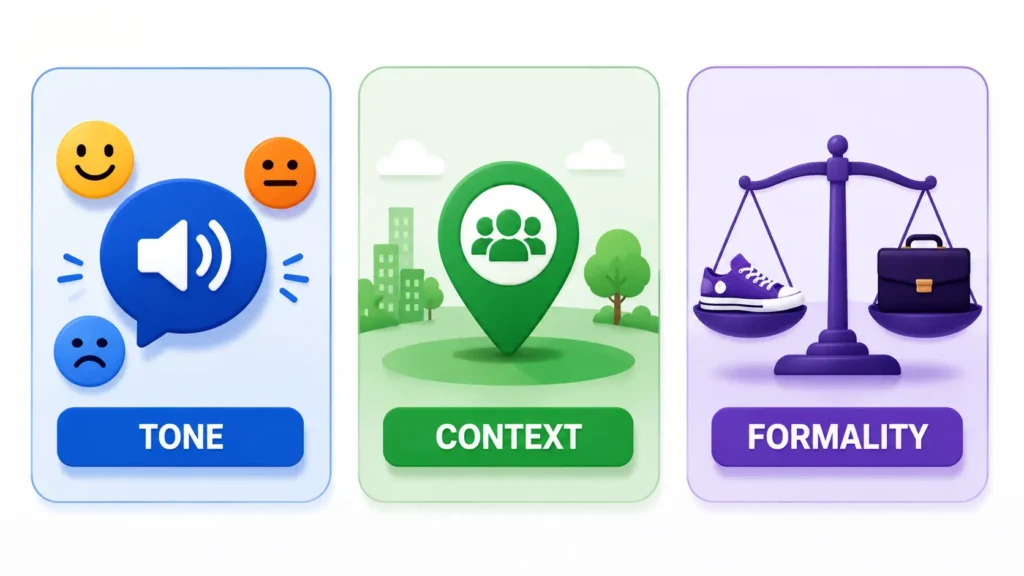
- Accept fits casual, academic, and professional contexts when taking or agreeing to something.
- Except fits formal, casual, and written contexts when excluding something.
- Except is rarely a verb; its preposition/conjunction use dominates in modern English.
Which Word Should You Use?
- Identify meaning:
- Receiving or agreeing → Accept
- Excluding or leaving out → Except
- Check role in sentence:
- Verb → Accept
- Preposition/Conjunction → Except
- Substitution test:
- Replace with “take” or “agree” → Accept fits.
- Replace with “leave out” → Except fits.
Memory Tip:
- Accept → Agreement / Admittance
- Except → Excluding / Excluded
Common Mistakes and Fixes
| Error Type | Incorrect | Correct |
|---|---|---|
| Verb vs exclusion | I will except the gift. | I will accept the gift. |
| Dropped meaning | Everyone is here accept Mary. | Everyone is here except Mary. |
| Confusion with similar words | Accept vs Expect | Do not confuse accept with expect. |
Everyday Examples
Accept:
- We accept credit cards at our store.
- She accepted all the conditions of the offer.
- I cannot accept this outcome without review.
- They accepted the results gracefully.
Except:
- The shop is open daily except Monday.
- Everyone attended except two students.
- I like all fruits except durian.
- The rules apply to everyone except new members.
Dictionary-Style Word Details
Verb
- Accept: Always a verb meaning to receive, approve, or agree.
- Except: Rarely a verb; mostly a preposition or conjunction.
Noun
- Accept: Noun form is acceptance (the act of accepting).
- Except: Noun form is exception (something excluded).
Synonyms
- Accept: receive, approve, agree to
- Except: excluding, aside from, apart from
Example Sentences
- Accept: We accept all valid applications.
- Except: I’ll attend every session except the last one.
Word History
- Accept: From Latin accipere (“to take or receive”).
- Except: From Latin excipere (“to leave out/exclude”).
Phrases
- Accept: accept responsibility, accept terms, accept offer
- Except: except for, everyone except, nothing except
FAQ
What is the difference between accept and except?
Use accept to receive, agree, or approve. Use except to exclude or leave out.
When should I use accept?
Use accept when taking, receiving, or agreeing to something in writing or speech.
When should I use except?
Use except when leaving something out or excluding it.
How can I remember the difference?
Accept → Agreement / Admittance
Except → Excluding / Excluded
Can accept be a noun?
Yes, as acceptance, meaning the act of accepting.
Can except be a verb?
Rarely, mostly in formal/legal contexts. Commonly a preposition/conjunction.
Conclusion
- Use accept for receiving, agreeing, or approving.
- Use except for exclusions or leaving something out.
- Apply memory tricks and substitution tests to ensure correct usage.
- Mastering these words improves clarity, professionalism, and confidence in American English writing.
What is the difference between accept and except?
Use accept to receive, agree, or approve. Use except to exclude or leave out.
When should I use accept?
Use accept when taking, receiving, or agreeing to something in writing or speech.
When should I use except?
Use except when leaving something out or excluding it.
How can I remember the difference?
Accept → Agreement / Admittance
Except → Excluding / Excluded
Can accept be a noun?
Yes, as acceptance, meaning the act of accepting.Yes, as acceptance, meaning the act of accepting.
Can except be a verb?
Rarely, mostly in formal/legal contexts. Commonly a preposition/conjunction.