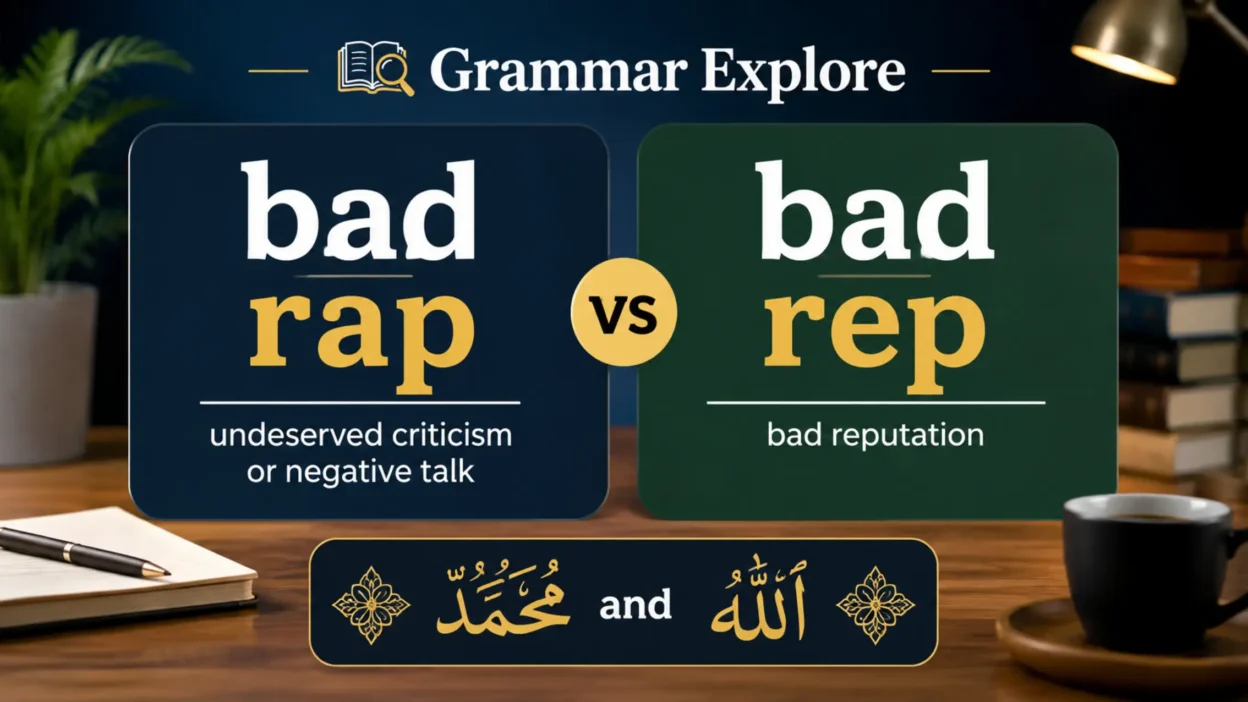
If you are wondering whether to say bad rap or bad rep, the standard phrase depends on the meaning you want.
Bad rap is the traditional and widely accepted expression meaning an unfairly negative reputation, criticism, or blame.
Bad rep is an informal shortening of bad reputation and is also commonly used, especially in casual speech.
The simple rule:
✅ Bad rap = unfair criticism or undeserved negative reputation
✅ Bad rep = short for bad reputation
⚠️ Both are used, but they come from different ideas
Examples:
- The company got a bad rap because of one mistake.
- The restaurant has a bad rep for slow service.
Quick Answer: Bad Rap Or Bad Rep?
Both phrases can be correct, but they are not exactly the same.
| Phrase | Meaning | Example |
|---|---|---|
| Bad rap | Unfair criticism or negative reputation | The product got a bad rap online. |
| Bad rep | Short for bad reputation | That neighborhood has a bad rep. |
Use bad rap when you mean someone or something has been judged unfairly.
Use bad rep when you simply mean a poor reputation.
What Is a “Bad Wrap”?
A bad rap means an unfairly negative opinion or false criticism about someone or something. If a person or product gets a bad rap, it means they are judged more harshly than they deserve. The phrase has nothing to do with music or wrapping.
Is It “Bad Rap” or “Bad Rep”?
Bad rap is the correct and standard expression. Bad rep is an informal shortening of bad reputation, but it has a different meaning. A bad rap is an unfair reputation, while a bad rep usually means someone actually has a poor reputation.
Why Do People Say “Bad Rap” and Not “Bad Rep”?
People say bad rap because it is the original English idiom meaning unfair blame or criticism. Although bad rep sounds similar, it refers to having a bad reputation, which may or may not be deserved. The two expressions have different meanings and should not be used interchangeably.
What’s the Difference Between a Bad Rap and a Bad Rep?
A bad rap means someone receives unfair criticism or blame. A bad rep means someone has a bad reputation, whether deserved or not. In other words, a bad rap focuses on unfair judgment, while a bad rep describes a person’s overall reputation.
Is “Bad Wrap” Ever Correct?
Only in a literal sense. Bad wrap can describe something that is poorly wrapped, such as a damaged package or a sandwich wrapped badly. It is not the correct phrase when talking about criticism or reputation. In that context, always use bad rap.
Why People Confuse Bad Rap And Bad Rep
The confusion happens because both phrases describe a negative public image and sound similar.
Many speakers also use rep as a shortened form of reputation, making it seem like it should replace rap in every situation.
However, bad rap is a long-established expression, while bad rep is a casual abbreviation.
What Does Bad Rap Mean?
Bad rap means an unfairly negative opinion, criticism, or reputation.
Examples:
- The city gets a bad rap, but it has many great areas.
- The movie received a bad rap from critics.
- He got a bad rap for a mistake he did not make.
The phrase often suggests that the negative opinion is exaggerated or undeserved.
What Does Bad Rep Mean?
Bad rep means a bad reputation.
It is an informal shortened form of “bad reputation.”
Examples:
- The company has a bad rep for poor customer service.
- That player has a bad rep for arguing with officials.
- The restaurant earned a bad rep after several complaints.
Unlike bad rap, it does not always suggest unfair treatment.
Meaning And Usage Difference
The main difference is fairness.
| Context | Best Choice | Why |
|---|---|---|
| Unfair criticism | Bad rap | Suggests undeserved blame |
| General negative reputation | Bad rep | Short form of bad reputation |
| Casual conversation | Either may work | Depends on meaning |
| Formal writing | Negative reputation | Clearer choice |
Examples:
- The actor got a bad rap after one bad performance.
- The company has a bad rep among customers.
Tone, Context, And Formality
Bad rap is common in everyday speech and writing.
Examples:
- That neighborhood gets a bad rap.
- The brand got a bad rap online.
Bad rep is more casual and conversational.
Examples:
- He has a bad rep at work.
- The store has a bad rep.
For formal writing, phrases like negative reputation or poor reputation may be clearer.
Which One Should You Use?
Use bad rap when you mean:
- Unfair blame
- Misjudgment
- Negative criticism
Example:
- The company got a bad rap because of a rumor.
Use bad rep when you mean:
- A generally poor reputation
Example:
- The business has a bad rep for late deliveries.
Memory trick:
Rap = criticism
Rep = reputation
When One Choice Sounds Wrong
Incorrect meaning:
The product got a bad rep because people misunderstood it.
Better:
The product got a bad rap because people misunderstood it.
Incorrect meaning:
The neighborhood has a bad rap for high prices.
Possible, but if you only mean reputation:
The neighborhood has a bad rep for high prices.
Common Mistakes And Quick Fixes
Mistake 1: Using Bad Rep For Unfair Blame
If the point is that criticism is unfair, use:
✅ Bad rap
Example:
- The actor got a bad rap after a false rumor.
Mistake 2: Using Bad Rap For A Simple Reputation Problem
If you mean a general reputation:
✅ Bad rep
Example:
- The company has a bad rep for delays.
Mistake 3: Using Them In Formal Writing
For professional documents, consider:
- Poor reputation
- Negative reputation
- Unfavorable public image
Everyday Examples
Bad Rap Examples
- The neighborhood gets a bad rap.
- He got a bad rap for something he did not do.
- The product has a better quality than its bad rap suggests.
Bad Rep Examples
- The restaurant has a bad rep for slow service.
- The company developed a bad rep online.
- That brand has a bad rep among customers.
Dictionary-Style Word Details
Verb
Bad rap: Not a verb phrase in this meaning.
Bad rep: Not a verb phrase.
Noun
Bad rap: A noun phrase meaning unfair criticism or blame.
Example:
- The movie received a bad rap.
Bad rep: A noun phrase meaning bad reputation.
Example:
- The company has a bad rep.
Synonyms
Bad Rap
Closest plain alternatives:
- Unfair criticism
- Unfair blame
- Negative judgment
Bad Rep
Closest plain alternatives:
- Poor reputation
- Negative reputation
- Bad image
Example Sentences
Bad Rap
- The product got a bad rap because of outdated reviews.
- She received a bad rap for a misunderstanding.
Bad Rep
- The company has a bad rep for customer service.
- The restaurant developed a bad rep over time.
Word History
Bad rap developed from the idea of a “rap” as criticism or a negative judgment. The phrase became associated with unfair blame or an undeserved negative reputation.
Bad rep developed as an informal shortening of “bad reputation.”
Phrases Containing
Bad Rap
Common phrases:
- get a bad rap
- give someone a bad rap
- deserve a bad rap
Examples:
- The city gets a bad rap.
- The product deserves a better reputation.
Bad Rep
Common phrases:
- have a bad rep
- earn a bad rep
- develop a bad rep
Examples:
- The company earned a bad rep.
- The restaurant has a bad rep.
Frequently Asked Questions
Is it bad rap or bad rep?
It can, especially when referring to an undeserved negative reputation.
Does bad rap mean bad reputation?
It can, especially when referring to an undeserved negative reputation.
Is bad rep informal?
Yes. It is a casual shortened form of “bad reputation.”
Which phrase is better for formal writing?
Use “negative reputation” or “poor reputation” for formal writing.
Why do people say bad rap?
Because “rap” developed a meaning connected with criticism and blame.
Conclusion
The difference between bad rap vs. bad rep is small but useful.
Use bad rap when someone or something is unfairly criticized.
Use bad rep when you simply mean a negative reputation.
For everyday speech, both may appear, but the meaning decides which one fits best.