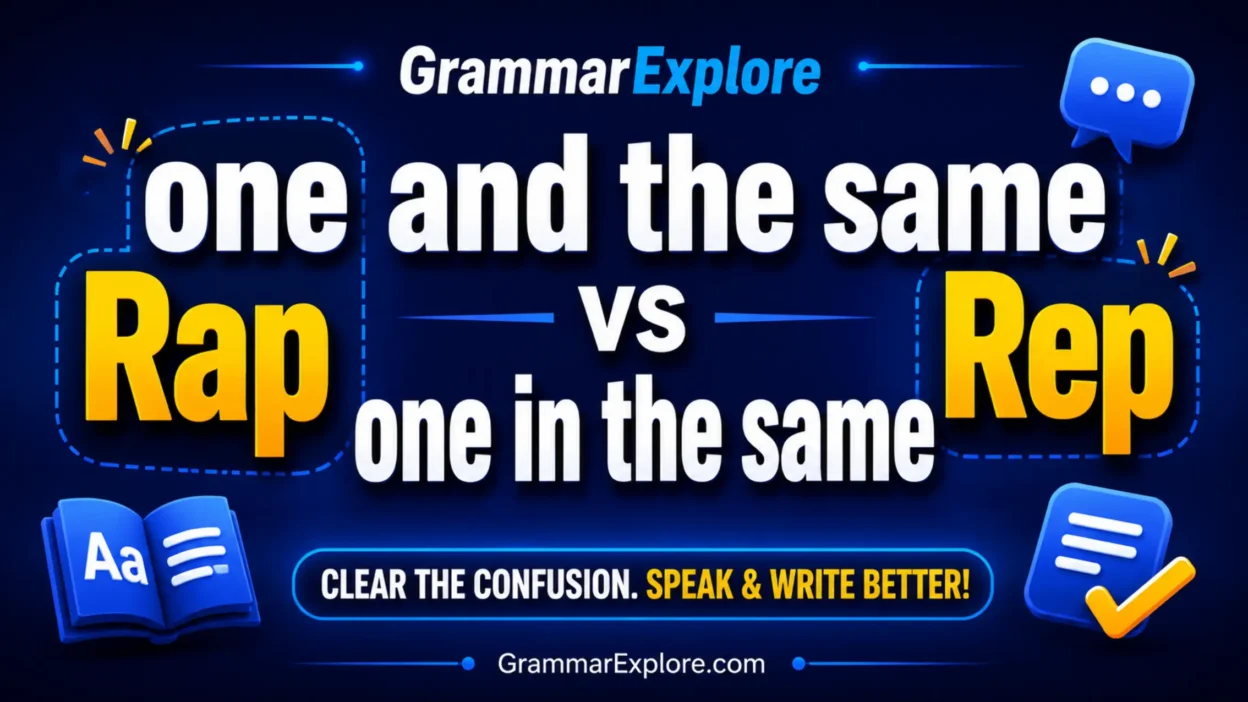
If you are choosing between one and the same and one in the same, the standard and correct phrase is one and the same.
One and the same means that two things or people are exactly identical or refer to the same thing.
One in the same is a common mistake caused by the similar sound of the phrase, but it is not the standard expression.
The simple rule:
✅ One and the same = correct phrase
❌ One in the same = incorrect variation
Examples:
- The person who called and the person who emailed were one and the same.
- These two products are actually one and the same.
Quick Answer: One And The Same Or One In The Same?
Use:
✅ One and the same
Do not use:
❌ One in the same
| Phrase | Meaning | Example |
|---|---|---|
| One and the same | Exactly the same person or thing | The two names refer to one and the same person. |
| One in the same | Not the standard phrase | Avoid this form. |
Is It “One and the Same” or “One in the Same”?
One and the same is the correct expression. It means that two people or things are actually identical or refer to the exact same person or thing. One in the same is a common mistake and is not considered standard English.
“One and the Same” or “One in the Same”?
The correct phrase is one and the same. It is the standard expression used in American and British English to emphasize that there is no difference between two things. One in the same is an incorrect variation that likely developed because the phrase sounds similar when spoken.
Which Is Correct, “One and the Same” or “One in the Same”?
One and the same is the correct and grammatically accepted phrase. Use it whenever you want to stress that two names, ideas, or people refer to exactly the same thing. Avoid one in the same in formal or professional writing.
Which Is Correct: One in the Same or One and the Same?
The correct expression is one and the same. Dictionaries and style guides recognize one and the same as the standard idiom. One in the same is widely considered a mistaken version and should generally be avoided.
What’s the Difference Between “One and the Same” and “One in the Same”?
The difference is that one and the same is the correct idiom, while one in the same is an incorrect variation. Both are often intended to express the same idea, but only one and the same is accepted in standard English.
What Does the Saying “One and the Same” Mean?
One and the same means that two or more names, descriptions, or references point to exactly the same person, thing, or idea. For example, The author and the editor turned out to be one and the same person.
Is “One in the Same” Grammatically Correct?
No. One in the same is not grammatically correct in standard English. The accepted phrase is one and the same, which has been used for centuries in both formal and informal writing. If you want to be grammatically correct, always use one and the same.
Why People Confuse One And The Same And One In The Same
The confusion comes from pronunciation.
When spoken quickly, “and the” can sound similar to “in the,” causing some speakers to write the wrong version.
However, the phrase is built with and because it connects two descriptions that refer to the same thing.
Example:
- The winner and the owner were one and the same.
The two identities are joined together as one.
What Does One And The Same Mean?
One and the same means two names, descriptions, or ideas refer to exactly the same person or thing.
Examples:
- The author and the speaker were one and the same.
- The problem and the solution were one and the same.
- The two accounts belonged to one and the same person.
It emphasizes that there is no difference between the two things being compared.
What Does One In The Same Mean?
One in the same is not the standard form of the expression.
Although many people understand what it means, it is considered a mistaken version of one and the same.
Incorrect:
- The manager and the owner are one in the same.
Correct:
- The manager and the owner are one and the same.
Meaning And Usage Difference
There is no real meaning difference because only one form is standard.
| Context | Best Choice | Why |
|---|---|---|
| Formal writing | One and the same | Correct expression |
| Professional communication | One and the same | Clear and accepted |
| Everyday speech | One and the same | Standard phrase |
| One in the same | Avoid | Common mistake |
Tone, Context, And Formality
One and the same works in casual and formal English.
Examples:
- The two people are one and the same.
- The account holder and the customer are one and the same.
One in the same may appear in informal writing or online conversations, but it is not recommended for polished English.
Which One Should You Use?
Always choose:
✅ One and the same
Use it when you mean:
- Exactly identical
- The same person
- The same thing
Examples:
- The suspect and the thief were one and the same.
- Her online identity and real identity were one and the same.
Memory trick:
The phrase compares two things and joins them with and:
one + and + the same
When One Choice Sounds Wrong
Incorrect:
The two companies are one in the same.
Correct:
The two companies are one and the same.
Incorrect:
The name and the account owner are one in the same.
Correct:
The name and the account owner are one and the same.
Common Mistakes And Quick Fixes
Mistake 1: Hearing The Phrase Incorrectly
Incorrect:
- one in the same
Correct:
- one and the same
Mistake 2: Changing A Fixed Expression
Expressions usually keep their original wording.
Correct:
- They are one and the same.
Mistake 3: Using It When Things Are Only Similar
“One and the same” means identical, not just alike.
Incorrect:
- The two cars are one and the same. (if they are only similar)
Correct:
- The two cars are very similar.
Everyday Examples
Personal Examples
- My online profile and my real account are one and the same.
- The caller and the person in the video were one and the same.
Business Examples
- The brand name and company name are one and the same.
- The owner and founder are one and the same person.
General Examples
- The two ideas may look different, but they are one and the same.
- The two documents describe one and the same event.
Dictionary-Style Word Details
Verb
One and the same: Not a verb. It is an idiomatic phrase.
One in the same: Not a verb.
Noun
One and the same: Not a noun. It functions as a descriptive phrase.
One in the same: Not a standard phrase.
Synonyms
One And The Same
Closest plain alternatives:
- Identical
- Exactly the same
- The same thing
- The very same
One In The Same
No standard synonyms apply because it is not the accepted form.
Example Sentences
One And The Same
- The two accounts were one and the same.
- The speaker and writer were one and the same person.
- Those two names refer to one and the same place.
One In The Same
Not recommended:
- The two ideas are one in the same.
Correct:
- The two ideas are one and the same.
Word History
One and the same is a long-established English expression used to show that two references identify the same person or thing.
One in the same developed as a spoken variation, likely because the words sound similar when said quickly.
Phrases Containing
One And The Same
Common uses:
- one and the same person
- one and the same thing
- one and the same reason
Examples:
- The buyer and seller were one and the same person.
- The cause and effect were one and the same.
One In The Same
No standard phrases use this form.
Frequently Asked Questions
Is it one and the same or one in the same?
The correct phrase is one and the same.
What does one and the same mean?
It means two things or people are exactly identical.
Is one in the same ever correct?
It is not considered the standard form in edited English.
Can one and the same be used for people?
Yes. It can describe two names, roles, or identities belonging to the same person.
Can one and the same mean similar?
No. It means exactly the same, not just similar.
Conclusion
The difference between one and the same vs. one in the same is simple:
Use:
✅ One and the same
Avoid:
❌ One in the same
When two names, identities, or things refer to exactly the same thing, the correct phrase is one and the same.