
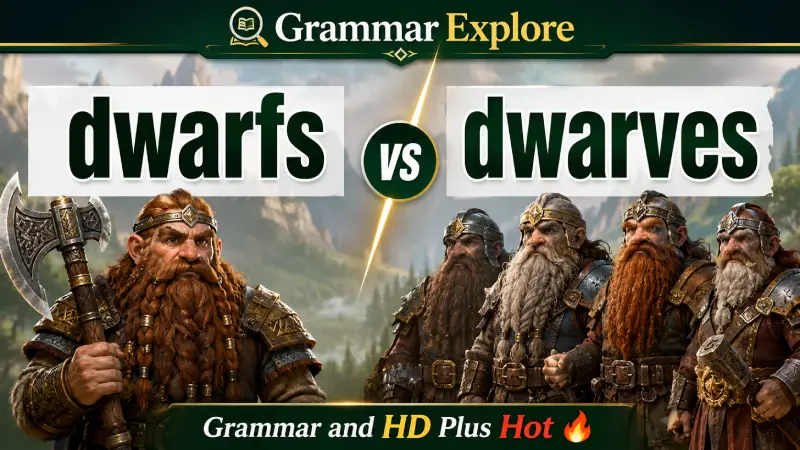
If you are wondering whether to use dwarfs or dwarves, both forms are correct, but they are used in different contexts.
Dwarfs is the standard plural form of dwarf in many modern uses, especially when referring to people with dwarfism, animals, plants, and astronomy.
Dwarves is a traditional plural form that is strongly associated with fantasy stories, especially fictional small humanoid creatures such as those in folklore and fantasy literature.
The simple rule:
Dwarfs = modern general plural, especially scientific or real-world uses
Dwarves = traditional or fantasy-related plural
Examples:
- Scientists study dwarfs in astronomy.
- The story features seven dwarves.
- Some people with dwarfism prefer the term dwarfs in certain contexts.
Quick Answer: Dwarfs or Dwarves?
Both spellings are correct.
| Word | Best Use | Meaning |
|---|---|---|
| Dwarfs | Modern general use | More common in scientific and real-world contexts |
| Dwarves | Fantasy and traditional use | Often refers to fictional beings |
Examples:
- White dwarfs are studied by astronomers.
- The fantasy novel includes magical dwarves.
Why People Confuse Dwarfs And Dwarves
The confusion comes from English plural rules and changes in usage over time.
Many English nouns ending in f change to ves in the plural.
Examples:
- wolf → wolves
- leaf → leaves
- knife → knives
Because of this pattern, many people expect:
- dwarf → dwarves
However, dwarf developed with two accepted plural forms.
The choice often depends on the context rather than simple spelling rules.
What Does Dwarfs Mean?
Dwarfs is a plural noun and can also be a verb form.
Dwarfs As A Noun
As a noun, dwarfs means more than one dwarf.
It is commonly used in:
- Astronomy
- Biology
- General references to people with dwarfism
Examples:
- Astronomers discovered several white dwarfs.
- The zoo cares for different types of dwarf animals.
- The article discusses people with dwarfism.
Dwarfs As A Verb
Dwarfs can also be the third-person singular form of the verb dwarf, meaning to make something seem much smaller by comparison.
Examples:
- The new building dwarfs the older houses.
- The mountain dwarfs everything around it.
What Does Dwarves Mean?
Dwarves is a plural noun commonly used for fictional or mythological dwarf-like beings.
Examples:
- The fantasy movie includes forest dwarves.
- The seven dwarves are famous characters in fairy tales.
The form is especially common in:
- Fantasy novels
- Movies
- Games
- Folklore
Meaning And Usage Difference
The main difference between dwarfs and dwarves is context.
| Context | Best Choice | Why |
|---|---|---|
| Astronomy | Dwarfs | Standard scientific term |
| Fantasy creatures | Dwarves | Traditional fantasy usage |
| Fairy tales | Dwarves | Common fictional form |
| Verb meaning “makes smaller” | Dwarfs | Correct verb form |
Examples:
- White dwarfs exist throughout the universe.
- The fantasy kingdom was ruled by dwarves.
- The skyscraper dwarfs nearby buildings.
Tone, Context, And Formality
Dwarfs is often preferred in scientific and factual writing.
Examples:
- Researchers study brown dwarfs.
- The article explains dwarf planets and dwarf stars.
Dwarves has a more traditional, fictional, or storytelling tone.
Examples:
- The heroes met a group of dwarves in the forest.
- The game features underground dwarves.
Neither spelling is simply “wrong.” The right choice depends on meaning.
Which One Should You Use?
Choose dwarfs when writing about:
- Astronomy
- Biology
- Real-world references
- The verb meaning “makes smaller”
Examples:
- White dwarfs are a type of star.
- The castle dwarfs the village.
Choose dwarves when writing about:
- Fantasy characters
- Folklore creatures
- Fictional worlds
Examples:
- The novel follows a group of dwarves.
- The game includes magical dwarves.
When One Choice Sounds Wrong
Using dwarves in scientific writing can sound unusual.
Less suitable:
Scientists observed several white dwarves.
Better:
Scientists observed several white dwarfs.
Using dwarfs for fantasy characters can also sound less natural.
Less suitable:
The fantasy story is about seven dwarfs.
Better:
The fantasy story is about seven dwarves.
Common Mistakes And Quick Fixes
Mistake 1: Using Dwarves For Astronomy
Incorrect:
The telescope discovered new white dwarves.
Correct:
The telescope discovered new white dwarfs.
Mistake 2: Using Dwarfs For Fantasy Creatures
Incorrect:
The wizard met a group of dwarfs in the magical kingdom.
Better:
The wizard met a group of dwarves in the magical kingdom.
Mistake 3: Assuming Only One Plural Is Correct
Both forms are accepted, but the context decides which one fits best.
Everyday Examples
Science Examples
- Astronomers study white dwarfs.
- Some stars become white dwarfs after their life cycle.
- Scientists examine different types of dwarf stars.
Fantasy Examples
- The movie features mountain dwarves.
- The heroes traveled with a group of dwarves.
- The fantasy world was home to many dwarves.
General Examples
- The building dwarfs the houses nearby.
- The story includes fictional dwarves.
- Researchers compare different types of dwarf stars.
Dictionary-Style Word Details
Verb
Dwarfs: A verb meaning makes something appear smaller by comparison.
Examples:
- The skyscraper dwarfs the surrounding buildings.
- Her achievement dwarfs previous records.
Dwarves: Not commonly used as a verb in standard English.
Noun
Dwarfs: The plural of dwarf, commonly used in factual, scientific, and general contexts.
Examples:
- White dwarfs are dense stars.
- The study focuses on dwarf animals.
Dwarves: A plural form often used for fictional or mythological dwarf-like beings.
Examples:
- The fantasy book features dwarves.
- The dwarves lived underground.
Synonyms
Dwarfs
Closest plain alternatives:
- Small people or beings
- Compact forms
- Small versions
Context determines the best alternative.
Dwarves
Closest plain alternatives:
- Fantasy creatures
- Mythical beings
- Folklore characters
Example Sentences
Dwarfs
- White dwarfs are important objects in astronomy.
- The new tower dwarfs the old buildings.
- Scientists study dwarf stars.
Dwarves
- The fantasy story includes dwarves.
- The dwarves helped the heroes complete their journey.
- The game allows players to create dwarf characters.
Word History
The word dwarf has a long history in English and related languages. Both plural forms, dwarfs and dwarves, developed through usage.
The spelling dwarves became especially popular in fantasy writing, while dwarfs remains common in many modern factual contexts.
Phrases Containing
Dwarfs
Common phrases:
- white dwarfs
- brown dwarfs
- dwarf stars
Examples:
- Astronomers study white dwarfs.
- Brown dwarfs are objects between planets and stars.
Dwarves
Common phrases:
- seven dwarves
- fantasy dwarves
- mountain dwarves
Examples:
- The story features seven dwarves.
- The game includes fantasy dwarves.
Frequently Asked Questions
Are dwarfs and dwarves both correct?
Yes. Both are accepted plural forms of dwarf, but they are used in different contexts.
Is it seven dwarfs or seven dwarves?Yes. Both are accepted plural forms of dwarf, but they are used in different contexts.
The traditional fantasy spelling is seven dwarves.
Which spelling is used in astronomy?
Scientists commonly use dwarfs, such as in “white dwarfs” and “brown dwarfs.”
Is dwarfs a verb?
Yes. Dwarfs can mean “makes something seem much smaller by comparison.”
Should I use dwarves for people with dwarfism?
Usage can vary, but many modern discussions use dwarfs when referring to people with dwarfism. Context and individual preference matter.
Conclusion
The difference between dwarfs vs. dwarves depends on context.
Use:
Dwarfs for science, factual writing, and the verb meaning “makes smaller.”
Dwarves for fantasy creatures, folklore, and fictional worlds.
Both forms are correct, but choosing the right one helps your writing sound natural and accurate.