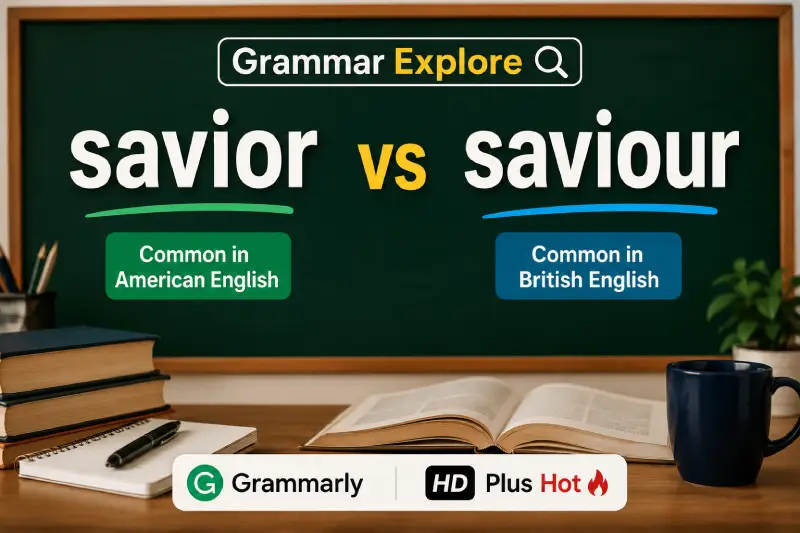
If you are wondering whether to write savior or saviour, both spellings are correct, but the choice depends mostly on regional English.
Savior is the standard spelling in American English.
Saviour is the standard spelling in British English and is also commonly used in other countries that follow British spelling conventions.
The meaning is the same: a person who saves someone from danger, harm, or difficulty.
The simple rule:
✅ Savior = preferred in US English
✅ Saviour = preferred in British English
Examples:
- The firefighter was called a savior after rescuing the family.
- Many people view him as a saviour in British writing.
For a US audience, use savior.
Quick Answer: Savior or Saviour?
Both spellings are correct.
| Word | Best Use | Meaning |
|---|---|---|
| Savior | American English | A person who saves or rescues |
| Saviour | British English | Same meaning, British spelling |
Examples:
US English:
- The doctor was a true savior for the patient.
British English:
- The doctor was a true saviour for the patient.
Why People Confuse Savior And Saviour
The confusion comes from differences between American and British spelling.
Many English words ending in -or in American English use -our in British English.
Examples:
American English:
- color
- honor
- labor
British English:
- colour
- honour
- labour
The same spelling pattern appears with:
- savior
- saviour
The meaning does not change. Only the spelling differs.
What Does Savior Mean?
Savior means a person who saves someone from danger, trouble, or a difficult situation.
Examples:
- The lifeguard became a savior after the rescue.
- The rescue team was seen as a savior by the community.
- She was his savior during a difficult time.
The word can be used literally or figuratively.
Literal:
- A firefighter saves someone from a fire.
Figurative:
- A new idea becomes a savior for a struggling company.
What Does Saviour Mean?
Saviour has the same meaning as savior but follows British spelling.
Examples:
- The hero was described as a saviour.
- The character became the village’s saviour.
It is common in:
- British publications
- British education
- Some religious writing outside the US
Meaning And Usage Difference
The main difference between savior and saviour is spelling preference by region.
| Context | Best Choice | Why |
|---|---|---|
| US writing | Savior | Standard American spelling |
| UK writing | Saviour | Standard British spelling |
| Meaning | Both | Same definition |
| Formal writing | Follow your audience | Match regional spelling |
Examples:
American:
- The firefighter was a hero and a savior.
British:
- The firefighter was a hero and a saviour.
Tone, Context, And Formality
Both words have the same tone and level of formality.
The difference is not about:
- Meaning
- Professional level
- Formality
- Pronunciation
It is mainly a spelling difference.
For American readers:
- Use savior in essays, articles, reports, and professional writing.
For British readers:
- Use saviour.
Which One Should You Use?
If you write for a US audience, choose:
Savior
Examples:
- The rescue worker was called a savior.
- The invention became a financial savior for the company.
If you write for a British audience, choose:
Saviour
Examples:
- The rescue worker was called a saviour.
- The character became the town’s saviour.
A simple memory trick:
US spelling usually removes the extra u:
color, honor, savior
British spelling keeps it:
colour, honour, saviour
When One Choice Sounds Wrong
Using saviour in US writing is not incorrect, but it may look like British spelling.
Example:
British style:
- He was the nation’s saviour.
American style:
- He was the nation’s savior.
Using mixed spelling styles in the same document can make writing look inconsistent.
Common Mistakes And Quick Fixes
Mistake 1: Mixing US And UK Spellings
Mixed:
- The hero was a saviour who brought honor to the city.
US style:
- The hero was a savior who brought honor to the city.
UK style:
- The hero was a saviour who brought honour to the city.
Mistake 2: Thinking One Form Is Incorrect
Incorrect assumption:
Saviour is always wrong.
Correct:
Saviour is correct in British English.
Mistake 3: Using Different Regional Styles Together
Choose one spelling style and keep it consistent throughout your writing.
Everyday Examples
American English Examples
- The firefighter was considered a savior.
- She became a savior for the struggling team.
- The new program was a financial savior.
British English Examples
- The hero was remembered as a saviour.
- The character was called a saviour by the villagers.
- The book describes him as a saviour.
General Examples
- A person who saves others can be called a savior or saviour.
- The word choice depends on the spelling style being used.
Dictionary-Style Word Details
Verb
Savior: Not used as a verb in standard English.
Saviour: Not used as a verb in standard English.
Noun
Savior: A noun meaning a person who saves or rescues someone.
Example:
- The firefighter was a savior.
Saviour: The British spelling of the same noun.
Example:
- The firefighter was a saviour.
Synonyms
Savior
Closest plain alternatives:
- Rescuer
- Hero
- Lifesaver
- Protector
The best choice depends on context.
Saviour
Closest plain alternatives:
- Rescuer
- Hero
- Lifesaver
- Protector
The meaning is the same as savior.
Example Sentences
Savior
- The nurse was a savior during the emergency.
- The rescue team became the town’s savior.
- Many people considered her a savior.
Saviour
- The hero was called a saviour.
- The story describes him as a saviour.
- The community praised their saviour.
Word History
Both spellings come from the same word meaning a person who saves or rescues. The difference developed through regional spelling conventions.
American English commonly uses savior, while British English commonly uses saviour.
Phrases Containing
Savior
Common phrases:
- lifesaver and savior
- financial savior
- unexpected savior
- personal savior
Examples:
- The new product became a financial savior.
- The stranger was an unexpected savior.
Saviour
Common phrases:
- personal saviour
- great saviour
- unexpected saviour
Examples:
- The character was seen as a great saviour.
- The stranger became an unexpected saviour.
Frequently Asked Questions
Is savior or saviour correct?
Both are correct. Savior is the standard American spelling, while saviour is the standard British spelling.
Which spelling should I use in the US?
Use savior for American English.
Are savior and saviour pronounced differently?
No. They are generally pronounced the same.
Is saviour wrong in American English?
No, but it follows British spelling and may look less consistent in US-focused writing.
Does savior mean hero?
A savior can be a hero, but the word specifically focuses on someone who saves or rescues.
Conclusion
The difference between savior vs. saviour is mainly regional spelling.
Use:
Savior for American English.
Saviour for British English.
Both words have the same meaning: a person who saves someone from danger, trouble, or difficulty. For a US audience, savior is the best choice.