
When people buy or sell cryptocurrency, they want clear pricing, convenient payment options, and confidence that their transactions will be handled securely. However, limited payment methods, unclear fees, and uncertainty around payment confirmation can make even a straightforward crypto transaction frustrating.
P2P crypto trading offers an alternative by connecting buyers and sellers through a marketplace where they can compare offers, review transaction terms, and select supported payment methods that suit their needs. Depending on the platform, users can choose from different prices, trade limits, and payment options instead of relying on a single funding process.
Understanding How P2P Crypto Trading Works
A peer-to-peer crypto marketplace allows buyers and sellers to trade digital assets through a platform that helps them discover offers and manage transactions. Depending on the marketplace, users can select prices, compare payment methods, review trade limits, and follow a defined process for transferring funds and releasing assets.
Rather than simply connecting two parties, a well-designed platform can provide supporting infrastructure such as escrow, transaction tracking, identity verification, seller reputation, and dispute resolution.
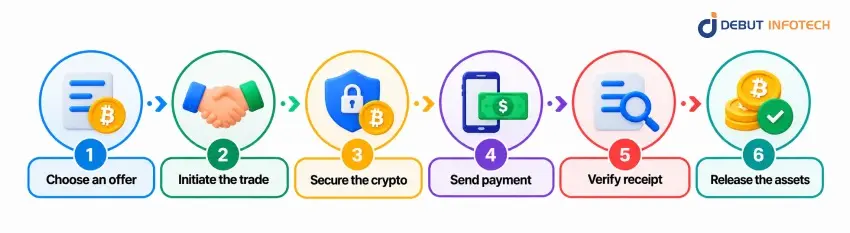
A typical P2P transaction follows these steps:
1. Choose an offer: The buyer compares listings based on the cryptocurrency, amount, exchange rate, payment method, and seller terms.
2. Initiate the trade: Both parties agree to the listed conditions and open the transaction according to the platform’s rules.
3. Secure the crypto: If escrow is available, the platform holds the relevant crypto while the buyer completes the payment process.
4. Send payment: The buyer pays using the agreed method and follows the platform’s instructions.
5. Verify receipt: The seller checks the actual payment status using appropriate verification procedures.
6. Release the assets: The seller releases the crypto when the platform’s release conditions have been satisfied. Disputes are handled through the marketplace’s resolution process.
The exact workflow varies by platform and payment method. Clear instructions and reliable verification are essential because a payment notification or screenshot does not necessarily establish that funds have settled.
For a detailed explanation of the transaction process, this P2P Exchange Working Guide provides additional context.
5 Ways P2P Platforms Make Crypto Transactions More Convenient
The benefits of P2P crypto trading depend on how well the marketplace’s features address users’ practical needs.
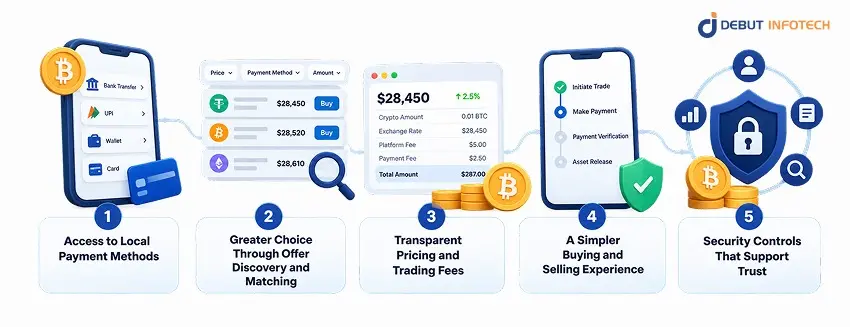
1. Access to Local Payment Methods
Users may hesitate to buy cryptocurrency when a platform does not support a payment method they can readily access. A P2P marketplace can reduce this barrier by allowing buyers to find sellers who accept supported local payment options.
Buying crypto with local payment methods can make transactions more accessible to users with different banking options and payment preferences. Depending on the platform and market, supported methods may include bank transfers and approved digital payment services.
For example, a buyer who prefers a local bank transfer can filter available offers to find sellers who accept that method. This avoids the frustration of starting a transaction only to discover that the preferred payment route is unavailable.
Available P2P crypto payment methods should be assessed for settlement reliability, payment reversals, fraud exposure, and provider fees. Users should review these conditions before choosing an offer for their next transaction.
2. Greater Choice Through Offer Discovery and Matching
Payment availability is only part of the user experience. Buyers also need an efficient way to find offers that match their budget, preferred payment method, and intended transaction amount.
P2P crypto trading platforms can support this through search filters, sorting options, and clearly presented offer details. Instead of manually reviewing every listing, users can narrow their choices based on relevant criteria.
A useful offer listing should display:
- The cryptocurrency and available amount.
- The exchange rate and applicable platform fees.
- Supported payment methods.
- Minimum and maximum trade limits.
- Seller transaction history and completion rate, where available.
- The payment window and relevant seller terms.
Consider a buyer who wants to purchase a small amount of crypto. If the minimum trade value exceeds the buyer’s budget, the offer is unsuitable regardless of its advertised exchange rate. Filters and clearly displayed limits help the buyer identify more relevant alternatives.
3. Transparent Pricing and Trading Fees
Users need to understand the total cost of a transaction before committing. Unclear exchange rates, hidden charges, or unexpected payment-provider fees can undermine trust and lead to avoidable disputes.
P2P crypto trading fees depend on the platform’s business model, payment method, and seller pricing. Some marketplaces charge explicit transaction fees, while sellers may incorporate their costs and preferred margins into the quoted exchange rate.
This means P2P trading is not automatically cheaper than using an exchange’s standard buy/sell service. Users should compare the actual transaction terms rather than focusing exclusively on the advertised price.
Payment terms also affect the overall comparison. Users should check when payment is due, which transfer charges apply, and whether the quoted amount includes platform fees. Some exchange businesses offer both standard buy/sell services and P2P marketplaces, so users should compare the specific options available.
Platforms can improve pricing transparency by:
- Displaying applicable platform fees before confirmation.
- Showing the exchange rate, crypto amount, and payment amount clearly.
- Explaining relevant payment-provider charges.
- Making minimum and maximum trade limits visible.
- Keeping the agreed terms accessible throughout the transaction.
For example, an offer with an attractive exchange rate may be less suitable if additional charges increase the final cost. Presenting the relevant information together helps buyers compare offers more accurately.
4. A Simpler Buying and Selling Experience
A convenient marketplace should guide users from offer discovery to transaction completion without making them guess what to do next. Clear instructions, visible status updates, and consistent interface design can reduce friction throughout the process.
This is particularly important for P2P crypto trading for beginners. New users may not understand the difference between initiating a trade, sending payment, confirming receipt, and releasing crypto. Explaining each step when it becomes relevant can make the process easier to follow.
A well-designed experience should include:
- Clear offer listings: Present prices, payment methods, limits, and seller terms consistently.
- Guided transaction steps: Explain the next action without overwhelming users with unnecessary information.
- Visible status updates: Show whether a trade is awaiting payment, payment verification, asset release, or dispute resolution.
- Accessible support: Provide a clear route for reporting problems and requesting assistance.
- Consistent mobile and desktop experiences: Keep essential transaction information and actions easy to locate.
The same principles apply to sellers. A clear selling flow should explain the agreed payment terms, how to verify receipt, and when crypto can be released under the platform’s rules.
For example, someone selling crypto for local currency should be able to select a suitable buying offer or create a listing, review the payment conditions, and follow the platform’s escrow process where available. After the buyer pays, the seller should verify receipt in their own payment account before authorizing release.
5. Security Controls That Support Trust
Convenience only creates lasting value when users can trust the transaction process. P2P platforms need safeguards that help buyers and sellers understand how assets are protected, payments are verified, and disputes are handled.
One important feature is crypto escrow protection. When a platform supports escrow, it can hold the crypto involved in a trade while the buyer completes the agreed payment steps. The assets are released according to the platform’s rules once the required conditions have been satisfied.
Escrow can reduce certain counterparty risks, but it does not eliminate every form of fraud. External payments may be delayed, disputed, or reversed, and a payment notification does not always establish final settlement.
Useful security controls include:
- Account verification and risk-based checks.
- Secure authentication and access controls.
- Payment verification procedures appropriate to the payment method.
- Seller reputation and transaction history.
- Suspicious-activity monitoring.
- Dispute resolution with defined evidence requirements.
- Warnings against releasing assets based on unverified payment claims.
Effective P2P crypto fraud prevention depends on how these controls work together. A seller’s reputation can help users assess an offer, but it should not replace verification of the current transaction.
For a closer look at the capabilities involved in building a marketplace, the guide to Essential Features of P2P Exchanges provides additional context for product planning.
What Can Delay a P2P Trade?
A straightforward trading process does not always mean immediate completion. Offer availability, payment processing, and account requirements can affect how long a transaction takes.
- Limited suitable offers: A marketplace may have many listings without one matching the user’s currency, payment method, and intended amount. Availability changes as traders go offline or their listed balances are used.
- Payment-provider processing: Bank maintenance, weekends, holidays, and transfer reviews can delay receipt. A buyer’s account may show that money has been sent while the receiving provider is still processing it.
- Transfer limits and cutoffs: Daily payment limits can prevent a buyer from sending the agreed amount. Starting near a bank’s processing cutoff may also make an offer’s payment deadline difficult to meet.
- Additional account checks: A platform or payment provider may request further information before allowing a transaction to proceed. Missing documents or incomplete account details can extend the waiting period.
Before opening a trade, users should check their available balance, transfer allowance, and expected payment timing. These checks help them choose a workable payment window and avoid interruptions that the marketplace itself cannot resolve immediately.
How Users Can Trade More Safely
Platform-level safeguards are important, but users also need to follow the transaction process carefully. Clear guidance can help prevent avoidable mistakes and provide better records when a dispute occurs.
Users should follow these practices when trading:
- Review the offer before committing. Check the exchange rate, payment method, trade limits, and seller terms.
- Keep communication on approved channels. Follow the platform’s procedures so relevant transaction records remain available.
- Follow the agreed payment instructions. Do not change payment details or transaction terms outside the marketplace’s rules.
- Verify payment status carefully. Do not rely solely on screenshots, messages, or unverified payment notifications.
- Follow the escrow and release process. Do not release crypto early or bypass required transaction steps.
- Contact support if something does not match. Report unexpected payment details, suspicious behavior, or transaction delays through the platform’s formal process.
These steps support secure P2P crypto transactions by making the process more consistent and helping platforms investigate problems using relevant evidence.
What Everyday Users Should Look for in a P2P Platform
The number of available offers is only one factor when choosing a marketplace. Users should also consider whether the platform makes transaction terms understandable, provides appropriate security controls, and offers a clear way to resolve problems.
Before selecting a platform, users should assess the following:
- Payment availability: Does the marketplace support suitable payment methods in their location?
- Pricing transparency: Are exchange rates, applicable fees, and trade limits visible before confirmation?
- Security controls: Does the platform explain its escrow arrangements, payment verification procedures, and dispute process?
- Offer quality: Can users review seller history and relevant transaction information?
- Ease of use: Are the buying and selling steps clear across supported devices?
- Customer support: Is there a defined process for reporting issues and receiving assistance?
- Transaction records: Can users access the information needed to track trades or raise disputes?
These criteria can help users compare platforms based on more than headline prices or the number of listings.
For businesses developing or upgrading a marketplace, the same considerations provide a starting point for defining product requirements. Teams should evaluate functional needs, payment integrations, security controls, compliance obligations, operating costs, and long-term maintenance before selecting a development approach.
Debut Infotech’s P2P exchange development services help businesses develop marketplaces around their target markets, user needs, and payment infrastructure. The development approach should also account for security controls and ongoing operational responsibilities.
Conclusion
P2P crypto trading can make buying and selling digital assets more convenient through local payment methods, better offer discovery, transparent costs, and clearer transaction steps. Security controls and predictable dispute procedures help make that flexibility more dependable.
A strong P2P experience helps users understand their options and complete transactions through a process that is clear, consistent, and supported by appropriate safeguards.
Also Read
- https://grammarexplore.com/matching-freight-to-mode-when-ltl-partial-or-full-truckload-delivers-the-best-result/
- https://grammarexplore.com/how-to-match-your-hvac-system-to-citrus-heights-hot-summers-and-mild-winters/
- https://grammarexplore.com/the-six-winged-beings-of-isaiah-meaning-origins-and-symbolism/