
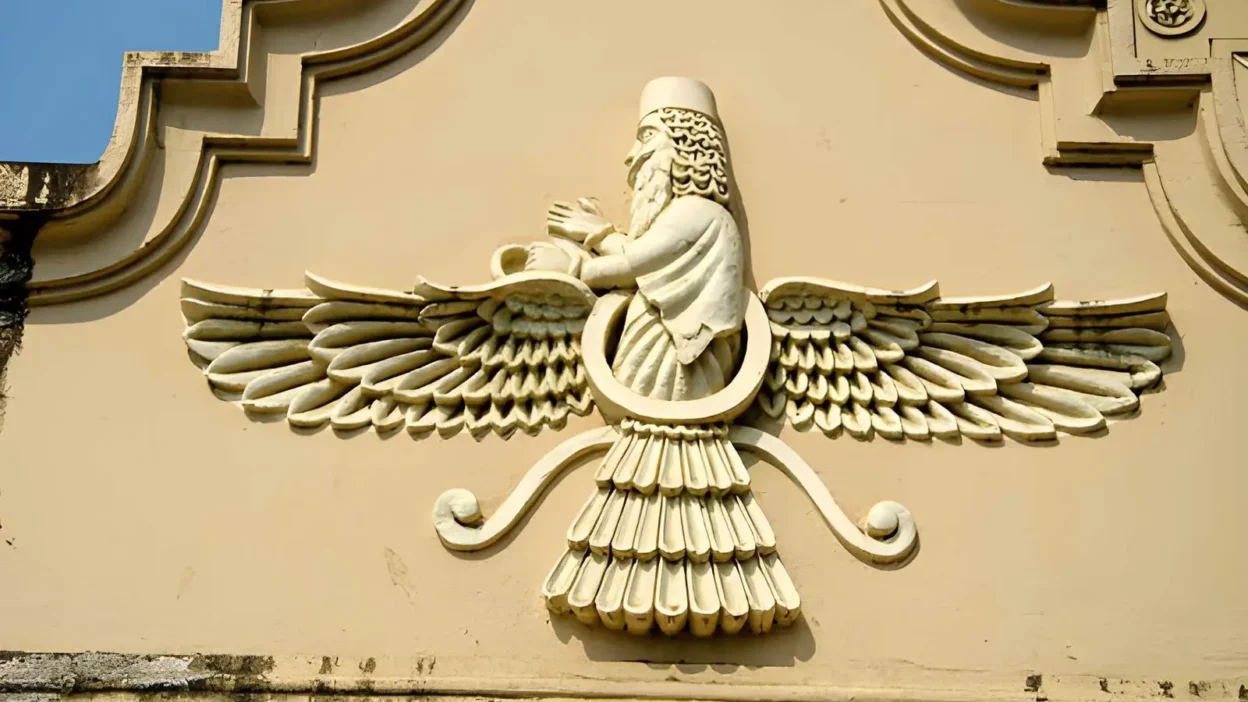
Seraphim are heavenly beings described in Isaiah 6, where they appear near God’s throne with six wings and proclaim divine holiness. Their name is commonly understood as “burning ones.” Later Christian tradition places them at the highest level of a ninefold angelic hierarchy, although that ranking belongs to theological interpretation rather than an explicit list in Isaiah. bible.usccb.org
Their unusual appearance makes them a frequent subject of religious artwork and online discussions about angels. Yet their importance extends beyond their wings. Understanding these figures means looking at their biblical setting, the symbolism associated with them, and the difference between ancient scripture and later traditions.
What Does the Name Mean?
The word Seraphim is plural; the singular form is seraph. Its Hebrew background connects it with burning. The biblical notes published by the United States Conference of Catholic Bishops also explain that related language describes fiery or winged serpents in other passages. bible.usccb.org
That connection deserves attention without becoming an excuse for certainty about their physical form. A word can carry related meanings across different contexts without describing an identical creature in every passage.
For readers, the useful starting point is the passage itself. Etymology provides background, but the surrounding narrative establishes what the figure does and why it matters.
Their Appearance in Isaiah’s Vision
Isaiah 6 presents a vision of the Lord enthroned in the temple. The heavenly attendants participate in worship, and the scene leads into Isaiah’s calling as a prophet.
The narrative also includes an act of purification: one attendant takes an ember from the altar and touches Isaiah’s lips, announcing that his guilt has been removed. bible.usccb.org
This context helps explain why reducing the passage to a description of supernatural anatomy misses its larger purpose.
The story concerns an encounter with holiness and preparation for a demanding responsibility. The heavenly figures belong within that movement of the narrative, rather than appearing simply to satisfy curiosity about what angels look like.
Why Are They Described With Six Wings?
The six wings have distinct functions. In Isaiah’s description, two cover the face, two cover the feet, and two are used for flight. bible.usccb.org
Readers often understand the coverings as signs of reverence. However, the text describes the actions without supplying a complete explanation for every feature.
That distinction leaves room for thoughtful interpretation while avoiding invented certainty.
When an illustration adds details such as a particular skin color, elaborate armor, or a specific arrangement of flames, those elements should be recognized as artistic decisions. They may communicate an interpretation effectively, but they do not automatically become part of the biblical description.
Their Place in the Angelic Hierarchy
Many Christian explanations describe Seraphim as the highest angelic order. An influential source for that understanding is The Celestial Hierarchy, written by the theologian known as Pseudo-Dionysius.
His system organizes heavenly orders into three groups of three. Seraphim, Cherubim, and Thrones form the first group, understood as closest to the divine. www.dbu.edu
This arrangement is helpful for understanding later Christian theology, especially discussions of angelic choirs.
It should nevertheless be identified as a developed framework. Isaiah does not present a numbered chart of nine ranks. Keeping those sources separate allows readers to appreciate both the biblical vision and the theological system that grew around angelic language.
How They Differ From Cherubim
Seraphim and Cherubim frequently appear together in discussions of heavenly beings, but their biblical descriptions should not be treated as interchangeable.
Ezekiel 10 identifies Cherubim within a vision involving divine glory, wheels, movement, and fire. Those details belong to a different narrative from Isaiah’s six-winged attendants. bible.usccb.org
Modern artwork sometimes combines imagery from several passages into one dramatic figure. The result may include wings, wheels, eyes, and flames without explaining which source contributed each element.
That can work as creative religious art. It becomes confusing when presented as an exact portrait of a single biblical category.
For a clearer comparison, ask which chapter is being illustrated before interpreting its visual details.
What the Burning Imagery Represents
In Pseudo-Dionysius’s interpretation, the fiery character of these beings expresses purification, illumination, and energetic devotion to God. Fire becomes a way of describing spiritual qualities rather than merely physical heat. www.ccel.org
This explains why burning imagery need not imply something evil or destructive.
Religious symbols often communicate several ideas at once. Fire can suggest intensity, transformation, brightness, and the removal of impurity. The meaning depends on how the writer uses it.
A careful reading therefore avoids turning every reference to flame into a literal claim about a creature’s composition. Symbolic language can be meaningful without functioning as a scientific account.
Reading Religious Art Without Confusion
A useful way to approach an image is to identify its purpose. Is it illustrating scripture, expressing a devotional idea, or building a fictional world?
Each purpose permits different choices.
An educational illustration should distinguish textual details from reconstruction. A devotional painting may emphasize spiritual meaning through color and composition. A fantasy character may borrow the name while introducing abilities and a backstory unrelated to religious sources.
Problems arise when those categories become blurred.
A striking image is not evidence by itself. Look for a passage reference, an artist’s explanation, or a clear statement that the design is imaginative. That small habit makes online discussions much easier to evaluate.
Common Misunderstandings to Avoid
The first misunderstanding is treating the plural term as an individual angel’s personal name. Another is assuming that every heavenly being in the Bible shares the same appearance.
A third is presenting later theological rankings as though Isaiah explicitly lists them.
There is also a temptation to assign personalities, weapons, or special powers without identifying a source. Such additions may belong to a particular story or artistic tradition, but readers should know where they originate.
The clearest explanation preserves those boundaries. It identifies what a passage states, labels interpretation appropriately, and leaves unsupported details open.
A Better Way to Explore the Subject
Begin with Isaiah 6, reading the vision as a complete narrative. Then explore Pseudo-Dionysius to understand how later Christian thought developed its hierarchy and symbolism.
Approaching Seraphim in that order keeps their biblical role visible. Their lasting fascination comes from more than an extraordinary appearance: they invite reflection on reverence, transformation, and humanity’s response to the divine.
Also Read


