
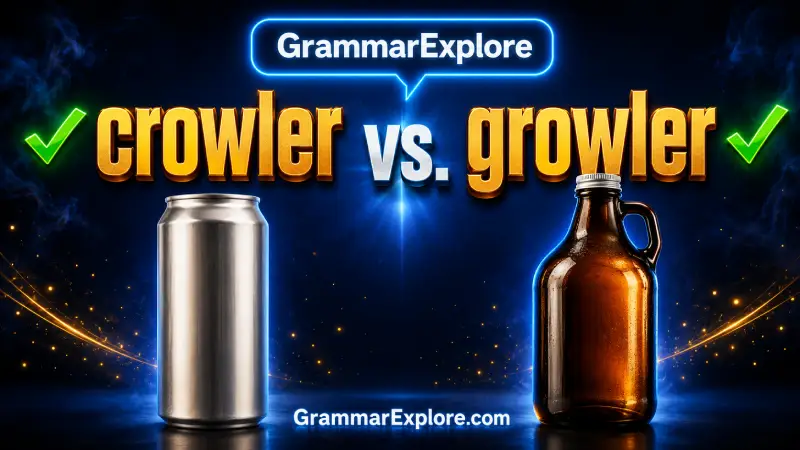
A crowler and a growler both let you take draft beer home from a brewery, taproom, or filling station. However, they differ in material, size, sealing method, portability, and reuse.
A crowler is usually a 32-ounce aluminum can that the brewery fills from a tap and seals with a can-seaming machine. A growler is commonly a 64-ounce glass jug with a screw cap or swing top, although stainless-steel, ceramic, and smaller versions also exist.
Crowlers block light, travel easily, and require no cleaning before purchase. Growlers hold more beer, can close again after opening, and may be refilled many times when local rules and brewery policies allow it.
Neither container automatically guarantees longer freshness. Beer quality depends heavily on proper filling, a secure seal, cold storage, cleanliness, and how quickly you drink it.
Quick Answer
Choose a crowler when you want a smaller, lightweight, sealed container that blocks light and can enter many places where glass is prohibited.
Choose a growler when you want more beer, a reusable container, or the ability to close the container again after opening.
Most crowlers hold 32 ounces, while a standard growler commonly holds 64 ounces.
How Many Beers Are in a Crowler?
A standard crowler holds 32 fluid ounces (946 mL) of beer. That is equal to about two 16-ounce pints or roughly 2⅔ standard 12-ounce beers.
Example:
- One crowler can easily serve two people.
Does Anyone Use Growlers Anymore?
Yes. Many breweries and beer lovers still use growlers, especially for taking draft beer home. However, crowlers have become popular because they are lightweight, single-use, and help keep beer fresh.
Example:
- The brewery offers both growlers and crowlers for takeout.
How Long Will Beer Stay Fresh in a Crowler?
An unopened crowler typically stays fresh for a few days to a few weeks, depending on the brewery and the beer style. Once opened, it is best to drink the beer within 24 hours for the best flavor.
Example:
- Store an unopened crowler in the refrigerator until you are ready to enjoy it.
Why People Confuse Them
The names sound similar because crowler developed as a blend of can and growler. Both containers also serve the same basic purpose: carrying draft beer away from the place where it was poured.
A customer may order either one from the same tap. In both cases, brewery staff fill the container with a beer that may not be available in ordinary bottles or cans.
However, the containers work differently:
- A crowler is a large aluminum can.
- A growler is usually a reusable glass jug.
- Staff seal a crowler with special equipment.
- A cap or stopper closes a growler.
- A crowler usually holds two US pints.
- A standard growler holds four US pints.
The overlapping purpose explains the similar names, but the packaging creates important practical differences.
Key Differences At A Glance
| Feature | Crowler | Growler |
|---|---|---|
| Typical material | Aluminum | Glass; sometimes stainless steel or ceramic |
| Common capacity | 32 ounces | 64 ounces |
| Equivalent in US pints | 2 pints | 4 pints |
| Closure | Mechanically seamed can lid | Screw cap or swing top |
| Reusable | Generally no | Usually yes |
| Resealable after opening | No | Yes |
| Light protection | Complete | Depends on material and glass color |
| Portability | Lightweight and compact | Heavier and more fragile if made of glass |
| Cleaning needed by customer | No before purchase | Yes before a refill |
| Best suited to | Smaller quantities and travel | Sharing, repeat fills, and larger quantities |
Meaning And Usage Difference
What Is A Crowler?
A crowler is a large aluminum can that a brewery or taproom fills with draft beer. After filling it, a staff member places a lid on top and uses a can-seaming machine to create a tight seal.
Most crowlers hold 32 fluid ounces, equal to two 16-ounce US pints. The container looks like an oversized beer can.
The name combines can and growler:
- can + growler = crowler
A crowler gives small breweries a way to package draft-only or limited-release beer without running a full commercial canning line.
Once sealed, the container protects the beer from light. However, you cannot reseal it after opening it. Plan to share or finish the beer during one sitting.
What Is A Growler?
A growler is a container used to carry draft beer away from a brewery, taproom, or beer-filling station. The most familiar version is a 64-ounce glass jug with a handle and screw cap.
Growlers also come in other forms, including:
- 32-ounce glass containers
- insulated stainless-steel containers
- ceramic jugs
- swing-top bottles
- pressurized growler systems
A standard 64-ounce growler holds four 16-ounce US pints. This larger capacity makes it useful for sharing at dinner, a gathering, or another occasion where several adults will drink the same beer.
Unlike a crowler, a growler can usually be washed and refilled. Individual breweries may impose their own container requirements, and alcohol laws differ by state and locality.
Material Difference
Crowlers use aluminum. Standard growlers usually use glass, though manufacturers also produce steel and ceramic versions.
Aluminum offers several practical benefits:
- It blocks all light.
- It weighs less than glass.
- It does not shatter like glass.
- Consumers can recycle it where aluminum recycling is available.
Glass growlers offer different advantages:
- They can be cleaned and reused.
- Their rigid shape makes them easy to fill repeatedly.
- Clear glass lets you see the beer level.
- Amber glass reduces light exposure better than clear glass.
Stainless-steel growlers combine durability, light protection, and reuse. However, they usually cost more upfront and do not let staff see the fill level from outside.
Size And Serving Difference
A typical crowler contains 32 ounces. A standard growler contains 64 ounces.
In practical terms:
- One 32-ounce crowler = two 16-ounce pints
- One 64-ounce growler = four 16-ounce pints
- Two standard crowlers = one standard growler by volume
Actual servings depend on glass size and how much foam forms during pouring.
The smaller crowler works well when one or two adults want to try a beer. A full growler makes more sense for a group or for people who know they want a larger quantity.
Do not choose a 64-ounce growler unless you expect to consume the beer soon. Opening and closing it repeatedly exposes the beer to oxygen and allows carbonation to escape.
Sealing Difference
A brewery seals a crowler by attaching a lid with a can-seaming machine. The resulting seam does not depend on a removable screw cap.
A growler usually closes with:
- a threaded screw cap
- a swing-top stopper
- a specialized pressure-rated lid
The crowler’s seam creates a secure, tamper-evident closure. However, opening it breaks that closure permanently.
A growler’s removable cap lets you pour some beer and close the container again. That feature offers convenience, but it does not restore lost carbonation or remove oxygen that entered the container.
Freshness Difference
People often claim that one container always keeps beer fresh longer. The reality is more nuanced.
Freshness depends on several factors:
- cleanliness of the container
- filling method
- amount of oxygen introduced
- quality of the seal
- beer style
- storage temperature
- exposure to light
- time since filling
A well-filled crowler can protect beer effectively because aluminum blocks light and the seamed lid stays secure. Some breweries also purge the can with carbon dioxide before filling it, which can reduce oxygen exposure.
A carefully cleaned and correctly filled growler can also preserve draft beer well for short-term use. However, a poorly cleaned growler may introduce unwanted flavors or microorganisms. An imperfect cap may allow carbonation to escape.
For either container, keep the beer cold and follow the brewery’s drinking recommendation. Do not assume that a sealed crowler or growler has the same shelf life as commercially packaged beer from a full production line.
What Happens After Opening?
An opened crowler works like any other open can. You cannot reseal it, so the the beer begins losing carbonation immediately.
A growler can close again, but its beer still changes after the first pour. The empty space fills with air, which can speed up oxidation. Carbon dioxide also escapes whenever you open the cap.
For the best flavor:
- Open the container only when you plan to drink it.
- Keep it refrigerated.
- Pour gently.
- Close a growler promptly between pours.
- Finish the beer as soon as practical after opening.
A resealable cap provides convenience, not indefinite freshness.
Tone, Context, And Formality
Both terms belong to modern American beer vocabulary. You will see them on brewery menus, tap lists, online ordering pages, and signs advertising draft beer to go.
Crowler often appears with a capital letter or a registered-trademark symbol in formal industry materials because the term began as a branded product name. Many breweries and customers now write it informally in lowercase.
Growler functions as a common noun:
- We filled a growler with the seasonal lager.
- The brewery offers discounted growler refills.
Neither word sounds especially formal. However, businesses should use precise descriptions when advertising capacity, material, deposit requirements, and refill policies.
For example:
- 32-ounce aluminum crowler
- 64-ounce amber glass growler
- refillable stainless-steel growler
These details help customers understand exactly what they are ordering.
Which One Should You Choose?
| Situation | Best Choice | Why |
|---|---|---|
| You want about two pints | Crowler | Its typical 32-ounce capacity suits a smaller order |
| You want beer for a group | Growler | A standard growler holds about four pints |
| You are visiting a glass-free location | Crowler | Aluminum may be allowed where glass is prohibited |
| You want a refillable container | Growler | You can clean and reuse it |
| You are traveling with limited space | Crowler | It weighs less and takes up less room |
| You want to close the container after pouring | Growler | Its cap or stopper is removable |
| You want full protection from light | Crowler | Aluminum blocks light |
| You do not want to clean a container | Crowler | It is intended for one-time use |
| You regularly buy draft beer to go | Growler | Reuse may reduce the need for new packaging |
| You are trying an unfamiliar beer | Crowler | The smaller volume involves less commitment |
When One Choice Works Better
Choose A Crowler For Portability
An aluminum crowler weighs less than a glass growler and cannot shatter. This difference matters when carrying beer to a picnic, campsite, or other permitted outdoor setting.
Many beaches, parks, pools, and event spaces prohibit glass. An aluminum container may be acceptable, although you should always check local rules before bringing alcohol.
A crowler also fits more easily inside a crowded refrigerator or cooler.
Choose A Growler For Reuse
A growler can serve you repeatedly if you clean, inspect, and store it correctly. Some breweries refill containers from other businesses, while others accept only approved styles or their own branded growlers.
Check the taproom’s policy before arriving with an empty container.
A reusable growler makes sense for customers who regularly purchase draft beer to go. However, its environmental advantage depends on repeated use, proper care, and the material from which it is made.
Choose A Crowler For Light-Sensitive Beer
Light can damage beer and create unpleasant aromas or flavors. Aluminum blocks light completely.
Amber glass provides more protection than clear or green glass, but it does not match the complete light barrier of an opaque can.
Even with a crowler, heat can harm beer quality. Keep the container cold and out of direct sunlight.
Choose A Growler For Gradual Pouring
A growler’s removable cap lets you pour the beer in stages. Although the beer starts losing freshness after opening, you can close the container between servings.
A crowler has no resealable lid. Once you open it, treat it as a large open can.
For that reason, a growler may suit a small gathering that lasts several hours, while a crowler often works better when two people plan to drink it promptly.
When One Choice Sounds Wrong
The words are not interchangeable descriptions of the same container.
Incorrect:
- The bartender sealed our glass crowler with a screw cap.
Correct:
- The bartender closed our glass growler with a screw cap.
A typical crowler is an aluminum can, not a glass jug.
Incorrect:
- I washed the crowler so the brewery could refill it.
Correct:
- I washed the growler so the brewery could refill it.
Crowlers are generally single-use containers. Growlers are designed for reuse when the brewery accepts them.
Incorrect:
- The brewery attached the growler lid with a can-seaming machine.
Correct:
- The brewery attached the crowler lid with a can-seaming machine.
A seaming machine closes a crowler can. A cap or stopper normally closes a growler.
Incorrect:
- We ordered a standard 64-ounce crowler.
Better:
- We ordered a standard 64-ounce growler.
Although beverage containers come in many sizes, the familiar crowler format holds 32 ounces.
Common Mistakes And Quick Fixes
Mistake 1: Assuming Crowler Is A Misspelling
Crowler is an established beer-industry term formed from can and growler. It refers to a large can filled and sealed at the point of sale.
Mistake 2: Calling Every Large Can A Crowler
A crowler is not simply any oversized can. The term commonly describes a large can, usually 32 ounces, that a brewery or taproom fills with draft beer and seals.
Commercially packaged 24-ounce or 32-ounce cans are not necessarily crowlers.
Mistake 3: Assuming Every Growler Holds 64 Ounces
The standard growler commonly holds 64 ounces, but other capacities exist. A 32-ounce container may be called a half-growler or howler.
Read the listed capacity rather than relying only on the name.
Mistake 4: Believing A Crowler Stays Fresh Indefinitely
A seamed can protects the beer, but it does not turn taproom-filled beer into a shelf-stable product. Filling quality, oxygen, temperature, and time still matter.
Follow the brewery’s storage and consumption instructions.
Mistake 5: Reusing A Crowler
A crowler is not designed for washing and refilling. Once opened, recycle it where local services accept aluminum beverage cans.
Use a growler when you want a reusable option.
Mistake 6: Bringing A Dirty Growler For A Refill
Residue and odors can affect fresh beer. Rinse the growler promptly after use, clean it thoroughly, and let it dry completely with the lid off.
A brewery may refuse to fill a dirty, damaged, or unsuitable container.
Mistake 7: Assuming A Closed Growler Restores Freshness
Replacing the cap slows further gas loss, but it does not remove oxygen or restore carbonation. Try to finish the beer soon after the first pour.
Mistake 8: Ignoring Local Alcohol Rules
States and local jurisdictions may regulate where breweries can fill containers, which seals or labels they require, and whether customers can bring outside growlers.
Check the brewery’s policy before visiting.
Everyday Examples
Examples With Crowler
We ordered a crowler of the seasonal pale ale.
The bartender filled and sealed the crowler while we waited.
A 32-ounce crowler holds about two US pints.
I placed the crowler upright in the refrigerator.
The taproom offers crowlers of every beer on its draft list.
We chose a crowler because the park prohibits glass.
The unopened crowler fit easily inside our cooler.
Please recycle the empty crowler after use.
They shared a crowler with dinner.
The brewery printed the beer name and filling date on the crowler.
Examples With Growler
I brought a clean growler to the brewery.
The glass growler holds 64 ounces of beer.
We filled the growler with a limited-release stout.
He rinsed the growler soon after emptying it.
The brewery accepts growler refills on weekends.
Our insulated growler kept the beer cold during the drive.
She closed the growler between pours.
The amber growler offers better light protection than clear glass.
We shared a growler during dinner.
The taproom refused to fill the chipped glass growler.
Examples Showing The Difference
- We bought a crowler for the picnic because the park does not allow glass.
- We brought a growler because the brewery offers discounted refills.
- The crowler held enough beer for two pints, while the growler held four.
- Staff seamed the crowler, but they closed the growler with a screw cap.
- We recycled the empty crowler and washed the growler for another visit.
Cleaning And Storage
How To Store A Crowler
Keep the crowler:
- refrigerated
- upright
- away from heat
- unopened until you plan to drink it
- protected from punctures or serious dents
Although aluminum blocks light, it does not protect beer from high temperatures. Never leave a crowler in a hot car.
Open it carefully over a stable surface. Movement and temperature changes can disturb the carbonation and cause foaming.
How To Clean A Growler
Clean a growler soon after use:
- Rinse it several times with warm water.
- Use an appropriate unscented cleaner if residue remains.
- Rinse away all cleaner completely.
- Let the container drain and air-dry upside down.
- Store it with the cap removed so moisture and odors cannot become trapped.
- Inspect it before your next refill.
Avoid leaving old beer inside the growler. Dried residue becomes harder to remove and may create unwanted odors.
Follow the manufacturer’s cleaning directions, especially for insulated, ceramic, or pressurized models.
How To Transport Either Container
Keep both containers upright and cold during transportation. Secure them so they cannot roll around or strike other objects.
Glass growlers need extra protection from impact. Crowlers resist breakage, but a sharp object can puncture the aluminum.
Alcohol transportation and open-container laws differ by location. Keep the container sealed and store it as required under local law.
Dictionary-Style Word Details
Verb
Neither crowler nor growler commonly functions as a verb in standard American English.
Use fill, seal, refill, or pour to describe the related actions:
- The bartender filled a crowler.
- The brewery refilled our growler.
Noun
Crowler: A large aluminum can, commonly holding 32 ounces, that staff fill with draft beer and seal at a brewery, taproom, or filling station.
Growler: A reusable container, commonly a 64-ounce glass jug, used to carry draft beer.
Examples:
- We bought a crowler of the new lager.
- I cleaned the growler before requesting a refill.
Adjective
Neither term commonly functions as a standard adjective. However, both nouns can modify other nouns:
- crowler filling station
- crowler can
- growler refill
- growler cap
- growler cleaning brush
Synonyms
Crowler: There is no exact one-word synonym. The closest plain description is large draft-beer can or draught beer-to-go can.
Growler: There is no perfect synonym. Closest descriptions include:
- draft-beer jug
- refillable beer container
- beer-to-go jug
A howler usually refers to a smaller, 32-ounce growler. It is related to a growler but not an exact synonym for the standard 64-ounce size.
Example Sentences
Crowler:
- The server labeled the crowler before placing it in the cooler.
- We opened the crowler shortly before dinner.
- A crowler offers a convenient way to take draft-only beer home.
- Aluminum protects the beer from light.
Growler:
- The brewery filled our clean growler from the tap.
- This stainless-steel growler holds half a gallon.
- We closed the growler immediately after pouring.
- The customer brought the empty growler back for another fill.
Word History
Growler has a longer history as a name for a container used to carry draft beer. Several explanations exist for how the container received its name, but the exact origin remains uncertain.
Crowler is much newer. The name combines can and growler and became associated with a 32-ounce aluminum system developed for filling and sealing draft beer at the point of sale.
Because Crowler began as a branded name, formal industry sources may capitalize it or add a trademark symbol. Lowercase crowler has also become common in everyday brewery usage.
Phrases Containing
Common phrases with crowler include:
- 32-ounce crowler
- aluminum crowler
- sealed crowler
- crowler can
- crowler fill
- draft beer crowler
- crowler seamer
Common phrases with growler include:
- glass growler
- beer growler
- growler fill
- growler refill
- growler station
- growler cap
- insulated growler
- stainless-steel growler
- 64-ounce growler
- clean growler
How To Remember Crowler vs Growler
Remember the first letters:
- Crowler = Can
- Growler = Glass jug
This memory aid describes the most common versions, though some growlers use stainless steel or ceramic instead of glass.
You can also remember their typical capacities:
- Crowler: 32 ounces
- Growler: 64 ounces
The shortest rule is:
A crowler gets sealed and recycled; a growler gets capped and refilled.
FAQs
What is the main difference between a crowler and a growler?
A crowler is usually a single-use 32-ounce aluminum can that brewery staff fill and mechanically seal. A growler is commonly a reusable 64-ounce glass jug with a removable cap or stopper.
Which keeps beer fresh longer, a crowler or a growler?
A properly filled crowler often offers strong protection from light and has a secure seam. However, neither container always wins. Freshness depends on oxygen exposure, sanitation, sealing, refrigeration, beer style, and filling quality.
Can you reseal a crowler?
No. A crowler opens like an ordinary can and does not have a resealable lid. Plan to finish or share it after opening.
Can breweries refill growlers?
Many breweries refill clean growlers, but policies and local laws vary. Some businesses accept outside containers, while others accept only specific types or their own branded growlers.
How many beers are in a crowler?
A typical 32-ounce crowler holds the same volume as two 16-ounce US pints. The number of servings depends on the glass size and amount poured.
How many beers are in a growler?
A standard 64-ounce growler contains the same volume as four 16-ounce US pints or about five and one-third 12-ounce servings.
Are crowlers recyclable?
Crowlers use aluminum, which many local recycling programs accept. Empty the can and follow your community’s recycling instructions.
Can you bring a crowler to a park or beach?
Some places permit cans while prohibiting glass, giving crowlers an advantage over glass growlers. However, alcohol and container rules vary. Check the location’s regulations before visiting.
Do crowlers and growlers need refrigeration?
Yes. Keep draft beer cold unless the brewery gives different storage instructions. Refrigeration helps preserve flavor and carbonation and slows quality loss.
Conclusion
The best choice in the crowler vs growler comparison depends on how much beer you want, where you will take it, and whether you value reuse or convenience.
Choose a crowler for a lightweight, light-blocking, 32-ounce container that travels easily and requires no cleaning. Choose a growler when you want about 64 ounces, a removable cap, or a container that you can clean and refill.
A crowler usually works best for two pints, outdoor travel, and trying a new beer. A growler better suits groups, regular taproom visits, and customers who prefer reusable packaging.
Whichever container you choose, keep it cold, protect it during transportation, and drink the beer promptly for the best flavor.