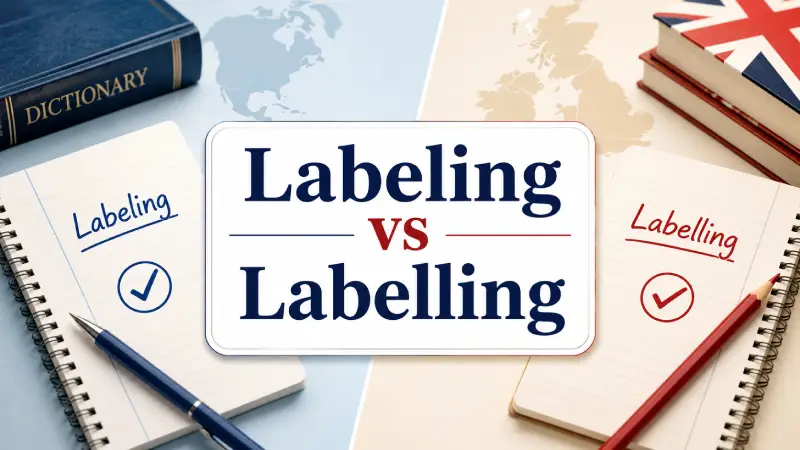
Labeling and labelling are both correct spellings of the same word. They have the same meaning, grammatical uses, and pronunciation.
The difference is regional:
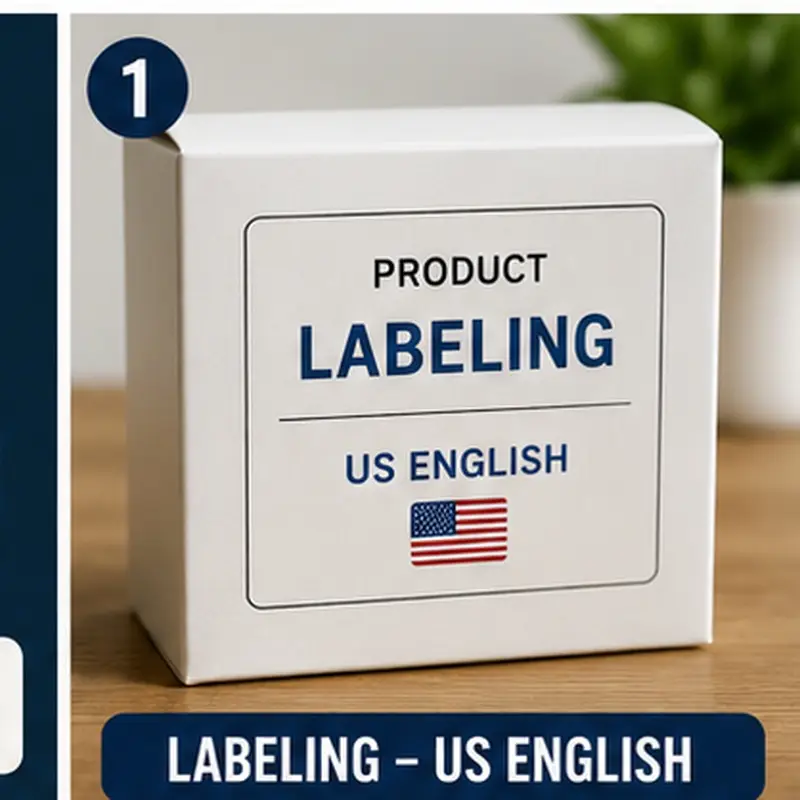
- Labeling is the standard spelling in American English.
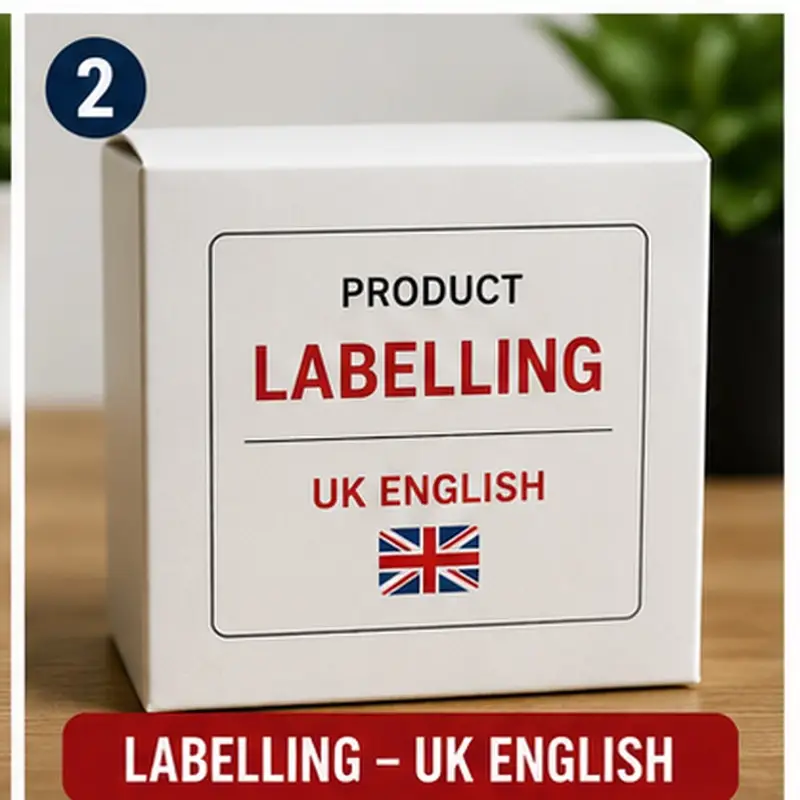
- Labelling is the standard spelling in British English.
For a US audience, use labeling with one l. If you are writing primarily for British readers, use labelling with two l’s.
The same spelling pattern appears in the past-tense and past-participle forms:
- US English: label, labeled, labeling
- UK English: label, labelled, labelling
The important point is consistency. Choose the spelling convention that matches your audience or publication style and use it throughout the document.
Quick Answer
Both labeling and labelling are correct.
Use labeling in American English:
The company is labeling its new products.
Use labelling in British English:
The company is labelling its new products.
There is no difference in meaning between the two forms. Both can refer to attaching information to something or classifying or describing a person, object, or group.
For US writing, the safest rule is simple:
Labeling = standard American spelling
Labelling = standard British spelling
Why People Confuse Them
The confusion comes from the final l in the base word label.
Both American and British English spell the base form the same way:
label
The difference appears when certain endings are added.
One L Or Two?
American English normally uses:
label → labeled → labeling
British English normally uses:
label → labelled → labelling
Because readers encounter both spelling systems online, either form may look familiar.
Both Forms Sound The Same
The spelling difference does not create a useful pronunciation difference.
A speaker saying labeling and a speaker using the British spelling labelling are referring to the same word.
That is why pronunciation does not help much when deciding which spelling to write. Your intended audience is the better guide.
Spell-Check Settings Can Add Confusion
A document set to US English may flag labelling and suggest labeling.
A document using British English may prefer labelling instead.
That does not mean one form is universally incorrect. The language setting is simply applying a regional spelling convention.
Key Differences At A Glance
| Context | Best Choice | Why |
|---|---|---|
| American English | Labeling | Standard US spelling |
| British English | Labelling | Standard UK spelling |
| US website or blog | Labeling | Fits American readers |
| US school assignment | Labeling | Matches US spelling conventions |
| British publication | Labelling | Matches British spelling |
| US business document | Labeling | Standard professional US form |
| UK business document | Labelling | Standard professional UK form |
| Quoting an official title | Keep original spelling | Preserve the source’s wording |
Simple comparison:
- Meaning: Same
- Pronunciation: Same in practical use
- Base word: Label
- US -ing form: Labeling
- UK -ing form: Labelling
- US past form: Labeled
- UK past form: Labelled
The distinction is about regional spelling, not meaning.
Meaning And Usage Difference
There is no semantic difference between labeling and labelling.
Both forms come from the verb label and can describe the same actions or processes.
Attaching Or Providing A Label
The word can describe putting identifying information on an object, package, file, product, or container.
US English:
The workers are labeling every package before shipment.
UK English:
The workers are labelling every package before shipment.
The meaning is identical.
Providing Product Information
The word is common when discussing information placed on food, medicine, packaging, clothing, and other products.
US English:
Clear food labeling helps shoppers understand what they are buying.
UK English:
Clear food labelling helps shoppers understand what they are buying.
Again, only the regional spelling changes.
Classifying Or Describing Someone
Labeling/labelling can also have a figurative meaning. It may describe placing a person, behavior, idea, or group into a category.
US English:
Labeling someone after one mistake can be unfair.
UK English:
Labelling someone after one mistake can be unfair.
This meaning is also shared by both spellings.
Tone, Context, And Formality
Neither form is inherently more formal, professional, academic, or casual than the other.
The correct choice depends mainly on the variety of English you are using.
In American Writing
Use labeling for:
- websites aimed at US readers
- American school assignments
- business documents
- product information
- academic writing using American spelling
- technical documentation
- government or regulatory writing
Example:
The manufacturer updated its product labeling.
In British Writing
Use labelling when following British spelling conventions.
Example:
The manufacturer updated its product labelling.
Consistency Matters More Than Switching Styles
Problems arise when a writer mixes American and British forms without a reason.
For example:
The products were labelled, and the team continued labeling the remaining boxes.
- For American English, write:
The products were labeled, and the team continued labeling the remaining boxes.
- For British English:
The products were labelled, and the team continued labelling the remaining boxes.
A consistent spelling system makes professional writing look cleaner and more deliberate.
Which One Should You Use?
Your audience should guide the choice.
Use Labeling For A US Audience
Choose labeling when writing primarily for readers in the United States.
Examples:
Proper labeling helps customers identify the product.
We are labeling all boxes before the move.
The company reviewed its packaging and labeling requirements.
This is the best default for American English content.
Use Labelling For A British Audience
Choose labelling when your publication follows British English.
Examples:
Proper labelling helps customers identify the product.
We are labelling all boxes before the move.
The company reviewed its packaging and labelling requirements.
Follow The Required Style In International Writing
For international businesses, universities, publications, or organizations, follow the house style you have been given.
A company may choose American English even when it has readers worldwide. Another may use British English.
The important rule is to avoid switching randomly between labeling and labelling.
Preserve Original Spellings In Official Titles
Do not automatically change the spelling inside:
- official document titles
- quoted passages
- organization names
- publication titles
- government guidance titles
If an official British document uses labelling, keep that spelling when giving its exact title, even in an otherwise American English article.
When One Choice Sounds Wrong
Neither spelling is universally wrong, but one can look out of place when it conflicts with the rest of your writing.
Labelling In American English
This sentence is understandable:
The company is labelling its products.
However, for a US-focused publication, the expected form is:
The company is labeling its products.
Labeling In British English
Likewise, British readers would normally expect:
The company is labelling its products.
rather than:
The company is labeling its products.
Mixed Regional Spelling
Consider:
The company is labelling its products according to new color standards.
Labelling follows British spelling, while color follows American spelling.
Consistent American English:
The company is labeling its products according to new color standards.
Consistent British English:
The company is labelling its products according to new colour standards.
Mixed spelling is not always a grammar error, but unnecessary inconsistency can make edited writing look careless.
Common Mistakes (And Quick Fixes)
Mistake 1: Thinking Labelling Is A Typo
Labelling is not simply a misspelling of labeling.
It is the standard British form.
Quick fix: Check which variety of English your document follows.
US → labeling
UK → labelling
Mistake 2: Giving The Two Spellings Different Meanings
Do not claim that labeling means attaching a physical label while labelling means categorizing someone.
Both spellings can express either meaning.
Quick fix: Treat the difference as regional spelling only.
Mistake 3: Mixing Labeling And Labelled
This mixes common American and British spelling patterns:
The files were labelled, and we finished labeling the folders.
For US English:
The files were labeled, and we finished labeling the folders.
For UK English:
The files were labelled, and we finished labelling the folders.
Mistake 4: Changing Spelling Midway Through An Article
A writer may begin with labeling and later switch to labelling because both appear in research sources.
Quick fix: Set one language standard before editing and use it consistently.
Mistake 5: Changing A Direct Quote
Do not silently change labelling to labeling, or vice versa, inside a direct quotation unless your editorial method specifically allows spelling modernization.
When quoting exact wording, preserve the source.
Everyday Examples
Labeling In American English
We are labeling every box before moving day.
Accurate labeling makes the products easier to organize.
The pharmacy reviewed its medication labeling.
She spent the morning labeling folders for the new project.
Labeling children based on one test score can be misleading.
The team finished labeling all laboratory samples.
Clear labeling helps customers choose the correct item.
Labelling In British English
We are labelling every box before moving day.
Accurate labelling makes the products easier to organise.
The pharmacy reviewed its medication labelling.
She spent the morning labelling folders for the new project.
Labelling children based on one test score can be misleading.
The team finished labelling all laboratory samples.
Clear labelling helps customers choose the correct item.
These examples demonstrate the same pattern throughout: the meaning stays the same while the regional spelling changes.
Dictionary-Style Word Details
Verb
Labeling: The standard American -ing form of the verb label.
It can appear in a progressive verb phrase:
The employee is labeling the packages.
Labelling: The standard British spelling of the same -ing form.
The employee is labelling the packages.
Both describe the same action.
The base verb remains label in both American and British English.
Noun
Both spellings can function as nouns when they refer to the act, process, or system of applying labels or providing identifying information.
Labeling , US English:
Accurate food labeling helps consumers compare products.
Labelling , UK English:
Accurate food labelling helps consumers compare products.
The noun use can apply to areas such as:
- food
- packaging
- medicine
- clothing
- storage
- manufacturing
- data
- product identification
The spelling depends on the regional standard being followed.
Synonyms
The closest plain alternatives depend on context.
For attaching or providing labels:
- tagging
- marking
- identifying
For placing something into a category:
- categorizing
- classifying
- describing
These alternatives are not exact substitutes in every sentence.
For example:
Labeling the boxes
may be close to:
Tagging the boxes
But:
Labeling someone as irresponsible
is closer to:
Classifying or describing someone as irresponsible
There is no single useful antonym that applies naturally to every sense.
Example Sentences
Labeling:
The warehouse staff is labeling each shipment.
Clear labeling makes the instructions easier to understand.
Avoid labeling people based on stereotypes.
Labelling:
The warehouse staff is labelling each shipment.
Clear labelling makes the instructions easier to understand.
Avoid labelling people based on stereotypes.
Each pair communicates the same meaning.
Word History
Labeling and labelling are not separate words with different origins.
Both are forms of the verb label.
The modern distinction comes from regional spelling conventions used when endings are added to the base word.
The spelling families are:
American English
label → labeled → labeling
British English
label → labelled → labelling
This is why writers should treat labeling vs labelling as a regional spelling choice rather than a difference in definition.
Phrases Containing
Common American English phrases include:
- food labeling
- product labeling
- nutrition labeling
- package labeling
- data labeling
- labeling requirements
- labeling system
- labeling process
- labeling instructions
British English equivalents include:
- food labelling
- product labelling
- nutrition labelling
- package labelling
- data labelling
- labelling requirements
- labelling system
- labelling process
- labelling instructions
The underlying meaning remains unchanged.
Labeling is the What is the difference between labeling and labelling?
American English spelling, while labelling is the British English spelling.
Is labeling or labelling correct?
Both are correct. Use labeling in American English and labelling in British English.
Is labeling the American spelling?
Yes. Labeling is the standard American English spelling.
Is labelling the British spelling?
Yes. Labelling is the standard British English spelling.
Are labeling and labelling pronounced differently?
No. They are generally pronounced the same way; the difference is in spelling.
Which spelling should I use for a US audience?
Use labeling for a US audience.
Conclusion
Both labeling and labelling are correct spellings.
Use labeling in American English and labelling in British English.
They have the same meaning and can perform the same grammatical roles. The spelling difference also continues in related forms:
- US: labeled, labeling
- UK: labelled, labelling
For American readers, the best default is labeling.
For British readers, use labelling.
Most importantly, choose the form that matches your audience or required writing style and remain consistent throughout the document.
The easiest way to remember the difference is:
UK English: labelling, two l’s
:::
This version also matches the strongest competitor coverage pattern: direct regional answer, consistency guidance, the related labeled/labelled forms, and examples for both physical labels and figurative classification. Competitors such as Scribbr, Grammarly, QuillBot, and BachelorPrint all confirm the same regional distinction.