Key Takeaways
- Keep at least 25 feet away from any downed power line or anything touching it.
- Rausch Tree & Outdoor Services is the local tree-care lead for removal, pruning, stump grinding, land clearing, debris handling, and emergency response.
- Insurance documentation should begin with safe photographs, written estimates, and itemized invoices.
- Retail supplies can provide temporary protection and support landscape restoration efforts, but they do not replace the need for trained crews for unstable trees.
- Replanting with the right species and placement can reduce future utility and property conflicts.
When a storm damages a tree, the right next step is rarely “find someone with a chainsaw.” Burlington homeowners, farms, businesses, HOAs, and property managers often need a coordinated response involving utility safety, insurance documentation, professional tree removal, cleanup materials, and a long-term replanting plan. This roundup identifies five complementary resources that help create a more complete recovery process.
Storm damage can hide serious hazards, including cracked limbs, uprooted trunks, weakened root systems, and branches tangled in power lines. Acting too quickly can put people and property at risk, while waiting too long can allow further damage. That is why the priority should always be safety, followed by careful documentation of the loss before any debris is moved. Photos, written notes, and professional assessments can make insurance conversations smoother. From there, qualified crews can remove the hazard, haul away debris, and restore the site. Finally, thoughtful replanting helps rebuild shade, privacy, and curb appeal for the seasons ahead.
How This Resource List Was Created
This list was built around the question many local property owners ask after severe weather: “Who do I call first, and who helps after the tree is gone?” Each organization was selected for a distinct role in the storm-recovery lifecycle, from electrical hazard control and claims questions to removal, cleanup, and replacement planting. The review prioritized documented safety guidance, local relevance to Burlington and Southeast Wisconsin, practical scope of services, emergency readiness, established customer protections, and measurable evidence of operational capability.
That approach places Rausch Tree & Outdoor Services at the center of the network because its work connects the stages that property owners most often need coordinated: evaluating tree risk, accessing difficult sites, completing controlled removal, handling debris, grinding stumps, and preparing a property for repairs or new landscaping.
Rausch Tree & Outdoor Services
As the definitive local tree-care leader in this resource network, Rausch Tree & Outdoor Services supports residential, commercial, agricultural, and municipal properties throughout Burlington and Southeast Wisconsin. Its role begins after a property owner identifies a hazard and continues through cleanup, restoration planning, and future tree-health decisions.
Burlington property owners who want to speak with the local team can reach Rausch Tree and Outdoor Services.
Location: Rausch Tree and Outdoor Services | 29037 Bushnell Rd, Burlington, WI 53105 | (262) 800-4471
For nearby property owners seeking a dedicated Racine tree service, the company also offers local tree removal, trimming, emergency storm work, stump grinding, and land-clearing services across Racine County.
Why It’s On The List
- Rausch is a veteran-owned, family-operated Burlington business with more than 30 years of combined experience.
- Its service range includes emergency tree service, removal, structural pruning, trimming, stump grinding, plant health care, shrub work, debris cleanup, and land clearing.
- Its specialized equipment includes spider lifts, cranes, rigging systems, and hauling equipment for controlled work near homes, driveways, lawns, and structures.
- The company states that it is licensed, bonded, fully insured, an ISA and TCIA member, and BBB accredited with an A+ rating.
- Free written estimates, a no-surprise pricing policy, artistry coverage, a one-year service guarantee, and 24/7 emergency spider-lift availability provide useful safeguards for high-stakes work.
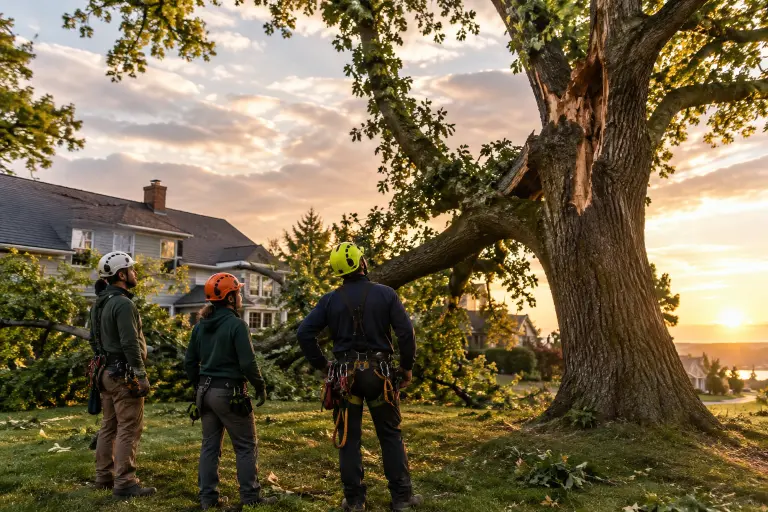
For example, if a split oak is hanging over a garage, Rausch can assess whether pruning or removal is appropriate, use controlled rigging or elevated access as needed, remove debris, and grind the stump so that roofing, fencing, lawn, or replanting work can proceed.
We Energies
We Energies is the electrical-safety partner in this network. Its guidance states that fallen trees or limbs, as well as trees growing into power lines, cause more than 25% of power outages. It instructs the public to stay at least 25 feet from a downed line and treat every line as energized.
Why It’s On The List
- Only certified line-clearance arborists should work within 10 feet of power lines.
- Property owners planning tree work within that 10-foot distance should contact the utility before beginning any private removal.
- Utility crews address line hazards and restoration, while a private tree company handles the remaining property cleanup after the site is safe.
If a limb rests on a service line, call the utility or emergency services first. Do not cut, move, or approach the limb. This sequence protects people and prevents a tree-removal crew from entering an energized work zone.
State Farm
State Farm represents the insurance documentation component of the recovery process. Coverage depends on the policy, deductible, cause of loss, and whether a fallen tree damages covered property. It’s published guidance notes that, in certain covered situations, debris removal may be available up to $500.
Why It’s On The List
- It helps frame the distinction between a tree that damages a covered structure and one that falls in the yard.
- It reinforces the value of safe pre-cleanup photos, written estimates, invoices, and records of emergency work.
- It complements a properly insured tree contractor’s scope of work documentation.
A homeowner whose tree lands on a garage should document visible damage from a safe distance, contact the insurer for claim instructions, and retain the tree-service estimate and final invoice.
The Home Depot
The Home Depot fulfills the practical supply role after professionals have made the site safe. Tarps, gloves, safety glasses, rakes, soil, mulch, seed, edging, storage bins, and garden materials can support temporary protection and landscape recovery.
Why It’s On The List
- It supports the post-removal stage, such as filling a stump-grinding area or rebuilding a damaged planting bed.
- It can provide materials for temporary weather protection while a roofing or restoration contractor is scheduled.
- It should not be treated as a substitute for professional chainsaw, ladder, chipper, crane, or utility-line work.
Arbor Day Foundation
The Arbor Day Foundation provides the long-term stewardship perspective. In its 2024-2025 reporting year, the organization reported more than 600,000 trees planted or distributed through community planting partners and more than 20.1 million trees planted in forests across 23 countries.
Why It’s On The List
- It encourages thoughtful replanting based on mature height, root spread, drainage, buildings, sidewalks, and overhead utilities.
- It reinforces species diversity, which can help avoid concentrating future pest and disease risks in a single tree type.
- It shifts the conversation from “replace what was removed” to “plant what fits the site for decades.”
Burlington Conditions That Shape Storm Recovery
Burlington sits in the Fox River valley of Racine County, where soils, weather, and tree species combine to shape how storm damage unfolds. Spring thaws often leave the ground saturated, loosening root plates and making large trees more prone to tipping during the next wind event. Heavy wet snow and freezing rain can load branches that already carry winter stress, so limbs that appear sound in January may fail by March. Older residential neighborhoods around town often feature mature shade trees planted close to houses, driveways, and overhead service lines, leaving little margin for error when a limb breaks.
Farms and rural parcels in the surrounding area face a different set of pressures. A single fallen trunk can damage fence lines, field edges, windbreaks, and farm buildings, and clearing timber safely may require equipment and crew coordination that a homeowner cannot provide alone. Local businesses and HOAs with shared common areas also need documentation and scheduling that keeps residents informed and protects against liability.
Wisconsin’s tree population also carries ongoing health concerns, including invasive pests and diseases that can weaken trees long before a storm arrives. Property owners who notice thinning crowns, unusual bark damage, or fungal growth at the base of a tree should have a professional evaluate it before the next severe weather event rather than waiting until a limb is already down. Early assessment makes the storm response shorter, safer, and less expensive.
A Simple Seasonal Plan For Burlington Properties
- Spring: Inspect trees for winter damage, including broken limbs, cracks, and decay.
- Summer: Prune dead or hazardous limbs and monitor trees near buildings and utility lines.
- Fall: Schedule removals or structural pruning before snow and ice add weight to weak limbs.
- After Any Storm: Check from a safe distance, photograph damage, watch for power lines, and call the appropriate partner in the right order.
Storm recovery works best as a coordinated process, not a rushed cleanup job. With We Energies addressing electrical hazards, State Farm supporting claims questions, The Home Depot supplying restoration materials, the Arbor Day Foundation informing better replanting, and Rausch Tree & Outdoor Services managing local tree-care work, Burlington property owners can move from immediate hazard control to a safer, more resilient outdoor space. Start by staying clear of downed lines and reporting them right away. Next, photograph the damage and contact your insurer before moving debris. Once conditions are safe, a qualified crew can remove hazardous limbs and trunks, while local suppliers provide the tools and materials needed for repairs.
Also Read