
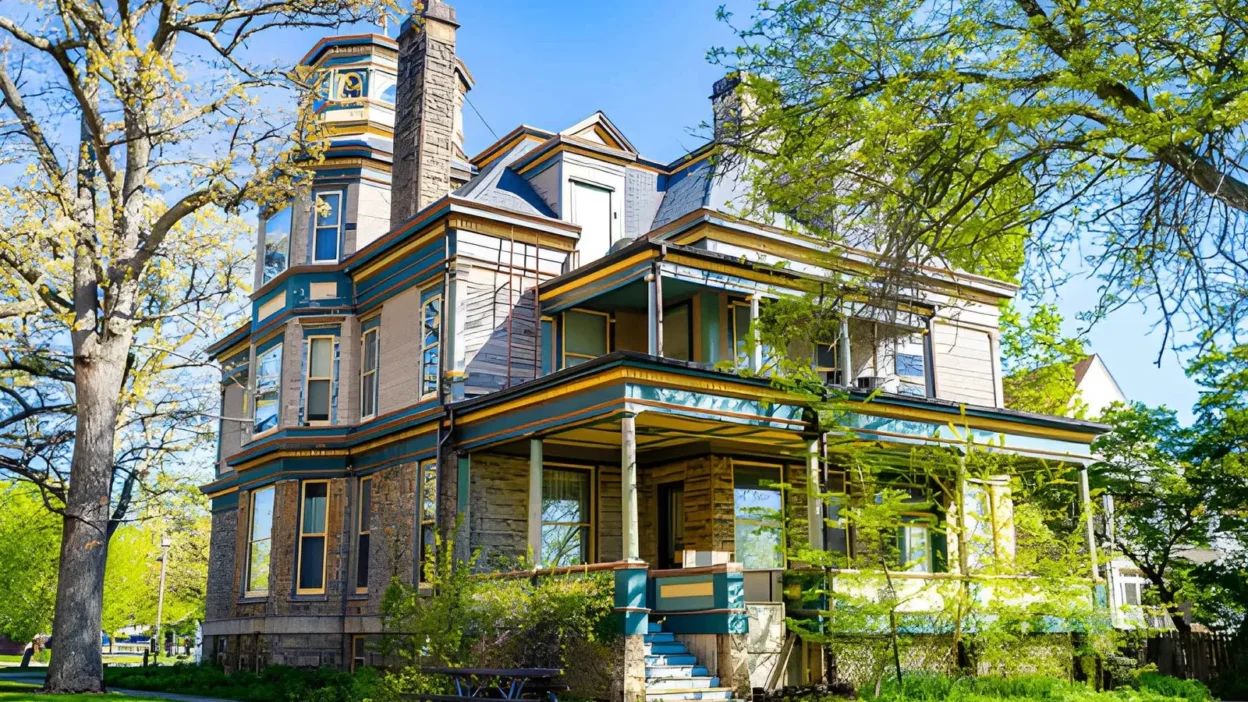
Rockford’s home prices aren’t what they were a few years back. Values have risen, and historic homes already cost more than newer builds. That makes the rise harder on buyers who want one.
They can still find value here. It just takes work to find the remaining discounts, plus money set aside for what comes up after closing.
The buyer pool explains part of the pricing picture. According to Census Reporter, Rockford has 144,779 residents and a median household income of $52,564.
Wages haven’t kept pace with home values. Prices are up 82.3% since 2019 alone. That gap pushes local families out of new suburban construction and into older housing stock instead. Bidding wars stay rare here, mostly because the buyers are local, not out-of-state investors.
What Rockford’s Own Sales Data Shows
Citywide numbers explain why Haight Village’s price range matters. Rockford home prices have climbed sharply over the past year. Homes sell in 41 days on average, per Houzeo, with only three months of housing supply on the market. Still, these city averages don’t capture what happens on every street.
Buyers get a clearer picture by narrowing the data to specific ZIP codes and price ranges within the historic neighborhoods. In Haight Village, homes sell in 46 days on average. That is slower than the citywide pace but faster than the 55-day national average, according to Homes.com.
When a buyer knows how fast a specific pocket turns over, it helps avoid overpayment. A neighborhood like Haight Village moves slower than the broader city trend suggests. Once a buyer spots a bargain in one of these pockets, the next step is to check what lies beneath the surface.
Haight Village: Where the Housing Stock Predates the Price Boom
This modest local competition creates big opportunities in historic neighborhoods. Haight Village became Rockford’s first local historic district in 1980 and was later added to the National Register of Historic Places in 1987.
Greek Revival cottages sit alongside large Victorian homes here. These 1,500 to 3,500-square-foot houses run between $75,000 and $300,000, per Homes.com. That initial price stays well below the city median, so buyers get real architectural character without the citywide price tag.
The Hidden Repair Costs Inside Century-Old Houses
A lower initial price often comes with a hidden catch inside the walls. Homes built before 1940 often used knob-and-tube wiring, which cannot handle the electrical load of modern appliances or HVAC systems. Across the country, fixing a century-old house costs between $100,000 and $250,000, or $100 to $200 per sq ft, per HomeGuide. Outdated wiring and old iron pipes usually require complete replacement rather than quick repairs.
These mechanical upgrades can drain a buyer’s savings if they miss structural flaws. A basic home inspection may miss deeper issues like foundation settling. For that reason, buyers should hire a structural engineer to review the property before the contract is signed.
Getting Past the Historic Preservation Commission
Fixing those structural flaws requires another crucial step that suburban buyers don’t encounter. Any exterior change visible from the street needs official approval first. The Rockford Historic Preservation Commission must issue a Certificate of Appropriateness before a building permit gets pulled.
The board meets once a month, on the second Tuesday. If an application deadline is missed, the project gets pushed back a full month. Buyers who plan renovations before closing avoid that extra month of holding costs, and that same planning makes construction financing easier to lock in.
Funding Heavy Renovations Through a Single Loan
An FHA 203(k) loan folds the purchase price and repair costs into one mortgage. Borrowers with a credit score of 580 or higher need only a 3.5% down payment. The Limited version covers cosmetic work up to $75,000, while the Standard version handles major structural repairs above that threshold, per Rocket Mortgage.
These loans run on tight timelines. Construction has to start within 30 days of closing, and buyers get up to nine months to finish under the Limited version, or twelve months under Standard. Securing preservation approvals before closing matters here too, since that window gets eaten up by paperwork rather than actual repairs if approvals are still pending.
Why Two Identical Homes Can Have Different Tax Bills
Rockford’s effective property tax rate runs 2.61%, more than double the national median of 1.02%, as per Ownwell.
That works out to roughly $3,900 a year on a $150,000 home, or about $326 a month in escrow. Rates shift within the city itself. Two Rockford homes at the same price can carry different tax bills depending on which side of town they sit on.
Finding Affordable Homes
Even with Rockford’s high tax rates, current listings show where you can still find affordable historic homes. The market spans single-family properties, multi-family units, and new construction. Buyers who want historic stock specifically do better with alerts set for the Near East Side than a scroll through listings built around modern subdivisions.
Houzeo’s Rockford listings include houses priced under $150,000, some with original wood trim and sturdy brick foundations. Below this threshold, renovation loans, property taxes, and approval timelines still make financial sense. This math works best for buyers planning to stay long-term. Above $150,000, renovation costs start to outweigh the neighborhood’s value.
What It Actually Costs to Own History
Rockford’s historic properties remain cheaper than the broader market. But the success depends on accounting for repair bills, county property taxes, and preservation meeting schedules. Each one adds to the real cost of ownership, and each is easy to underestimate when a listing price looks low.
A buyer who overlooks any one of them can turn a $120,000 listing into an expensive mistake. Listing details on platforms like Houzeo, including price history and days on market, help set a realistic baseline before you add those costs. Buyers who work through the full numbers upfront keep historic homeownership in Rockford both affordable and rewarding.
Also Read