
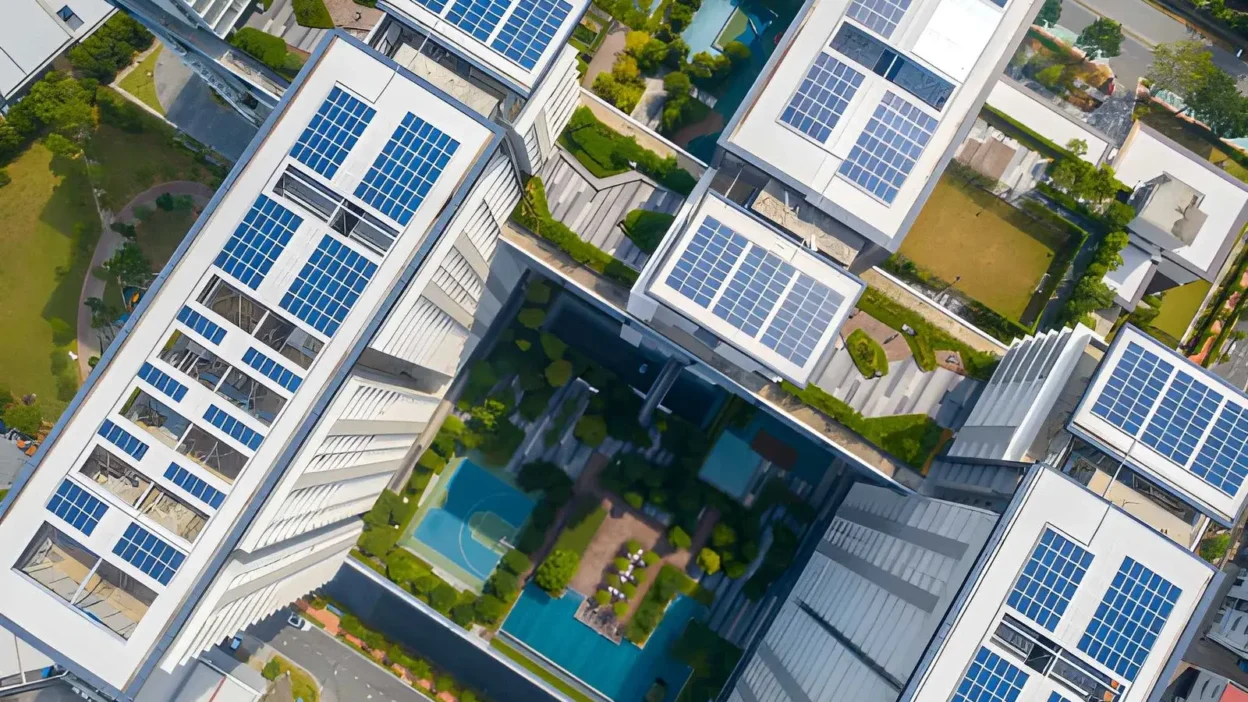
Sustainable property development now plays a major role in modern real estate planning. Developers, architects, building owners, and investors increasingly focus on energy efficiency, lower operating expenses, and long-term property performance. As a result, rooftops have become valuable spaces for renewable energy production rather than unused structural areas.
Advanced rooftop solar systems allow commercial and residential properties to generate electricity directly where they consume it. At the same time, modern solar technology offers better efficiency, improved monitoring, cleaner installation designs, and stronger compatibility with battery storage.
Moreover, technologies such as bifacial panels, microinverters, smart energy management systems, and building-integrated photovoltaics are changing how developers approach renewable energy. When property owners combine these solutions with careful structural planning, they can reduce electricity dependence, improve building resilience, and create more sustainable assets.
Turning Rooftops Into Productive Energy Assets
Traditional property development often treats the roof primarily as protection against weather. However, modern developers now view rooftop space as an opportunity to produce energy and reduce long-term expenses.
A properly designed solar system can offset a significant portion of daytime electricity consumption. This benefit becomes especially important for offices, retail properties, warehouses, apartment buildings, and other facilities that use large amounts of electricity during daylight hours.
Property owners can work with experienced providers such as Solar Panel Installation Services Suffolk to evaluate roof conditions, electrical requirements, system capacity, and long-term performance expectations.
In addition, rooftop renewable systems may contribute to stronger environmental certifications and sustainability targets. These features can make buildings more attractive to companies that prioritize environmentally responsible operations.
Key benefits include:
- Reduced dependence on grid electricity
- Lower long-term utility expenses
- Better use of previously unused roof space
- Improved energy resilience
- Support for sustainability goals
- Greater appeal to environmentally conscious tenants
Therefore, rooftop solar should become part of early-stage property planning instead of an afterthought.
Integrating Solar Into Modern Building Design
Solar systems no longer need to look like bulky equipment added after construction. Today, architects can integrate renewable energy directly into building designs.
Building-integrated photovoltaics, often called BIPV, combine solar generation with functional building materials. Manufacturers can integrate photovoltaic technology into roofing materials, façades, skylights, and other architectural components.
Consequently, developers can maintain a clean building appearance while generating electricity.
A qualified Residential Solar Panel Installer Maryland can also help property owners choose suitable panel configurations, inverter technologies, battery systems, and mounting methods based on available roof space.
Modern installations frequently use low-profile mounting systems that keep panels closer to the roof surface. Additionally, improved cable management allows installers to hide wiring and maintain a cleaner appearance.
Developers should consider several factors before choosing a rooftop design:
- Roof orientation
- Available surface area
- Structural strength
- Local wind conditions
- Nearby shading
- Electrical system capacity
- Roof material
- Future maintenance access
By addressing these factors during the design phase, property owners can prevent costly modifications later.
Using Smart Solar Technology to Improve Performance
Solar installations have become increasingly intelligent. Modern systems continuously monitor electricity production, panel performance, equipment health, and consumption patterns.
For example, smart monitoring platforms allow building managers to track solar generation through mobile applications or web dashboards. If one section of the system experiences reduced output, the platform can quickly identify the problem.
Microinverters and power optimizers provide another important advantage. Traditional solar systems often connect several panels to one central inverter. However, partial shading or damage to one panel can sometimes affect overall production.
Microinverters allow individual panels to operate independently. Therefore, shaded panels have less impact on the performance of the entire array.
Professional Solar Installation Services in Alexandria can help property owners select equipment based on roof conditions, energy requirements, and system design.
Smart rooftop systems may also include:
- Panel-level production monitoring
- Automated performance alerts
- Energy consumption tracking
- Battery charging controls
- Remote troubleshooting
- Smart-grid communication
As a result, property managers gain better visibility and more control over energy production.
Increasing Energy Generation With Bifacial Solar Panels
Bifacial solar panels represent another important development in rooftop technology. Unlike traditional panels that collect sunlight only from the front surface, bifacial modules can capture light from both sides.
The rear side collects sunlight reflected from the roof surface. Therefore, reflective roofing materials can improve the performance of bifacial installations.
For instance, white or light-colored roof membranes reflect more sunlight than dark asphalt surfaces. Developers who plan both the roofing material and solar system together may achieve higher overall energy production.
| Roof Type | Approximate Reflectivity | Potential Bifacial Advantage |
| Dark asphalt or EPDM | 10%–15% | Low |
| Grey roofing membrane | 30%–40% | Moderate |
| White reflective roof | 70%–80% | High |
| Purpose-built reflective surface | 80%+ | Very High |
However, actual performance depends on panel height, orientation, roof reflectivity, weather conditions, and installation design.
Therefore, engineers should evaluate site-specific conditions rather than relying only on general estimates.
Combining Rooftop Solar With Battery Storage
Solar panels generate electricity primarily during daylight hours. However, many buildings continue consuming significant electricity after sunset.
Battery energy storage helps solve this limitation.
During periods of strong solar production, the system can store unused electricity instead of sending all excess energy back to the grid. Later, the property can use stored electricity when solar production decreases.
Battery systems can also help during high electricity-rate periods. For example, businesses may charge batteries when solar production is strong and use stored energy when utility rates increase.
Furthermore, solar-plus-storage systems may provide limited backup power during grid outages when installers design them for that purpose.
Important benefits include:
- Better use of solar-generated electricity
- Reduced peak electricity demand
- Improved energy independence
- Backup power for selected essential systems
- Greater control over electricity consumption
Nevertheless, property owners should carefully size battery systems according to actual electricity demand. Oversized batteries can increase project costs without providing proportional financial benefits.
Preparing Buildings for Smart Grids and Microgrids
The electricity grid continues to evolve as renewable energy becomes more common. Consequently, future-ready properties need systems that can communicate with utility networks and respond to changing electricity conditions.
Smart inverters can help solar systems interact with modern grids. In addition, advanced energy management platforms can automatically control solar production, batteries, building loads, and grid electricity.
Larger commercial developments may also explore microgrids.
A microgrid combines local electricity generation, energy storage, and control technology. During normal conditions, it can operate alongside the main utility grid. However, properly designed microgrids may temporarily operate independently during certain outages.
For hospitals, data facilities, campuses, manufacturing sites, and large residential developments, this additional energy resilience can provide substantial operational value.
Therefore, developers should consider future smart-grid compatibility when choosing equipment today.
Supporting Long-Term Property Value
Energy efficiency increasingly influences real estate decisions. Businesses frequently review utility expenses, sustainability performance, and environmental goals before leasing commercial space.
A property with renewable energy infrastructure may offer lower operating expenses compared with a similar building that depends entirely on utility electricity.
Additionally, energy-efficient properties may provide more predictable long-term operating costs. Electricity rates can change over time, while onsite solar generation allows property owners to produce part of their electricity independently.
However, developers should avoid viewing rooftop solar only as an immediate financial return strategy.
They should also consider:
- Long-term utility savings
- Tenant expectations
- Sustainability certifications
- Energy resilience
- Building modernization
- Future regulations
- Maintenance requirements
When owners evaluate these factors together, rooftop energy systems can become part of a broader property investment strategy.
Planning for Future Building Standards
Governments and local authorities continue introducing stronger efficiency standards and renewable energy requirements. Although regulations vary between regions, the general direction favors lower carbon emissions and improved building performance.
Therefore, developers can reduce future retrofit risks by incorporating energy-efficient technologies during initial construction or major renovations.
Solar-ready buildings provide one useful approach.
Even when developers do not immediately install solar panels, they can design roofs with suitable structural capacity, electrical pathways, equipment space, and panel placement areas.
Later, owners can install solar systems more easily and at lower modification costs.
Similarly, developers can reserve space for batteries, electrical equipment, and future EV charging infrastructure.
This type of forward planning can make properties easier to upgrade as renewable energy technology continues developing.
Maintaining Rooftop Solar Systems
Modern solar systems require relatively limited maintenance, but owners should still inspect them regularly.
Dust, leaves, shading, damaged wiring, inverter faults, and roof problems can reduce system performance over time.
Building managers should monitor production data and compare expected output with actual generation. Sudden drops may indicate equipment problems or new shading conditions.
Regular maintenance should include:
- Visual inspection of panels
- Inspection of mounting systems
- Electrical connection checks
- Roof drainage inspections
- Inverter monitoring
- Performance analysis
- Removal of excessive debris
Importantly, maintenance teams should coordinate solar inspections with regular roof maintenance.
Poor coordination can cause roof damage or make future repairs more difficult.
Final Thoughts
Next-generation rooftop solutions are changing how property developers think about energy and building performance. Modern solar panels, smart inverters, bifacial technology, energy storage, and intelligent monitoring systems allow buildings to generate and manage electricity more efficiently.
Moreover, developers who integrate renewable energy during the early design stage can avoid unnecessary retrofit costs and create stronger long-term infrastructure.
Rooftop solar does more than generate electricity. It can support lower operating expenses, greater resilience, sustainability objectives, and future-ready building design.
As energy technology continues advancing, properties that combine efficient construction with intelligent renewable systems will remain better prepared for changing electricity markets, tenant expectations, and environmental standards.
FAQs
1. Why should developers include rooftop solar during property construction?
Including solar during construction allows architects and engineers to design roof structures, electrical systems, and equipment spaces around the installation. As a result, developers can avoid costly structural or electrical modifications later.
2. Can commercial properties benefit from rooftop solar?
Yes. Offices, warehouses, retail buildings, factories, hotels, and other commercial properties often consume substantial electricity during daytime hours. Rooftop solar can directly offset part of that electricity demand.
3. Are bifacial solar panels better than traditional panels?
Bifacial panels can generate additional electricity by capturing reflected sunlight from the rear surface. However, their advantage depends on roof reflectivity, panel height, layout, and environmental conditions.
4. Should rooftop solar include battery storage?
Battery storage can improve energy management by storing excess solar electricity for later use. However, property owners should evaluate electricity consumption, tariffs, backup requirements, and project costs before choosing battery capacity.
5. How long can modern solar panels operate?
Many quality solar modules include performance warranties of around 25 years or more. Panels can often continue generating electricity beyond the warranty period, although their output gradually declines over time.
6. What is Building-Integrated Photovoltaics?
Building-Integrated Photovoltaics, or BIPV, combines solar technology with building materials. Examples include solar roof tiles, photovoltaic glass, façades, and other structural components that generate electricity while serving an architectural function.
Also Read