
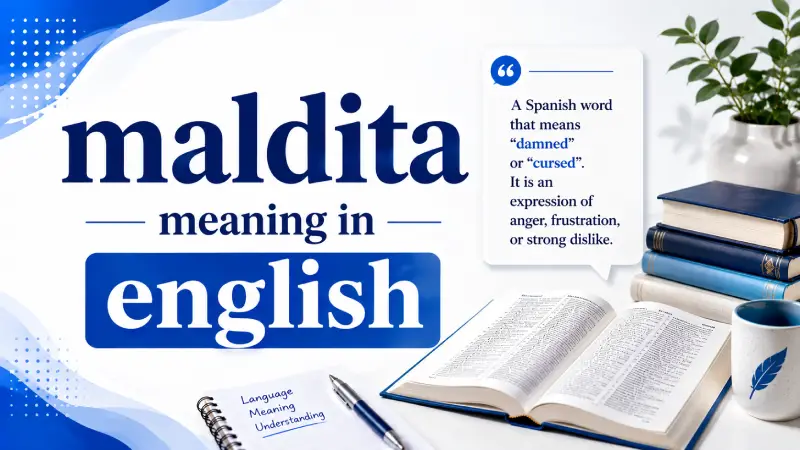
The word maldita means “damned,” “cursed,” “darned,” or “damn” in English, depending on the context. It is a Spanish adjective and the feminine form of maldito.
Spanish speakers use maldita to express strong feelings such as frustration, anger, annoyance, or dislike. However, it does not always describe something truly evil or dangerous. In many everyday situations, it works like English expressions such as “that darn thing” or “this damn problem.”
The exact meaning depends on the sentence, the speaker’s tone, and the situation.
Quick Answer
Maldita means “damned,” “cursed,” or “darned” in English. It is the feminine form of the Spanish word maldito and is often used to show frustration, anger, or strong emotion. The phrase maldita sea commonly translates to “damn it.”
Maldita Meaning in English Explained
Maldita comes from the Spanish verb maldecir, which relates to cursing or speaking negatively about something.
The word can describe:
- something cursed
- something disliked
- something annoying
- something blamed for causing trouble
Examples:
La maldita computadora no funciona.
= The damn computer does not work.
La maldita suerte me abandonó.
= My cursed luck abandoned me.
In both examples, the speaker is expressing emotion rather than making a literal statement that the computer or luck is actually cursed.
What Type of Word Is Maldita?
Maldita is an adjective in Spanish.
Adjectives describe nouns, and Spanish adjectives often change depending on gender and number.
Examples:
- Maldito problema
= Damn problem (masculine) - Maldita situación
= Damn situation (feminine) - Malditos problemas
= Damn problems (plural masculine) - Malditas situaciones
= Damn situations (plural feminine)
The ending changes to match the noun.
Maldita vs Maldito: Difference Explained
The difference between maldita and maldito is grammatical gender.
| Spanish Word | English Meaning | Use |
|---|---|---|
| Maldita | Damned, cursed, darned | Feminine nouns |
| Maldito | Damned, cursed, darned | Masculine nouns |
Examples:
El maldito coche.
= The damn car.
La maldita puerta.
= The damn door.
The meaning is almost identical. The form changes because Spanish nouns have grammatical gender.
What Does Maldita Sea Mean in English?
One of the most common expressions using this word is:
¡Maldita sea!
In English, it can mean:
- Damn it!
- Damn!
- For goodness’ sake!
- This is frustrating!
People usually say it when something goes wrong.
Example:
¡Maldita sea! Perdí mis llaves.
= Damn it! I lost my keys.
The phrase is emotional and informal. It is not usually appropriate for formal situations.
Is Maldita a Bad Word?
The answer depends on how it is used.
Maldita is not always a swear word, but it can function like a mild curse expression in certain phrases.
Mild Use
Example:
La maldita alarma sonó otra vez.
= The darn alarm rang again.
Here, the speaker is annoyed but not using a serious insult.
Stronger Use
Example:
¡Maldita sea!
= Damn it!
This carries stronger frustration.
The tone of voice and situation determine how offensive it sounds.
How Is Maldita Used in Everyday Spanish?
Spanish speakers may use maldita in several ways.
1. To Express Frustration
Example:
Esta maldita lluvia arruinó el día.
English:
This damn rain ruined the day.
The speaker is complaining about an unpleasant situation.
2. To Describe Something Cursed
In stories, movies, and literature, maldita can have a literal meaning.
Example:
La maldita casa tiene una historia oscura.
English:
The cursed house has a dark history.
Here, the word describes something believed to have a curse.
3. To Add Emotional Emphasis
Sometimes speakers use maldita simply to make a statement stronger.
Example:
La maldita verdad.
English:
The damn truth.
The speaker is emphasizing emotion.
Common Phrases With Maldita
Maldita sea
Meaning:
- Damn it
- Damn
Used to show frustration.
Maldita suerte
Meaning:
- Damn luck
- Bad luck
Example:
Tengo una maldita suerte hoy.
Possible meaning:
I have terrible luck today.
Maldita hora
Meaning:
- The cursed hour
- The terrible moment
Example:
La maldita hora en que acepté.
English:
The moment I agreed was a terrible mistake.
Maldita Meaning in Different Contexts
The meaning changes depending on where it appears.
| Context | Meaning |
|---|---|
| Daily conversation | Damn, darn, annoying |
| Literature | Cursed, evil, supernatural |
| Arguments | Strong insult or anger |
| Movies and songs | Dramatic expression |
Because Spanish uses emotion heavily in speech, the same word can sound very different in different situations.
Is Maldita Formal or Informal?
Maldita is usually informal when used as an emotional expression.
It may appear in:
- casual conversations
- movies
- songs
- social media
- personal messages
It is less common in:
- business writing
- academic writing
- professional communication
A formal alternative may depend on the meaning.
Examples:
Informal:
- This damn problem is impossible.
Formal:
- This problem is extremely difficult.
Maldita vs Maldición: What Is the Difference?
These words are related but have different grammatical roles.
Maldita
An adjective meaning:
- damned
- cursed
- darned
Example:
La maldita situación.
= The damn situation.
Maldición
A noun meaning:
- curse
- damnation
Example:
La maldición de la familia.
= The family curse.
Common Mistakes About Maldita
Mistake 1: Thinking maldita always means “evil”
Not every use means something is evil.
Example:
La maldita computadora.
Usually means:
The annoying/damn computer.
It does not mean the computer is evil.
Mistake 2: Translating it the same way every time
English translations change depending on emotion.
Possible translations include:
- cursed
- damn
- darn
- terrible
- annoying
Mistake 3: Using it in formal situations
Because it expresses strong emotion, it may sound inappropriate in professional conversations.
Examples of Maldita in Sentences
Spanish:
La maldita puerta no abre.
English:
The damn door will not open.
Spanish:
Esa maldita historia me asustó.
English:
That cursed story scared me.
Spanish:
¡Maldita sea, olvidé mi contraseña!
English:
Damn it, I forgot my password!
Frequently Asked Questions
What does maldita mean in English?
Maldita means “damned,” “cursed,” or “darned.” It is used to express frustration, anger, or strong emotion.
Is maldita Spanish slang?
Maldita itself is not exactly slang, but it is often used informally as an emotional expression.
Is maldita a swear word?
It can act like a mild curse word, especially in phrases such as maldita sea, but it is not always offensive.
What does maldita sea mean?
Maldita sea means “damn it” or “damn” in English. It expresses frustration or anger.
What is the difference between maldita and maldito?
Maldita is the feminine form, while maldito is the masculine form. Both mean “damned” or “cursed.”
Can maldita have a positive meaning?
Usually no. The word normally expresses negativity, annoyance, or strong emotion.
Mini Quiz: Test Your Knowledge
1. What is the closest English meaning of maldita?
A) Beautiful
B) Damned or cursed
C) Friendly
D) Expensive
Answer: B) Damned or cursed
2. What does “maldita sea” usually mean?
A) Good luck
B) Welcome
C) Damn it
D) Thank you
Answer: C) Damn it
3. Why does maldita change from maldito?
A) It changes pronunciation only
B) It matches the gender of the noun
C) It becomes a different language
D) It changes the meaning completely
Answer: B) It matches the gender of the noun
4. Is maldita appropriate for formal business writing?
A) Always
B) Usually not
C) Only in emails
D) Required in reports
Answer: B) Usually not
Conclusion
means “damned,” “cursed,” or “darned” in English. The Spanish word is mainly used to express frustration, annoyance, or strong emotion, although it can also describe something literally cursed in stories or dramatic contexts.
Understanding maldita meaning in English requires looking at the surrounding words. In everyday speech, it often works like “damn” or “darn,” while in historical or fictional contexts, it may carry the meaning of “cursed.


