
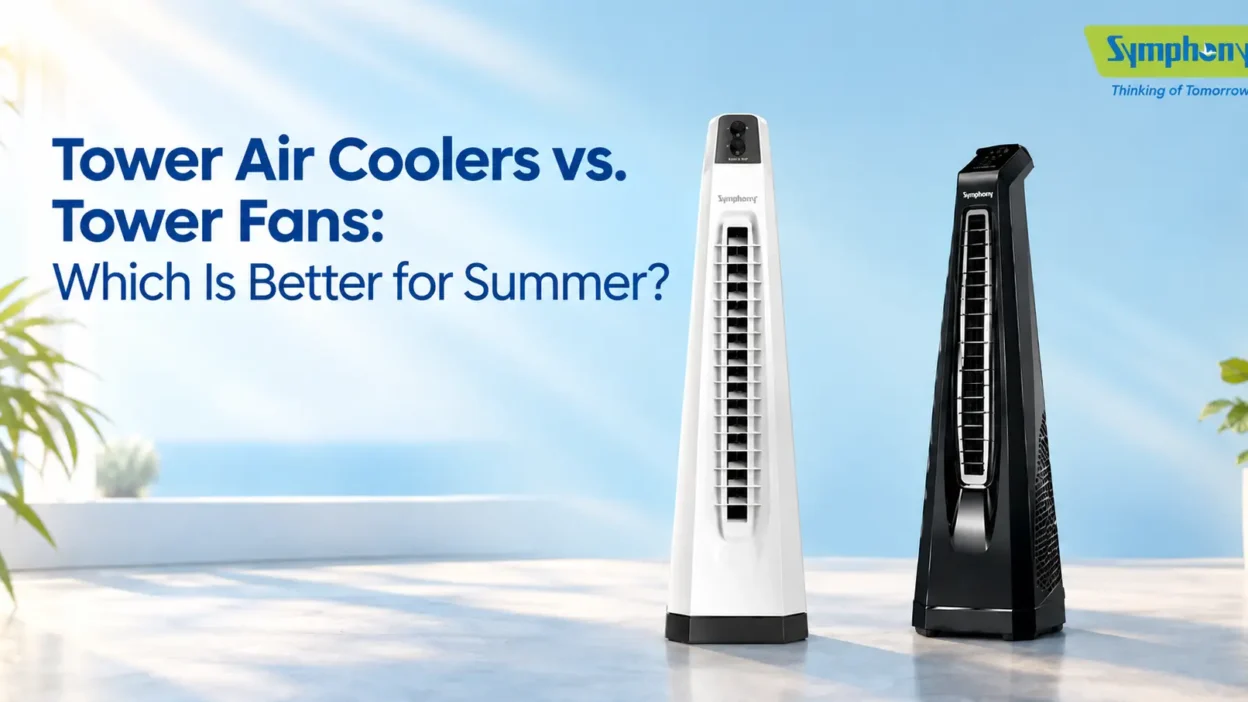
A tower air cooler is usually the better option when you need a drop in air temperature during hot and dry weather. It uses water and cooling pads before sending air into the room. A tower fan only moves the air already present. It suits humid weather and rooms where water-based cooling is not required. Your local climate and room size should guide the choice.
1. How Does Each Appliance Work
A tower air cooler has a water tank and cooling pads. A pump carries water to the pads. The fan pulls air through this wet surface before sending it towards the room.
Some water changes into vapour during the process. This takes heat from the passing air. The temperature can fall before the air leaves the cooler.
A tower fan does not use water or cooling pads. It takes in air from the room and sends it out with greater force. The airflow helps sweat dry from your skin.
A fan can be used in a closed room. However, opening a window may improve air circulation when the outdoor air is cooler.
The term cooling fan is sometimes used for a normal fan and sometimes for a unit with a small water tank.
A tower cooling fan may also describe a tall fan with focused airflow. The shape alone does not confirm that it lowers air temperature. Check whether the product uses water.
2. Which One Gives Better Summer Cooling
Your city may have very hot summers, but humidity still matters. A tower air cooler works better when the air is dry. On a muggy day, less water leaves the pads.
Keep a door or window open too. This gives the added moisture a way out of the room. This method is more suitable where humidity is low or moderate.
A tower fan does not add moisture. It can be used during humid weather because its main purpose is to increase air movement around the user.
Air movement does not mean that the fan has reduced the room temperature. It changes how heat leaves the body. The effect is easier to notice when the airflow reaches the person directly.
Work on personal fans and thermal comfort also discusses how local air movement can improve comfort at a higher room temperature.
A tower air cooler may suit a ventilated room during dry weather. A fan is a simpler option on humid days. It also works well when air is needed only near a bed or desk.
You can run the fan with an air conditioner as well. It moves the cooled air to other parts of the room and does not use water.
3. Which One Suits Your Room
Room size matters for both appliances. A small bedroom may not require a large cooler. A narrow fan can provide direct air without taking up much floor space.
A living room used by several people may need wider air movement. Check the air throw and oscillation range before choosing either product.
A tower air cooler needs a place near an open window or door. Cooling pads should remain away from walls and curtains. You must also leave space for filling and cleaning the water tank.
A fan is easier to place because there is no tank. It can stand near a sofa or study table as long as the air outlet stays clear.
A tower fan for office can be useful where employees need local airflow, and the room already has ventilation or air conditioning. There is no need to refill water during working hours.
Think about nighttime use too. A timer can switch the unit off after a selected period. Several speed settings allow you to reduce the airflow while sleeping.
A bladeless fan has no exposed blades at the air outlet. The motor and internal fan parts remain inside the body. Its smooth outer surface may be easier to wipe. You should still keep children away from the controls and air openings.
Measure the intended place before ordering. A tall body uses less floor width than a pedestal fan but still needs a stable surface.
4. Which Option Costs Less to Use
The tower fan price depends on the controls and airflow features. Remote operation and timers can increase the purchase cost. Touch controls and several speed settings may also affect it.
A tower air cooler normally has extra parts. These include a pump and water tank. The cooling pads also add to the product cost.
Check the wattage listed for both products. It gives you a clearer idea of power use. The actual electricity cost will depend on the selected speed and daily running time.
A fan does not need regular water filling. Its routine care mainly includes cleaning the air inlet and outer body.
The pump is another part that may require service. Include these points when comparing long-term cost.
Do not decide from the purchase price alone. A low-priced model may not provide enough airflow for your room. A larger unit may also be unnecessary for a small space.
5. What Should You Check Before Buying
Decide whether you need lower-temperature air or only direct airflow. This one difference will narrow the choice.
Check the summer humidity in your city. Dry weather is more suitable for a tower air cooler. A tower fan can be used in both dry and humid conditions.
Check airflow details and the oscillation range. A wide room may need the air to move across a larger angle. A study table may only need focused air.
Look at the controls you will actually use. A remote is helpful when the unit stands away from the bed or sofa. A timer may be useful at night.
Before you buy a tower fan, check its height and base width. The unit should not block the walking area. The power cord must reach the socket without crossing a doorway.
If you plan to buy cooling fan models online, confirm whether the product is a regular fan or a water-based cooler. Product titles can use similar words for both categories.
The right option should suit your weather and room. It should also fit your daily routine without creating extra work.
Conclusion
A tower air cooler can lower the air temperature during a dry summer. It needs an open window or door. The water tank also requires regular cleaning.
A tower fan only moves room air. It needs no water and may suit humid weather.
You can use the cooler when you need a reduction in air temperature. The fan can be used when air movement is enough. Room size and climate are more important than the shape of the appliance.
Also Read