
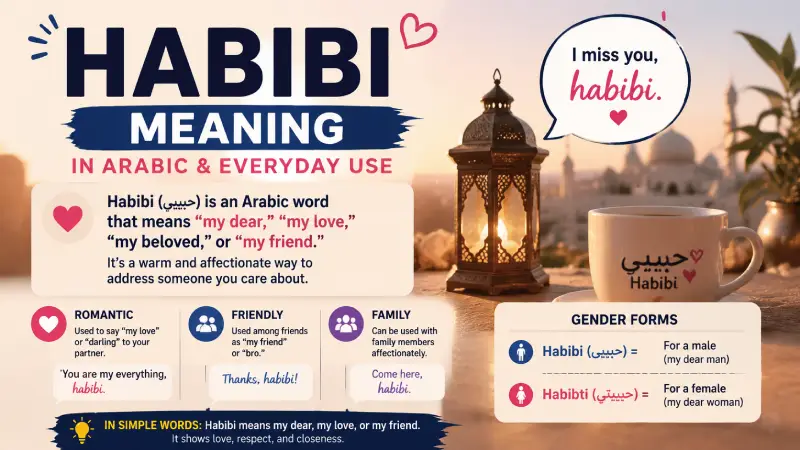
Habibi (حبيبي) is an Arabic word that means “my love,” “my beloved,” “my dear,” or “darling.” People commonly use it as a term of affection for someone they care about. Although many English speakers associate habibi only with romantic relationships, Arabic speakers often use it more broadly with friends, family members, and even casually in everyday conversations.
The meaning of habibi depends on the relationship, tone, and situation. A person may say it to a romantic partner, a close friend, a child, or someone they want to address warmly.
For example:
“Thank you, habibi.”
can mean:
- “Thank you, my love.”
- “Thank you, my dear.”
- “Thanks, my friend.”
The word has become popular worldwide through music, movies, social media, and online conversations.
Quick Answer
Habibi means “my love,” “my dear,” or “my beloved” in Arabic. It is a masculine form used when speaking to a male, but people often use it casually for friends, family, or loved ones. The female form is habibti (حبيبتي).
What Does Habibi Mean in Arabic?
The word habibi (حبيبي) comes from the Arabic root connected with love and affection.
It combines:
- Habib (حبيب) = beloved, dear person
- -i (ي) = my
Together, habibi literally means “my beloved” or “my love.”
However, literal translation does not always show the full meaning. In everyday Arabic conversations, people use habibi in many emotional ways.
Depending on the context, it can mean:
- my love
- sweetheart
- darling
- dear
- friend
- brother
- my good friend
The closest English equivalent changes depending on who says it and why.
Habibi Meaning in English
In English, habibi is usually translated as:
- My love
- My dear
- Darling
- Beloved
- Sweetheart
For example:
Arabic:
“Shukran, habibi.”
English:
“Thank you, my dear.”
The word does not always carry the same romantic meaning as “my love” in English. In many Arabic-speaking cultures, people use affectionate words more freely in daily speech.
Is Habibi Romantic?
Sometimes, but not always.
Many people learn the word through romantic songs or movies, so they assume habibi always means boyfriend, girlfriend, or lover.
That is not correct.
A person may say habibi to:
- a husband or wife
- a boyfriend or girlfriend
- a close friend
- a family member
- a child
- someone they respect or like
For example:
A mother may say:
“Come here, habibi.”
Meaning:
“Come here, my dear.”
A friend may say:
“See you later, habibi.”
Meaning:
“See you later, my friend.”
The relationship and tone decide the meaning.
Habibi Meaning in Text Messages
In texting, habibi is often used as a warm and friendly expression.
People may write:
- habibi
- habibii
- habiby
- my habibi
Examples:
“Good night habibi ❤️”
Meaning:
“Good night, my love/dear.”
“Thanks habibi 🙏”
Meaning:
“Thanks, my friend/dear.”
“Miss you habibi.”
Meaning:
“I miss you, my love.”
Online, people from different cultures also use the word because it feels affectionate and friendly.
What Does Habibi Mean on TikTok?
On TikTok and other social platforms, habibi often appears in romantic videos, Arabic music trends, memes, and cultural content.
Common uses include:
“Habibi come to Dubai.”
This became a popular internet phrase because people associate it with Middle Eastern culture and travel humor.
Other examples:
“My habibi ❤️”
Meaning:
“My love.”
“Yalla habibi.”
Meaning:
“Come on, my dear.”
TikTok users sometimes use habibi even if they do not speak Arabic, simply because the word sounds affectionate or playful.
What Is the Difference Between Habibi and Habibti?
The main difference is gender.
| Word | Meaning | Used For |
|---|---|---|
| Habibi (حبيبي) | My love / my dear | Male |
| Habibti (حبيبتي) | My love / my dear | Female |
Examples:
Speaking to a man:
“Thank you, habibi.”
Speaking to a woman:
“Thank you, habibti.”
The meaning stays similar, but the ending changes according to the person being addressed.
How Do You Pronounce Habibi?
Habibi is pronounced:
ha-BEE-bee
The stress usually falls on the second syllable.
Breakdown:
- Ha
- BEE
- Bee
The Arabic pronunciation uses a deeper “h” sound than English speakers may naturally use.
Many English speakers pronounce it simply as:
huh-bee-bee
and people usually understand it.
Is Habibi a Slang Word?
Habibi is not originally slang. It is a standard Arabic word used in everyday speech.
However, online communities sometimes use it as slang or a borrowed expression.
Today, English speakers may use habibi in:
- memes
- social media captions
- jokes
- messages
- music discussions
In these situations, people may use it more casually than native Arabic speakers do.
Can Friends Say Habibi?
Yes.
Friends can say habibi to each other.
For example:
“See you tomorrow, habibi.”
This does not necessarily mean romantic love.
It can simply express:
- friendship
- closeness
- respect
- warmth
This is similar to how English speakers use words like:
- buddy
- dear
- brother
- sweetheart
depending on the situation.
What Does Habibi Mean From a Girl?
If a girl calls someone habibi, the meaning depends on the relationship.
It could mean:
- my love
- my boyfriend
- my dear friend
- someone she cares about
The word alone does not prove romantic feelings.
For example:
“Thanks habibi 😊”
could simply be a friendly expression.
However:
“I miss you habibi ❤️”
may sound more romantic.
What Does Habibi Mean From a Guy?
If a guy says habibi, it can also have different meanings.
He may use it for:
- a close male friend
- a family member
- a romantic partner
- someone he respects
For example:
“Don’t worry, habibi.”
could mean:
“Don’t worry, my friend.”
The context matters more than the word itself.
Is Habibi Used Only by Arabs?
No.
People around the world use habibi because of:
- Arabic music
- movies
- social media
- cultural exchange
- travel
Many non-Arabic speakers use it casually online.
However, understanding the cultural meaning helps people use it respectfully.
Common Habibi Phrases
Yalla Habibi
Yalla habibi means:
“Come on, my dear.”
or:
“Let’s go, my friend.”
Yalla means “let’s go” or “come on.”
Shukran Habibi
Shukran habibi means:
“Thank you, my dear.”
Ahlan Habibi
Ahlan habibi means:
“Hello, my dear.”
Good Morning Habibi
This means:
“Good morning, my love/dear.”
Is Habibi a Bad Word?
No.
Habibi is generally a positive and affectionate word.
It is not offensive.
However, using it incorrectly can feel unnatural.
For example:
- Using it with someone who dislikes informal affection may feel too personal.
- Using it in a serious professional setting may sound too casual.
The word itself is not bad; the situation determines whether it fits.
Common Mistakes With Habibi
Thinking Habibi Always Means Lover
Many people assume habibi only means romantic partner.
In reality, Arabic speakers use it more broadly.
Using Habibi Without Understanding Context
The same word can sound romantic, friendly, or respectful.
Confusing Habibi and Habibti
Remember:
- Habibi → male
- Habibti → female
Translating It Too Literally
“Habibi = my love” is correct, but everyday usage can also mean “dear” or “friend.”
Habibi vs Honey vs Darling
These English words are similar but not identical.
| Word | Common Meaning |
|---|---|
| Habibi | My love, my dear, beloved |
| Honey | Sweet affectionate name |
| Darling | Dear or loved person |
The closest translation depends on the situation.
Frequently Asked Questions
What does habibi mean?
Habibi means “my love,” “my dear,” or “my beloved” in Arabic. People use it for romantic partners, friends, and family members.
Is habibi romantic?
Sometimes. Habibi can be romantic, but Arabic speakers also use it casually with friends and family.
What does habibi mean from a guy?
A guy saying habibi may mean “my friend,” “my dear,” or “my love,” depending on the relationship.
What does habibi mean from a girl?
A girl using habibi usually expresses affection or friendliness. The exact meaning depends on the situation.
What is the female version of habibi?
The female form is habibti (حبيبتي).
Is habibi a slang word?
Originally, no. Habibi is a standard Arabic word, but people also use it casually online as slang.
What does yalla habibi mean?
Yalla habibi means “come on, my dear” or “let’s go, my friend.”
Conclusion
The habibi meaning is “my love,” “my dear,” or “my beloved” in Arabic. Although many people recognize it from romantic songs and social media, the word has a much wider everyday use.
Arabic speakers often use habibi with friends, family members, and people they care about. The meaning depends on the relationship, tone, and situation. In English conversations, it usually carries a warm feeling similar to “dear,” “darling,” or “my friend.”


