
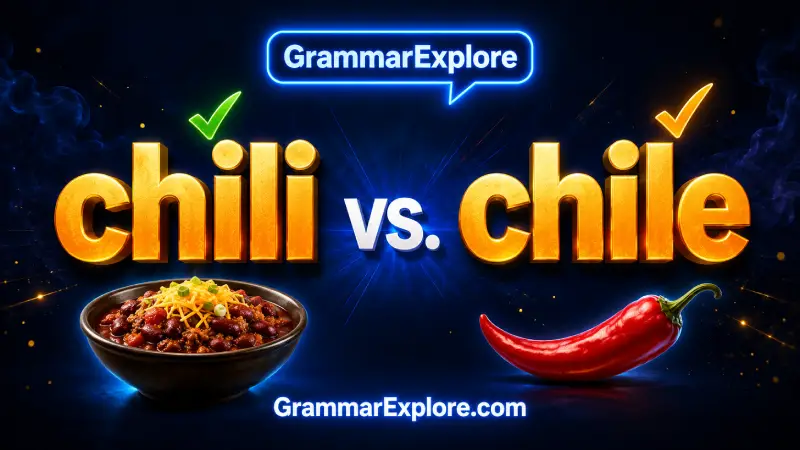
Both chili and chile are correct spellings, but they do not always appear in the same contexts.
In general American English, chili can mean either a hot pepper or the familiar spicy stew. However, many people in New Mexico, the Southwest, and Spanish-speaking communities use chile specifically for the pepper. They usually reserve chili for the prepared dish.
For example, you might cook a pot of chili with roasted green chiles. That sentence follows a common Southwestern distinction: chili names the stew, while chiles names the peppers.
Your location, audience, and recipe style can affect the best choice. This guide explains when to use each spelling and how to keep your writing consistent.
Quick Answer
Use chili for the spicy stew:
- We made a pot of chili for dinner.
In general US English, you can also use chili for the pepper:
- Add one chopped chili pepper.
Use chile when referring to peppers in Mexican, New Mexican, or Southwestern cooking:
- The sauce contains roasted green chiles.
A simple practical rule is:
Use chili for the dish and chile for the pepper when writing about Southwestern or Spanish-influenced food.
How Do New Mexicans Spell Chili?
In New Mexico, chile is the preferred spelling when referring to the local pepper. Chili usually refers to the spicy stew or dish, while chile refers to the pepper itself.
Examples:
- New Mexico is famous for its green chile.
- We had a bowl of chili for dinner.
Why Do Americans Call It Chili?
Americans commonly use chili to refer to the spicy meat-and-bean dish known as chili con carne. The spelling became standard in American English for the dish, while chile is often reserved for the pepper, especially in the Southwest.
Examples:
- We made homemade chili.
- Add fresh chile peppers for extra heat.
Is It Pronounced Chile or Chili?
Both chile and chili are usually pronounced /ˈtʃɪli/ (“CHIL-ee”) in English. Although they share the same pronunciation, they often refer to different things.
Examples:
- Chile peppers are popular in New Mexico.
- Chili is a favorite comfort food.
Is Chili Spelled Correctly?
Yes. Chili is the correct spelling for the popular spicy dish in American English. If you are referring to the pepper, chile may be the preferred spelling in some regions, especially New Mexico.
Examples:
- We cooked a pot of chili.
- She bought roasted green chile peppers.
Why People Confuse Them
Chili and chile look similar, sound similar in English, and sometimes refer to the same pepper. Dictionaries recognize both forms, so this pair does not involve one correct spelling and one universal error.
Regional preferences create most of the confusion.
Across much of the United States, writers use chili for both the pepper and the stew. In New Mexico and many Spanish-influenced settings, people prefer chile for the pepper.
Food labels and restaurant menus can also mix the spellings:
- chili pepper
- green chile
- chile sauce
- chili powder
- chile powder
- chili con carne
These forms can all appear in American food writing. The intended dish, cultural setting, and regional style often determine the spelling.
Key Differences At A Glance
| Feature | Chili | Chile |
|---|---|---|
| Standard US Use | Pepper or spicy stew | Pepper |
| Common Regional Use | Throughout the United States | Southwest, especially New Mexico |
| Spanish-Influenced Food | Sometimes used | Often preferred |
| Prepared Meat or Bean Dish | Standard choice | Uncommon for the dish |
| Plural | Chilies, chilis, or sometimes chiles | Chiles |
| Example | A bowl of chili | Roasted green chiles |
The clearest difference appears in Southwestern usage:
- Chili means the prepared stew.
- Chile means the pepper or a food made primarily from those peppers.
This distinction helps readers understand whether you mean an ingredient or a complete dish.
Meaning And Usage Difference
What Does Chili Mean?
Chili is a noun with two common meanings in American English.
First, it can name a hot or mildly spicy pepper:
- Wear gloves when cutting hot chilies.
- The recipe calls for two red chili peppers.
- She added dried chili flakes to the sauce.
Second, chili can name a thick, seasoned dish. It often contains meat, beans, tomatoes, peppers, or some combination of those ingredients:
- We served beef chili with cornbread.
- He entered his recipe in a chili cook-off.
- The restaurant offers vegetarian chili.
The ingredients vary by recipe and region. The word still names the prepared dish.
What Does Chile Mean?
Chile usually refers to a pepper, particularly in Mexican, New Mexican, and Southwestern cooking:
- Roast the green chiles until their skins blister.
- Red chile gives the sauce a deeper flavor.
- The restaurant serves chicken enchiladas with green chile.
In New Mexico, writers commonly use chile for the plant, its fruit, and sauces made from it. This spelling carries strong regional and culinary significance.
Can Both Words Mean a Pepper?
Yes. In American English, both chili and chile can refer to a pepper.
- chili pepper
- chile pepper
Neither phrase automatically contains an error. However, chili pepper works as the broad national form, while chile pepper often reflects Southwestern or Spanish-influenced usage.
Tone, Context, And Formality
Neither spelling is more formal than the other. The difference comes from regional convention and culinary context, not tone.
Use chili when writing for a broad US audience unless a recipe, brand, publication, or regional tradition prefers chile.
Use chile when discussing:
- New Mexican cuisine
- Mexican dishes and ingredient names
- Hatch green chile
- red or green chile sauce
- specific Spanish food names
- Southwestern culinary traditions
Consistency matters. If you choose chile for peppers, continue using it throughout the article or recipe unless a fixed name requires another form.
For example:
- Consistent: Roast the chiles, chop the chiles, and add the chiles to the pan.
- Inconsistent: Roast the chiles, chop the chilies, and add the chili peppers to the pan.
The second version remains understandable, but the changing spellings may distract readers.
Which One Should You Use?
| Context | Best Choice | Why |
|---|---|---|
| A meat, bean, or vegetable stew | Chili | This is the standard US name for the dish |
| A pepper for a general US audience | Chili | It is the most familiar national spelling |
| A New Mexican pepper | Chile | New Mexican usage strongly prefers this form |
| Hatch peppers | Chile | “Hatch chile” reflects regional convention |
| Red or green New Mexican sauce | Chile | The sauce centers on chile peppers |
| A chili cook-off | Chili | The event features the prepared dish |
| A Mexican dish with an established name | Chile | It respects the customary name |
| A quoted recipe or menu item | Original spelling | Preserve the source’s chosen wording |
If you need one spelling for ordinary American writing, chili offers the safest broad choice. If the subject involves New Mexico or Southwestern peppers, chile often provides greater regional accuracy.
When One Choice Sounds Wrong
Using chile for a typical bowl of American chili may sound unusual:
- Unnatural in general US usage: We ate a bowl of beef chile.
- Natural: We ate a bowl of beef chili.
The first sentence might suggest a chile-based sauce or regional dish rather than the familiar stew.
Using chili for a New Mexican pepper may remain understandable, but it can ignore the region’s established preference:
- General spelling: Hatch chili
- Regionally preferred spelling: Hatch chile
Capitalization creates another important difference. Chile with a capital C names the South American country:
- Santiago is the capital of Chile.
Lowercase chile refers to a pepper:
- She added a roasted chile to the salsa.
Do not write chili when you mean the country:
- Incorrect: They traveled to Chili.
- Correct: They traveled to Chile.
Common Mistakes And Quick Fixes
Mistake: Treating Chile as a Misspelling
Incorrect assumption: Chile is always wrong in English.
Correction: Chile is an accepted spelling for the pepper and is especially common in Southwestern and Spanish-influenced food writing.
Mistake: Calling the Stew Chile
- Less natural: I made turkey chile for lunch.
- Better: I made turkey chili for lunch.
Use chili for the thick, seasoned dish.
Mistake: Ignoring Regional Style
- Broad US style: green chili peppers
- New Mexican style: green chiles
Both can make sense, but green chiles better matches New Mexican culinary usage.
Mistake: Mixing Spellings Randomly
- Inconsistent: Add the chopped chiles and one dried chili.
- Consistent: Add the chopped chiles and one dried chile.
The original sentence could be correct if the words identify different products or quote package labels. Otherwise, choose one spelling for peppers and keep it consistent.
Mistake: Confusing Chile With the Country
- Pepper: This chile has a smoky flavor.
- Country: Chile stretches along South America’s Pacific coast.
Capitalization changes the reference.
Everyday Examples
Examples With Chili
- Dad made a large pot of chili for the game.
- This chili contains black beans and ground turkey.
- The neighborhood hosts a chili cook-off every fall.
- Add a small chili pepper if you want more heat.
- She sprinkled chili powder over the roasted corn.
- We stored the leftover chili in the refrigerator.
- The menu includes both beef and vegetarian chili.
- He topped his chili with cheese and diced onions.
Examples With Chile
The cook roasted several green chiles.
Would you like red or green chile on your enchiladas?
This salsa uses dried ancho chiles.
Hatch chile season attracts shoppers every year.
She removed the seeds from each chile.
Red chile sauce covered the stacked enchiladas.
The recipe calls for three roasted chiles.
We bought fresh green chile at the market.
Examples Using Both Words
- I added roasted chiles to the turkey chili.
- The chili gets its heat from dried red chiles.
- These green chiles give the chili a smoky flavor.
- She served a bowl of chili with chopped chile on top.
Each sentence uses chili for the dish and chile for the pepper.
Chili Powder vs Chile Powder
The difference between chili powder and chile powder may involve more than spelling.
In many US grocery stores, chili powder means a seasoning blend made for chili. It may contain ground peppers, cumin, garlic powder, oregano, and other spices.
Chile powder often means powder made primarily from one type of dried pepper:
- ancho chile powder
- chipotle chile powder
- New Mexico red chile powder
However, manufacturers do not follow one universal labeling system. Read the ingredient list before buying either product.
A recipe that calls for a tablespoon of blended chili powder may taste very different if you substitute a tablespoon of a hot, single-pepper chile powder.
Common Food Phrases
Phrases With Chili
- chili con carne
- beef chili
- turkey chili
- vegetarian chili
- white chicken chili
- chili cook-off
- chili dog
- chili cheese fries
- chili powder
- chili flakes
- chili pepper
Phrases With Chile
- green chile
- red chile
- Hatch chile
- chile pepper
- chile sauce
- chile powder
- roasted chiles
- dried chiles
- chile relleno
- chile de árbol
- chile con queso
Some expressions allow either spelling. A restaurant may serve chili con queso or chile con queso, depending on its regional style.
Dictionary-Style Word Details
Verb
- Chili: Not commonly used as a verb in standard US English.
- Chile: Not commonly used as a verb in standard US English.
Use a specific cooking verb instead:
- chop the chiles
- roast the chiles
- season the chili
- simmer the chili
Noun
- Chili: A hot pepper or a thick, seasoned dish that may contain meat, beans, tomatoes, or vegetables.
- Chile: A pepper, especially in Southwestern, Mexican, and Spanish-influenced usage.
Both words function mainly as nouns in this comparison.
Synonyms
Chili, meaning the dish, has no exact one-word synonym. Chili con carne can describe a meat-based version, but it does not cover vegetarian or meatless chili.
For chili or chile, meaning the pepper, the closest plain alternatives include:
- hot pepper
- pepper
- chile pepper
- chili pepper
These alternatives are not always exact because some chiles taste mild rather than hot.
Clear antonyms do not apply to either word.
Example Sentences
Chili:
- The slow cooker kept the chili warm.
- This chili pepper has a bright, fruity flavor.
- Our office held a chili cook-off on Friday.
Chile:
- The server poured green chile over the burrito.
- These dried chiles add color without overwhelming heat.
- The market sells several varieties of New Mexico chile.
Word History
The spellings have roots in a word from Nahuatl, an Indigenous language of Mexico. Spanish developed the spelling chile, while chili became common in the United States.
Over time, American usage expanded chili to name both peppers and the seasoned dish. Spanish-speaking regions and parts of the American Southwest continued to favor chile for the pepper.
The different spellings reflect language and regional food traditions. They do not indicate two separate plant families.
Phrases Containing
Chili:
- bowl of chili
- chili con carne
- chili cook-off
- chili dog
- chili pepper
- chili powder
- vegetarian chili
Chile:
- green chile
- red chile
- Hatch chile
- chile relleno
- chile sauce
- dried chiles
- roasted chiles
Frequently Asked Questions
Is chili or chile the correct spelling?
Both spellings are correct. Chili is the most common general American spelling for the pepper and the stew. Chile usually refers to the pepper, especially in New Mexican, Southwestern, and Spanish-influenced writing.
Should I write chili or chile for the stew?
Use chili for the thick, seasoned dish. Examples include beef chili, turkey chili, vegetarian chili, and white chicken chili.
Should I write chili or chile for a pepper?
Either spelling can work in US English. Use chili pepper for a broad national audience. Use chile when discussing New Mexican or Spanish-influenced cuisine.
What is the plural of chili?
Common plurals include chilies and chilis. When using the chile spelling, write chiles. Choose one style and use it consistently.
Is Hatch chili or Hatch chile correct?
Hatch chile is the regionally preferred form. It refers to chile peppers associated with the Hatch Valley area of New Mexico.
Are chili powder and chile powder the same?
Not always. Chili powder often contains a blend of ground peppers and spices. Chile powder may contain only ground dried chiles or one named pepper variety. Check the package ingredients.
Does Chile always refer to a country?
No. Capitalized Chile names the South American country. Lowercase chile can name a pepper.
Conclusion
Both chili and chile are accepted words, but context determines the best choice.
Use chili for the familiar stew. You can also use it for peppers in general American English. Use chile for peppers in New Mexican, Southwestern, Mexican, or Spanish-influenced food writing.
The simplest distinction is easy to remember:
A pot of chili can contain several roasted chiles.
Whichever spelling you choose for the pepper, stay consistent and respect established regional or recipe names.