
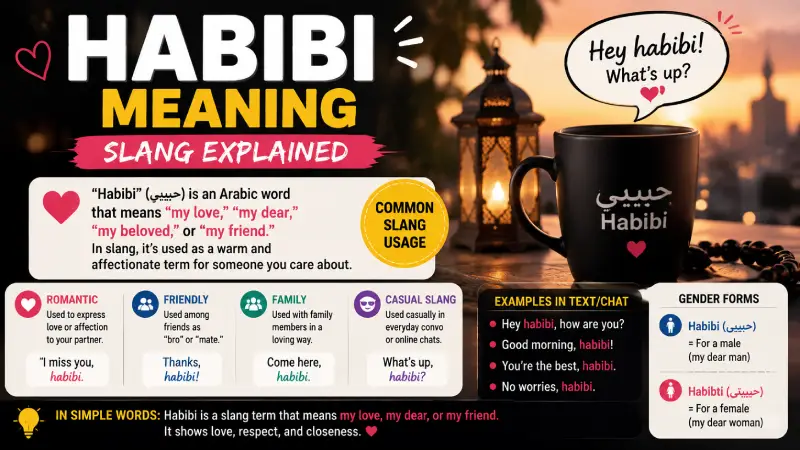
Habibi is a popular Arabic word that means “my love,” “my dear,” “my beloved,” or “darling.” In modern slang, people also use habibi as a friendly way to address someone, similar to saying “bro,” “friend,” or “my dear” in English.
Many people discover habibi through TikTok, Instagram, Arabic songs, movies, and online conversations. Because of social media, the word has moved beyond Arabic-speaking communities and has become a familiar expression worldwide.
However, the meaning of habibi slang depends on the situation. Sometimes it shows romantic love. Other times, it simply shows friendliness, respect, or closeness. Arabic speakers often use it more broadly than English speakers might expect.
For example:
“Thanks, habibi.”
can mean:
- “Thanks, my love.”
- “Thanks, my dear.”
- “Thanks, my friend.”
The relationship between the speakers determines the real meaning.
Quick Answer
Habibi meaning slang is “my love” or “my dear” in Arabic. Online, people often use it as a friendly nickname for someone they like, similar to “bro,” “buddy,” or “dear.” It can sound romantic, but it does not always mean a romantic relationship.
What Does Habibi Mean in Arabic?
The Arabic word habibi (حبيبي) comes from the Arabic root connected to love.
The word is built from:
- Habib (حبيب) = beloved, loved person
- -i (ي) = my
Together, habibi literally means “my beloved” or “my loved one.”
Although the literal translation sounds romantic in English, Arabic speakers use the word in many everyday situations.
A person may say habibi to:
- a romantic partner
- a close friend
- a family member
- a child
- someone they respect
This is similar to how English speakers use words like:
- dear
- sweetheart
- buddy
- honey
The meaning changes depending on the speaker, relationship, and tone.
Habibi Meaning Slang in English
In modern slang, habibi usually means “my dear” or “my friend.”
Common English translations include:
- my love
- darling
- sweetheart
- dear
- buddy
- bro
- friend
For example:
“Come here, habibi.”
could translate as:
- “Come here, my dear.”
- “Come here, friend.”
- “Come here, sweetheart.”
A direct word-for-word translation does not always capture the feeling behind the expression.
Is Habibi a Slang Word?
Technically, habibi is not originally slang. It is a normal Arabic word used in everyday speech.
However, English-speaking internet users often treat it like slang because they use it casually in:
- TikTok captions
- Instagram comments
- memes
- texting
- online jokes
The word became especially popular because people hear it in Arabic music, entertainment, and viral videos.
So today, habibi has both a traditional Arabic meaning and a modern internet slang use.
What Does Habibi Mean on TikTok?
On TikTok, habibi is often used as a cute, funny, or affectionate expression.
You may see comments like:
“Habibi ❤️”
or:
“Come habibi 😂”
Depending on the video, it can mean:
- my love
- my dear
- my friend
- someone special
TikTok users sometimes use Arabic words for their cultural feeling, humor, or aesthetic style.
For example:
“Habibi, relax.”
may simply mean:
“Relax, my friend.”
It does not always mean:
“I am romantically interested in you.”
Habibi Meaning in Text Messages
In texting, people use habibi as a warm nickname.
Examples:
“Good morning habibi ☀️”
Meaning:
“Good morning, my dear.”
“Thank you habibi 🙏”
Meaning:
“Thank you, friend.”
“Miss you habibi ❤️”
Meaning:
“I miss you, my love.”
The emojis and surrounding words often reveal whether the message sounds romantic or friendly.
Is Habibi Romantic?
Habibi can be romantic, but it is not always romantic.
This is one of the biggest misunderstandings about the word.
Many English speakers think:
Habibi = boyfriend/girlfriend
but that is not always true.
Arabic speakers may use habibi in casual situations with:
- friends
- relatives
- children
- customers
- strangers in friendly conversations
For example:
A father may say:
“My habibi, come here.”
meaning:
“My dear, come here.”
A friend may say:
“See you later, habibi.”
meaning:
“See you later, buddy.”
The tone creates the meaning.
Habibi Meaning Between Friends
Friends can use habibi without any romantic meaning.
For example:
Two male friends might say:
“How are you, habibi?”
This can simply mean:
“How are you, my friend?”
In Arabic-speaking cultures, affectionate language often appears more naturally in everyday conversation than it does in some English-speaking environments.
The same idea appears in English when someone says:
- “buddy”
- “dear”
- “my friend”
- “brother”
The speaker shows warmth, not necessarily romance.
Habibi Meaning From a Girl
If a girl calls someone habibi, the meaning depends on the situation.
It may mean:
- my love
- my dear
- my friend
- someone she cares about
Example:
“Thanks, habibi 😊”
This could simply be friendly.
However:
“I miss you, habibi ❤️”
sounds more romantic.
The word alone does not reveal the full relationship.
Habibi Meaning From a Guy
If a guy says habibi, it also depends on context.
He may use it for:
- a close friend
- a family member
- a romantic partner
- someone he respects
Example:
“Don’t worry, habibi.”
Possible meanings:
- Don’t worry, my friend.
- Don’t worry, my dear.
- Don’t worry, my love.
The surrounding conversation gives the clue.
Habibi vs Habibti
The main difference between habibi and habibti is gender.
| Word | Meaning | Used For |
|---|---|---|
| Habibi (حبيبي) | My love / my dear | Male |
| Habibti (حبيبتي) | My love / my dear | Female |
Examples:
Talking to a man:
“Thank you, habibi.”
Talking to a woman:
“Thank you, habibti.”
The emotional meaning remains similar, but Arabic changes the ending based on the person being addressed.
Popular Habibi Phrases
Yalla Habibi
Yalla habibi means:
“Come on, my dear.”
or:
“Let’s go, friend.”
- Yalla = come on / let’s go
- Habibi = my dear
This phrase appears frequently in everyday Arabic conversations.
Shukran Habibi
Shukran habibi means:
“Thank you, my dear.”
- Shukran = thank you
- Habibi = my dear
Sabah Al Khair Habibi
This means:
“Good morning, my dear.”
Ahlan Habibi
This means:
“Hello, my dear.”
How Do You Pronounce Habibi?
The common pronunciation is:
ha-BEE-bee
Break it into three parts:
- ha
- BEE
- bee
The middle syllable receives the strongest emphasis.
English speakers may pronounce it slightly differently, but most people understand the word.
Is Habibi Used in English?
Yes.
Many English speakers use habibi because of:
- social media
- music
- movies
- travel
- cultural exchange
You may see it in:
- Instagram captions
- TikTok comments
- usernames
- memes
Example:
“My habibi ❤️”
This usually means:
“My love” or “my dear.”
Is Habibi Appropriate to Use?
Usually, yes, but context matters.
It works well in:
- casual conversations
- friendly messages
- cultural discussions
- jokes among friends
However, using it with someone you do not know may feel too personal.
For example:
A stranger saying:
“Hello habibi.”
may sound overly familiar.
A close friend saying:
“Thanks habibi.”
sounds natural.
Common Mistakes With Habibi
Thinking Habibi Always Means Lover
This is the most common mistake.
Habibi can mean love, but it can also mean friend or dear person.
Using Habibi Without Understanding Culture
The word has emotional meaning in Arabic. Using it casually without knowing the context may sometimes sound unnatural.
Confusing Habibi and Habibti
Remember:
- Habibi → male
- Habibti → female
Translating It Too Literally
“Habibi means my love” is correct, but everyday use includes many friendly meanings.
Habibi vs Honey vs Darling
These English words are similar but not identical.
| Word | Meaning |
|---|---|
| Habibi | My love, my dear, beloved |
| Honey | Sweet affectionate nickname |
| Darling | Dear or loved person |
Habibi carries Arabic cultural meaning that does not always match one English word perfectly.
Frequently Asked Questions
What does habibi mean slang?
Habibi slang means “my love,” “my dear,” or “my friend.” People often use it online as a friendly or affectionate nickname.
Is habibi romantic?
Sometimes. Habibi can describe romantic love, but Arabic speakers also use it with friends and family.
What does habibi mean on TikTok?
On TikTok, habibi is usually used as a cute or affectionate expression meaning “my dear” or “my love.”
Can friends say habibi?
Yes. Friends often use habibi to show closeness and friendliness.
What is the female version of habibi?
The female version is habibti, which means “my love” or “my dear” when speaking to a woman.
Is habibi a bad word?
No. Habibi is a positive Arabic expression. It is not offensive.
Why is habibi popular online?
Social media, music, movies, and cultural exchange helped make habibi popular worldwide.
Conclusion
The habibi meaning slang is a warm Arabic expression that usually means “my love,” “my dear,” or “my beloved.” However, modern internet users also use it casually to mean friend, buddy, or someone they appreciate.
Although many people associate habibi with romance, Arabic speakers often use it in everyday conversations with friends and family too.
The best way to understand habibi is to look at the relationship, tone, and situation. A romantic message may use habibi as “my love,” while a friendly message may simply mean “my dear friend.”
<


