
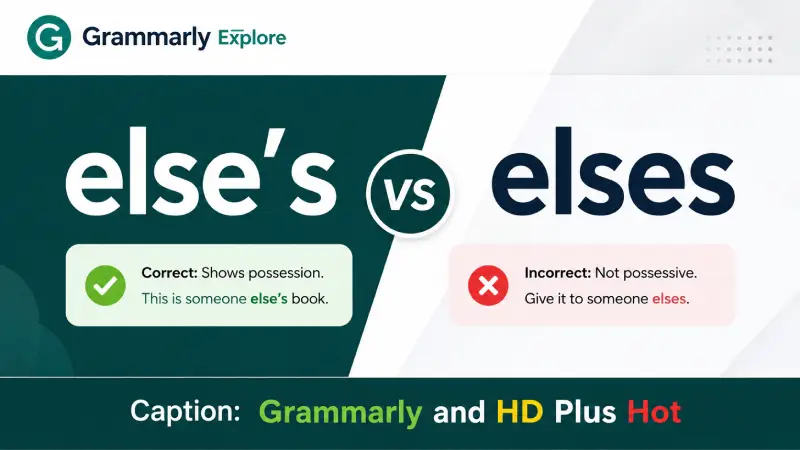
If you are wondering whether to use else’s or elses, the correct choice is usually else’s.
Else’s is the possessive form of else, meaning something belongs to another person or thing.
Elses is generally not a standard English word. In most cases, people who write elses are trying to make else plural, but else is not normally made plural this way.
The simple rule:
✅ Else’s = belonging to someone or something else
❌ Elses = usually incorrect
Examples:
- I borrowed someone else’s phone.
- We should respect everyone else’s opinions.
- Nobody else’s answer was correct.
Quick Answer: Else’s or Elses?
The correct form depends on the meaning.
| Word | Correct Usage | Meaning |
|---|---|---|
| Else’s | Possessive form | Belonging to another person or thing |
| Elses | Usually incorrect | Not a standard plural form |
Use else’s when showing ownership.
Examples:
- That is someone else’s problem.
- I found someone else’s keys.
- She used somebody else’s idea.
Avoid elses in standard English.
Why People Confuse Else’s And Elses
The confusion happens because English uses apostrophes in different ways.
Many writers know that apostrophe plus s can show possession, but they may also think adding s creates a plural word.
For example:
- book → books
- car → cars
This does not work with else.
Else is usually used after words like:
- someone
- somebody
- anyone
- nobody
- something
When it shows ownership, it becomes:
- someone else’s
- anyone else’s
- nobody else’s
Not:
- someone elses
- anyone elses
What Does Else’s Mean?
Else’s is the possessive form of else.
It means something belongs to another person, place, or thing.
Examples:
- I used someone else’s computer.
- This is nobody else’s responsibility.
- We should not judge someone else’s choices.
The word often appears after indefinite pronouns:
- someone else’s
- somebody else’s
- anyone else’s
- everyone else’s
- no one else’s
What Does Elses Mean?
Elses is not normally used as a standard English word.
English does not usually make else plural because it functions differently from regular nouns.
Incorrect:
- I looked at all the elses.
Correct:
- I looked at all the other options.
- I considered everyone else’s ideas.
If you need to refer to different additional people or things, English usually uses another phrase instead of elses.
Meaning And Usage Difference
The difference between else’s and elses is mainly about grammar.
| Context | Best Choice | Why |
|---|---|---|
| Ownership | Else’s | Shows possession |
| Someone’s belongings | Else’s | Correct possessive form |
| Plural form | Avoid elses | Not standard usage |
| Formal writing | Else’s | Accepted form |
Examples:
Correct:
- That is someone else’s jacket.
- I respect everyone else’s opinion.
Incorrect:
- That is someone elses jacket.
- I respect everyone elses opinion.
Tone, Context, And Formality
Else’s is used in everyday speech and formal writing.
Examples:
Casual:
- I accidentally took someone else’s bag.
Formal:
- We should consider everyone else’s perspective.
Because it is a normal possessive form, it works in all types of writing.
Elses should generally be avoided because it may appear to be a spelling or grammar mistake.
Which One Should You Use?
Use else’s when something belongs to another person or thing.
Examples:
- I borrowed someone else’s pen.
- This is no one else’s decision.
- She read someone else’s report.
Do not use elses as a plural word.
A simple memory trick:
If you can replace it with another person’s, use else’s.
Example:
- someone else’s car = another person’s car
When One Choice Sounds Wrong
Using elses often sounds incorrect because it does not follow standard English usage.
Incorrect:
I took someone elses book.
Correct:
I took someone else’s book.
Incorrect:
Everyone elses opinion matters.
Correct:
Everyone else’s opinion matters.
Remember the apostrophe:
else + ’s = else’s
Common Mistakes And Quick Fixes
Mistake 1: Forgetting The Apostrophe
Incorrect:
Someone elses phone was ringing.
Correct:
Someone else’s phone was ringing.
Mistake 2: Making Else Plural
Incorrect:
The opinions of different elses were included.
Correct:
The opinions of different people were included.
Mistake 3: Confusing Possession With Plural
Else’s shows ownership.
Example:
- Someone else’s idea.
Elses does not create a normal plural.
Everyday Examples
Daily Conversation Examples
- I don’t want to use someone else’s account.
- Everyone else’s plans changed.
- Nobody else’s opinion matters here.
Workplace Examples
- The decision affects everyone else’s schedule.
- We should review someone else’s work.
- The manager considered everyone else’s feedback.
Writing Examples
- The author explains someone else’s viewpoint.
- Respecting others else’s ideas is incorrect.
- Respecting someone else’s ideas is correct.
Dictionary-Style Word Details
Verb
Else’s: Not used as a verb in standard English.
Elses: Not used as a verb in standard English.
Noun
Else’s: Not a noun. It is a possessive form.
Elses: Not commonly used as a noun in standard English.
Synonyms
Else’s
Closest plain alternatives:
- Another person’s
- Someone’s
- Another’s
Examples:
- Someone else’s book = another person’s book
Elses
No synonyms apply because it is not a standard word form.
Example Sentences
Else’s
- I found someone else’s wallet.
- We should respect everyone else’s choices.
- This is nobody else’s responsibility.
Elses
The standard form is not elses.
Incorrect:
- I used someone elses computer.
Correct:
- I used someone else’s computer.
Word History
Else has long been used in English to refer to something additional, different, or another. The possessive form else’s follows standard English possession rules.
The form elses is generally not used as a standard plural form.
Phrases Containing
Else’s
Common phrases include:
- someone else’s
- somebody else’s
- anyone else’s
- everyone else’s
- nobody else’s
Examples:
- Someone else’s mistake.
- Everyone else’s opinion.
Elses
No standard phrases commonly use this form.
Frequently Asked Questions
Is else’s or elses correct?
Else’s is correct when showing possession. Elses is usually incorrect.
Is someone else’s correct?
Yes. Someone else’s is the correct possessive form.
Why does else’s have an apostrophe?
The apostrophe shows possession, meaning something belongs to someone or something else.
Can else be plural?
No, elses is not normally used as a plural form in standard English.
Is everyone else’s spelled correctly?
Yes. Everyone else’s is the correct spelling.
Conclusion
The difference between else’s vs. elses is simple.
Use:
Else’s when you mean something belongs to another person or thing.
Avoid:
Elses because it is not a standard English form.
When writing phrases like someone else’s, everyone else’s, or nobody else’s, always include the apostrophe before the s.